Negotiations aimed at advancing U.S. President Donald Trump’s plan to end the war in Gaza Strip have been paused since last week after the United States and Israel launched joint strikes on Iran, triggering a wider conflict in the Middle East, according to three sources familiar with the discussions.
The halt in talks threatens to delay implementation of Trump’s key Middle East peace initiative, which he has presented as a major foreign policy priority. The pause comes less than a month after he secured billions of dollars in financial commitments for Gaza’s reconstruction from Gulf Arab nations — many of which are now facing Iranian attacks as the regional conflict intensifies.
A central element of Trump’s Gaza proposal involves persuading Hamas to disarm in exchange for amnesty. The step is intended to pave the way for reconstruction efforts and further withdrawals of Israeli forces. U.S. mediators have been quietly facilitating backchannel communications between Israel and Hamas on the disarmament issue.
However, discussions on this and other aspects of the plan were suspended when the Iran conflict erupted on February 28, the sources said, speaking anonymously due to the sensitivity of the negotiations. The interruption in disarmament talks had not been previously reported.
One source involved in the work of Trump’s “Board of Peace” initiative described the delay as temporary and relatively minor, caused mainly by flight disruptions that prevented mediators and representatives from travelling across the region. Many of the negotiations have traditionally taken place in Cairo.
Despite the pause, the source suggested the broader war could ultimately accelerate progress by weakening Iranian influence over regional actors.
Meanwhile, a Palestinian official close to the mediation process said Hamas had been scheduled to meet with mediators from Egypt, Qatar and Turkey on the day the conflict began, but the meeting was cancelled and no new date has been set.
A Hamas official confirmed that negotiations related to Trump’s Gaza proposal are currently frozen but declined to provide further details. The Israeli government has not responded to requests for comment, while the White House has yet to issue an official statement.
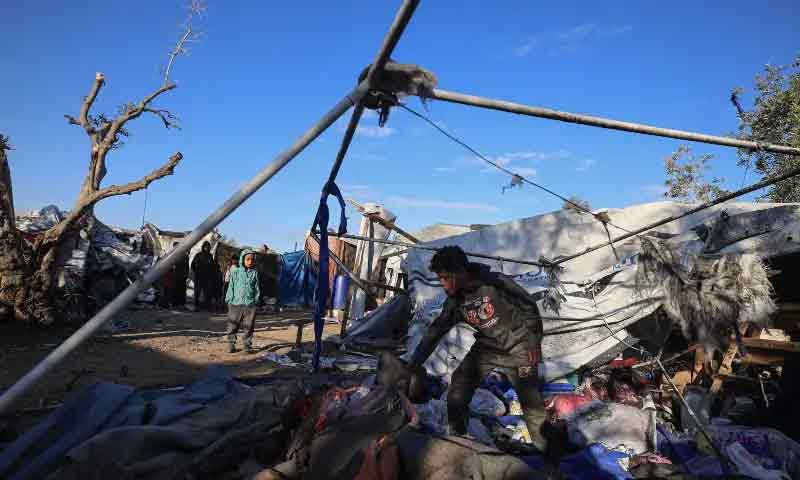
Since the broader regional war began, Israel’s military operations in Gaza have slowed but not stopped entirely. Israeli forces have shifted much of their focus to air campaigns in Iran and Lebanon, though attacks in Gaza continue. Health officials say at least 16 Palestinians have been killed in the territory since February 28.
Residents fear the lull in violence may only be temporary. Talal Hamouda, a 46-year-old resident of Jabalia in northern Gaza, said he expects Israeli strikes to intensify again once the conflict with Iran ends.
“The moment the war on Iran is over, they will come back at us with the same intensity and violence,” he said.
Meanwhile, Hamas has continued to consolidate its control in areas under its authority in Gaza. Sources close to the group say its fighters have recently carried out ambushes against Israeli-backed militia members in northern and southern parts of the enclave, reportedly killing at least two people.




.jpg)