





.jpg)
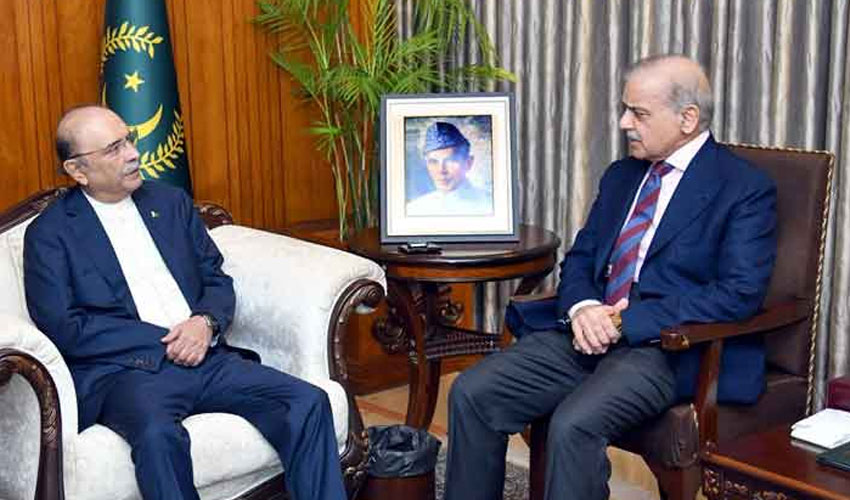
Prime Minister Shehbaz Sharif chaired an important consultation at the Prime Minister’s House to review Pakistan’s economic preparedness in light of evolving regional and global tensions.
The meeting focused on implementing a national austerity policy, ensuring energy conservation and protecting the economy from potential global shocks.
Several key members of the federal cabinet participated in the consultation chaired by the prime minister. Among those present were Deputy Prime Minister Ishaq Dar, Finance Minister Muhammad Aurangzeb, Planning Minister Ahsan Iqbal, Awais Leghari, Ali Pervaiz Malik, Attaullah Tarar, Dr Musadik Malik and Haroon Akhtar.
Representatives from all four provinces and Azad Jammu and Kashmir also attended the meeting through a video link, along with senior officials from relevant government institutions.
Possible economic impact of global tensions
During the meeting, officials briefed participants on the potential impact of regional and global developments on Pakistan’s economy.
According to the briefing, the country could face challenges related to energy supply and price fluctuations in global markets. However, officials assured the prime minister that preparations are already complete to deal with any emergency situation.
The government was also informed that Pakistan currently has adequate reserves of petrol, diesel and other petroleum products.
National austerity policy reviewed
Finance Minister Muhammad Aurangzeb briefed the meeting on the government’s austerity policy, sources said.
On the instructions of the prime minister, the national austerity plan was reviewed in consultation with the provinces to ensure uniform implementation across the country.
The meeting decided that the austerity policy would be implemented at the national level with the cooperation of provincial governments.
Energy conservation, efficient use of resources
Officials emphasized the need for wise use of energy and careful consumption of fuel due to the global situation. The meeting decided to save government resources and ensure continuous monitoring of energy demand and supply for efficient utilization.
Provinces also presented their own plans related to economic activity and energy usage in the context of rising global tensions.
The prime minister directed provincial governments to effectively implement administrative preparations and energy-saving measures.
Relief for citizens
Participants also discussed suggestions to provide relief to deserving and low-income citizens during challenging economic conditions. The meeting reviewed several recommendations focused on austerity, simplicity and economic stability.
Based on these suggestions, a final action plan was agreed upon to protect the country’s economy from external shocks.
PM emphasizes shared responsibility
Prime Minister Sharif said that timely measures are essential to maintain economic stability in the current international environment. He stressed that domestic production, exports, food security and overall consumption must not be disrupted.
The prime minister also emphasized that all segments of society should fairly share the burden of austerity. He specifically urged privileged and elite classes to set an example in adopting the austerity measures.
According to sources, federal cabinet members will also contribute to the national austerity plan. The prime minister also hinted that salaries and benefits of government officials may be reduced until the economic situation improves.
Special instructions were issued to federal cabinet members, elected representatives and senior government officials to strictly follow the austerity plan.
Digital work, internet connectivity
The meeting also addressed the importance of digital connectivity during economic adjustments. The prime minister directed authorities to ensure that work-from-home arrangements are not disrupted.
He also instructed officials to provide uninterrupted internet facilities for people working online, including freelancers and digital professionals.
Prime Minister Sharif said the government is making every effort to provide maximum support and relief to citizens during difficult circumstances. He reaffirmed that the government’s focus remains on economic stability, responsible governance and protecting the welfare of the public.


.jpg)


.jpg)







