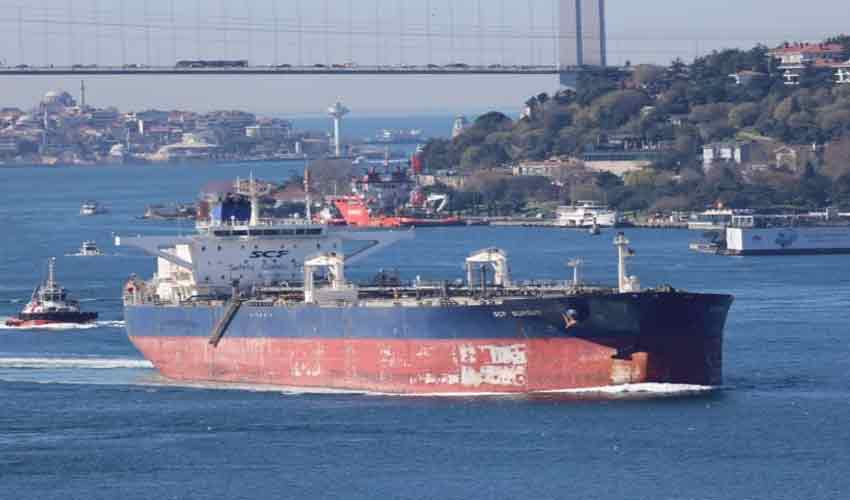
The United States on Thursday temporarily eased certain sanctions on Russia to allow shipments of Russian oil currently stranded at sea to be delivered and sold to India.
The US Treasury Department’s Office of Foreign Assets Control (OFAC) issued a Russia-related licence authorising the delivery and sale of crude oil and petroleum products of Russian origin that had already been loaded onto vessels as of March 5, 2026.
According to a Treasury statement, the authorization applies to transactions - including those involving vessels previously restricted under sanctions regimes - and will remain in effect until the end of the day on April 3, 2026.
US Treasury Secretary Scott Bessent said the temporary waiver was intended to prevent disruptions in global energy supplies.
“To enable oil to keep flowing into the global market,” Bessent said in a post on X.
He stressed that the measure was deliberately limited in scope and duration, noting that it would not generate significant financial gains for the Russian government because it only covers cargoes already stranded at sea.
“This deliberately short-term measure will not provide significant financial benefit to the Russian government as it only authorizes transactions involving oil already stranded at sea,” he added.
Bessent also said the move would help ease pressure on global energy markets following recent tensions involving Iran.
The sale of the oil to India, he said, would “alleviate pressure caused by Iran’s attempt to take global energy hostage,” despite New Delhi previously signalling that it intends to halt purchases of Russian oil as part of a trade arrangement with the United States.
In November last year, US President Donald Trump imposed sanctions on major Russian oil companies Lukoil and Rosneft in an effort to increase pressure on Moscow over its invasion of Ukraine.
Those measures - among the strongest actions taken by Trump against Russia during the Ukraine conflict - forced many large buyers of Russian crude to seek alternative suppliers.
Russia has since been reported to rely on a network of aging oil tankers with opaque ownership structures to circumvent sanctions imposed by the United States, the European Union and the Group of Seven (G7) nations following Moscow’s full-scale invasion of Ukraine in 2022.
.jpg)
.jpg)