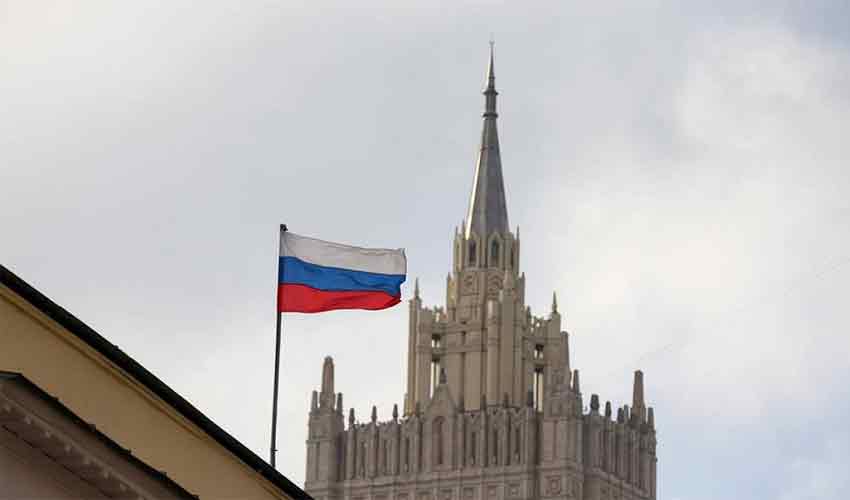
According to a report by the Russian Ministry of Foreign Affairs, the security and political situation in Afghanistan remains highly complex, with terrorist networks actively operating across the country.
The report states that Afghanistan hosts between 20,000 and 23,000 terrorist fighters, over half of whom are foreign nationals. The presence of these groups poses a continuous threat to regional security.
It highlights that nearly 3,000 ISIS (Daesh) fighters and 5,000 to 7,000 Tehrik-i-Taliban Pakistan (TTP) militants are present on Afghan soil. The TTP is reportedly focusing on launching attacks from Afghanistan into Pakistan, contributing to growing tensions in bilateral relations.
Other terrorist organizations, including al-Qaeda and the East Turkistan Islamic Movement (ETIM/TIP), continue to operate training centers and maintain operational networks within Afghanistan. The country has become a key hub for al-Qaeda’s regional coordination and training, with its centers located in the provinces of Ghazni, Laghman, Kunar, Nangarhar, Nuristan, Parwan, and Uruzgan.
ISIS-Khorasan has established strong networks in Afghanistan’s eastern and northern regions, with long-term ambitions to expand into Central Asia and establish a so-called caliphate. A recent explosion at a Chinese restaurant in Kabul in January 2026 serves as evidence of ISIS activity in the capital.
The report also notes an increase in illicit drug trafficking, particularly methamphetamine, which is Afghanistan’s most exported narcotic.
The Russian Foreign Ministry concluded that Afghanistan’s current situation has a direct impact on peace and stability across the region, underlining the persistent security risks emanating from the country.



.jpg)