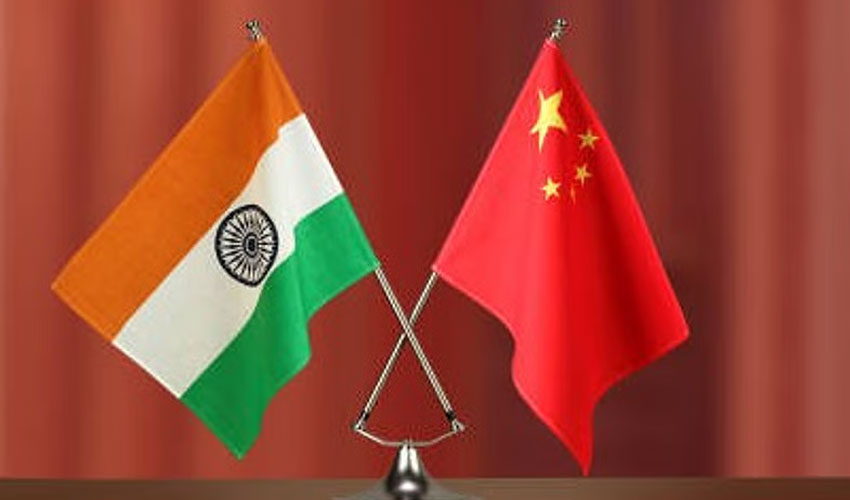
India on Monday asked China to guarantee that Indian nationals transiting through Chinese airports will not face arbitrary detention or harassment.
The demand comes after an Indian woman was stopped and held for hours at Shanghai airport last month, triggering diplomatic concern and renewed scrutiny over travel safety.
India’s foreign ministry said it expects China to provide firm assurances that Indian travelers will not be “selectively targeted, arbitrarily detained, or harassed” during airport transits.
Foreign ministry spokesperson Randhir Jaiswal said at a weekly briefing that India has already lodged a strong protest with Beijing over what it described as the inappropriate detention of an Indian passport holder.
He added that such incidents undermine efforts to rebuild trust between the two Asian neighbours, whose relations have only recently begun showing signs of stability.
Jaiswal also advised Indian nationals to “exercise due discretion” when traveling to or through China.
The November airport incident
Indian media reports identified the detained traveler as Prema Wangjom Thongdok, a UK-based Indian passport holder who was transiting through Shanghai on November 21.
She was reportedly told her passport was invalid because she was born in Arunachal Pradesh, an eastern Indian state that China claims as part of southern Tibet, calling it Zangnan.
Thongdok was prevented from boarding her connecting flight to Japan and was held for 18 hours before being released.
The incident has revived concerns around Beijing’s long-standing territorial claims and how they can affect Indian travelers born in disputed regions.
China’s position
The Chinese foreign ministry did not immediately respond to a request for comment on Monday.
Last month, Beijing said airport checks were conducted in accordance with “laws and regulations,” without addressing the specific circumstances of the case.
The travel dispute comes at a time when India and China have been cautiously working to improve ties after years of strained relations.
Prime Minister Narendra Modi visited China in August — his first trip in seven years — where he and President Xi Jinping emphasized partnership over rivalry. The visit was widely seen as an attempt to stabilize ties after prolonged tensions.
Relations had sharply deteriorated following a deadly border clash in the Himalayas in 2020, where 20 Indian and four Chinese soldiers were killed in hand-to-hand combat. The two nuclear-armed nations continue to share a 3,800 km (2,400-mile) disputed frontier.


.jpg)