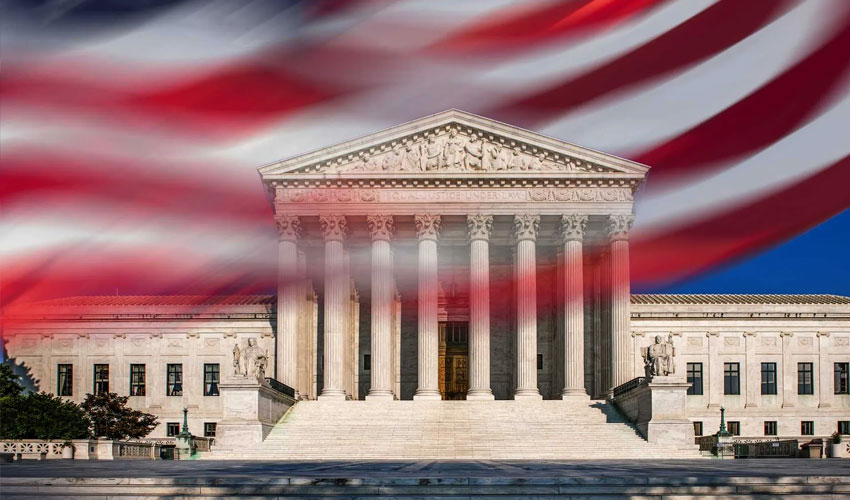
The United States Supreme Court has agreed to take up President Donald Trump’s controversial bid to end birthright citizenship, setting the stage for a major constitutional battle over one of America’s oldest legal protections.
The court announced on Friday that it would review the legality of Trump’s executive order, which seeks to deny automatic citizenship to children born in the US to undocumented migrants or temporary visa holders.
Although no hearing date has been set, oral arguments are expected early next year, with a final ruling likely in June.
Several lower courts previously blocked the move as unconstitutional, halting the executive order before it was due to take effect.
What Trump’s executive order says
Trump signed the order on January 20 — his first day in office — declaring that children born on US soil to parents without legal status would no longer receive citizenship by default.
The administration claimed that such children were not “subject to the jurisdiction” of the US, a key phrase in the 14th Amendment, and therefore not eligible for automatic citizenship.
Officials further argued that the amendment, introduced after the Civil War, was intended only to protect the rights of formerly enslaved people, not the children of undocumented migrants or temporary visitors.
Lower courts declare order unconstitutional
Federal judges rejected this reasoning, ruling that Trump’s order violated the 14th Amendment, which clearly states:
“All persons born or naturalized in the United States, and subject to the jurisdiction thereof, are citizens of the United States…”
District Judge John Coughenour in Washington state called the order “blatantly unconstitutional” while blocking it in one of several lawsuits filed against the administration.
Trump’s solicitor general, John Sauer, defended the order in a Supreme Court brief, arguing that extending citizenship to children of undocumented migrants has “caused substantial harm” and encouraged illegal immigration.
A Court tilted in Trump’s favor
The Supreme Court holds a 6–3 conservative majority, with three justices appointed by Trump. This ideological advantage has helped the administration secure several victories this year, as the court allowed multiple Trump policies to proceed despite lower court objections.
The upcoming case will test whether that trend continues.
Cecilia Wang, national legal director of the American Civil Liberties Union (ACLU), expressed optimism that the court will strike down the order.
She said federal courts nationwide have consistently rejected similar attempts to undermine birthright citizenship — a constitutional safeguard in place for over 150 years.




.jpg)