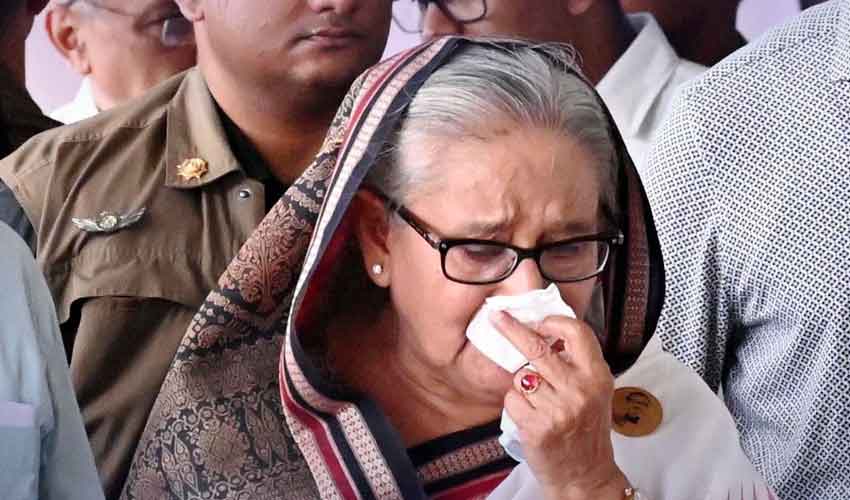
A Bangladesh court has sentenced former prime minister Sheikh Hasina to death for crimes against humanity, concluding a months-long trial that found her guilty of ordering a deadly crackdown on a student-led uprising last year.
Sheikh Hasina has been sentenced to life imprisonment on three charges, as per the court order, while she has been sentenced to death for using deadly weapons and ordering murders of protesters.
The tribunal in Dhaka opened proceedings on Monday to deliver its verdict in the case, which accuses the 78-year-old leader of masterminding and directing the violent operation against protesters. Hasina, along with two other senior officials — the former interior minister and a former inspector general of police — is being tried on five charges, according to Bangladeshi media.
Prosecutors allege that Hasina was the “mastermind and principal architect” of a state crackdown on demonstrations triggered by a controversial quota system in government jobs. The protests, which ballooned into nationwide unrest, resulted in the deaths of some 1,400 people.
Prosecutors outline charges of killings, arson, aerial attacks
During the trial, prosecutors accused Hasina of authorising the use of helicopters and drones to kill protesters. They also alleged she delivered provocative speeches to fuel public hostility against demonstrators.
Also Read: Bangladesh court set to deliver verdict against Sheikh Hasina; security tightened
Specific crimes presented to the tribunal include the deliberate killing of Abu Saeed, a student of Begum Ruqaiya University; the shooting deaths of six protesters in Dhaka; and the burning alive of another six people in Ashulia. These incidents form part of the broader charges of crimes against humanity faced by the three accused.
Tensions escalate as police, military deployed in Dhaka
As the verdict reading began, unrest continued to brew on the streets of the capital. Large crowds gathered at Dhanmondi 32 — the historic home of Hasina’s father and a key protest site. Police attempted to push the crowds back and used stun grenades to disperse marchers who approached properties linked to the former prime minister.
Soldiers were deployed across parts of Dhaka amid fears of renewed violence.
Dhaka Metropolitan Police Commissioner Sheikh Mohammad Sazzat Ali confirmed issuing orders authorising the use of firearms if protesters attempt arson or hurl crude bombs. “If anyone sets a bus on fire or throws a cocktail and attacks police, will they sit idle?” he said, as quoted by The Daily Star.
The directive followed a week of nationwide unrest marked by at least 40 arson attacks and dozens of crude bomb explosions, resulting in two deaths.
Rights groups have long criticised Bangladesh’s police forces for what they describe as excessive violence during last year’s protests.
Protests flare as tribunal proceedings continue
The tense atmosphere in Dhaka reflects simmering public anger that has persisted since the initial wave of protests. Demonstrators have called for justice for the victims of the crackdown, while authorities remain on high alert for further escalation.
The tribunal’s verdict — expected to be lengthy — is being read section by section, with security forces bracing for possible street mobilisations as details of the ruling emerge.




.jpg)