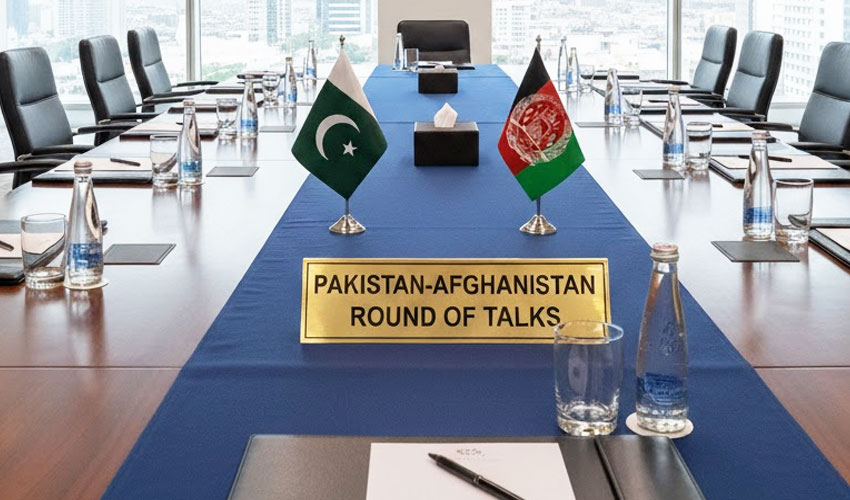
Afghanistan and Pakistan will resume peace talks in Istanbul on Thursday, both nations said, after a previous round ended without agreeing a lasting truce.
Militaries from the South Asian neighbours clashed last month, with dozens killed in the worst such violence since the Taliban returned to power in Kabul in 2021.
Both sides signed a ceasefire in Doha on October 19, but a second round of negotiations in Istanbul last week ended without a long-term deal, due to a disagreement over militant groups hostile to Pakistan operating inside Afghanistan.
Defense Minister Khawaja Asif has said Pakistan will take all necessary measures to ensure its security if cross-border infiltration continues from Afghanistan.
Also Read: Asif says Taliban unwilling to offer any guarantees
In an interview with Independent Urdu, Khawaja Asif stated that while Pakistan remains committed to peaceful dialogue, it will not hesitate to defend itself if hostile activities persist. “If the talks are not successful and infiltration continues, the military option will be the last resort,” he said.
Demand for halt to cross-border attacks
The minister stressed that Pakistan’s only demand is that infiltration from Afghan soil must stop. He said the Afghan Taliban have so far refused to provide a written guarantee that attacks on Pakistani territory will cease.
“Our message is clear — the use of Afghan soil for terrorism against Pakistan must come to an end,” he emphasized. Khawaja Asif added that continued instability along the border not only threatens Pakistan’s security but also regional peace.
Two government sources said Pakistan's intelligence chief, Asim Malik, is leading the Pakistani delegation. The Afghan delegation will be led by intelligence chief Abdul Haq Wasiq, Taliban spokesperson Zabihullah Mujahid told state broadcaster RTA.
Also Read: Khawaja Asif warns of military option if border infiltration continues
According to the Turkish Foreign Ministry, the two sides are expected to finalize a mechanism for verifying ceasefire violations and ensuring accountability for any breaches.
Khawaja Asif warns of fallout if talks fail
Khawaja Asif had said on Wednesday that Pakistan is participating in the dialogue only in hopes of genuine progress.
“If the talks with Afghanistan are not successful, the situation may deteriorate,” he warned while speaking to journalists outside Parliament House. “If the violations of our territory continue, we will respond in kind.”
Asif added that Pakistan’s stance remains unchanged — Afghanistan must ensure its territory is not used for attacks against Pakistan. “For peace in the region, the Afghan leadership should act wisely,” he stressed.

Security officials said Pakistan values the constructive mediation role of Qatar and Turkey and is committed to working in good faith for regional stability.
Background: Deadly clashes and ceasefire deal
The current round of dialogue stems from deadly border clashes in early October, which left dozens of soldiers and civilians dead.
Afghanistan accused Pakistan of conducting airstrikes on Kabul and eastern provinces — a claim Islamabad denied, stating the strikes targeted terrorist hideouts operating from Afghan soil.
Following the clashes, Qatar’s emergency diplomacy led to a temporary ceasefire on October 19, which paved the way for the Istanbul negotiations.
During the previous Istanbul session, a joint statement by Turkey, Qatar, Pakistan, and the Afghan Taliban announced an agreement to maintain the ceasefire and set up a monitoring and verification system to penalize any violations.
Pakistan Army and political leadership’s concerns
Chief of Army Staff Field Marshal Asim Munir recently reiterated that Pakistan desires peace with all its neighbours but will not tolerate terrorism from Afghan soil.
He said that the Afghan Taliban’s support for the banned Tehreek-e-Taliban Pakistan (TTP) has eroded the spirit of goodwill between the two nations.
Deputy Prime Minister Ishaq Dar echoed similar concerns in the Senate, saying that despite Pakistan’s repeated efforts, relations with Afghanistan have not improved. “We went there for a cup of tea, but that tea was very expensive,” he remarked, referring to the previous government’s decisions that allowed thousands of Taliban members to return and hundreds of militants to be released.
According to DG ISPR Lt Gen Ahmed Sharif, Pakistan has neutralized several cross-border militants — many of them Afghan nationals — and continues to face challenges from opium-funded terrorism.
He warned that any external aggression against Pakistan will be met with a “firm and severe response.”




.jpg)