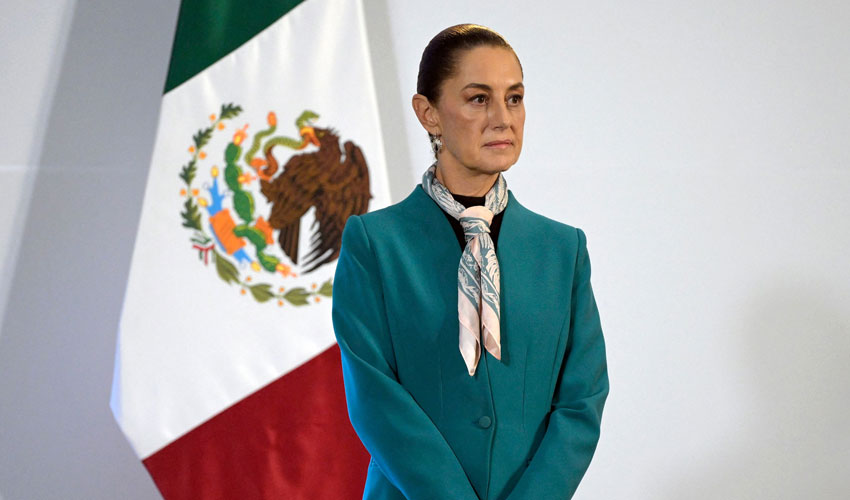
Mexican President Claudia Sheinbaum has filed a criminal complaint after being groped on the street while greeting supporters, vowing to push for nationwide reforms to make sexual harassment a crime across all states.
The shocking incident has sparked renewed outrage over Mexico’s poor record on women’s safety.
Sheinbaum, 63, was walking from the National Palace to the Education Ministry on Tuesday when a man approached her, placing an arm around her shoulder and touching her chest and hip while trying to kiss her.
The president quickly pushed him away before a staff member intervened. The man, reportedly intoxicated, was later arrested.
🇲🇽 Mexican President Claudia Sheinbaum was sexually assaulted on Tuesday, while interacting with passers-by on the streets of Mexico City. pic.twitter.com/8K2u1XMJyl
— FRANCE 24 English (@France24_en) November 5, 2025
“My thinking is: If I don’t file a complaint, what becomes of other Mexican women? If this happens to the president, what will happen to all the women in our country?” Sheinbaum said during her morning press conference on Wednesday.
Push for nationwide anti-harassment law
Following the attack, Sheinbaum announced plans for a nationwide review of sexual harassment laws, noting that not all of Mexico’s 32 states treat it as a criminal offense.
“It should be a criminal offence, and we are going to launch a campaign,” she said, adding that she had faced similar incidents in her youth.
On social media, Sheinbaum emphasized that “no one can violate our body and personal space,” calling for clear laws that protect women’s dignity and freedom from harassment.
Criticism over security and media ethics
The attack has raised questions about Sheinbaum’s minimal security detail. Like her predecessor Andrés Manuel López Obrador, she prefers to maintain close contact with the public, often walking through crowds unguarded.
However, she dismissed suggestions of increasing her security, insisting that “we have to be close to the people.”
Sheinbaum also condemned Mexican newspaper Reforma for publishing photos of the assault, calling it “re-victimization” and urging media outlets not to circulate images that violate women’s integrity.
“The use of the image is also a crime,” she said, citing legislation against digital violence.
The incident has renewed scrutiny on Mexico’s record of gender-based violence. The United Nations reports that an average of 10 women are murdered every day in the country, and nearly 70% of women aged 15 and older have experienced some form of sexual harassment.
Despite creating a federal Women’s Ministry, activists have criticized Sheinbaum’s administration for what they describe as weak enforcement of laws protecting women. Many cases of femicide remain under-investigated, fueling public frustration.







.jpg)