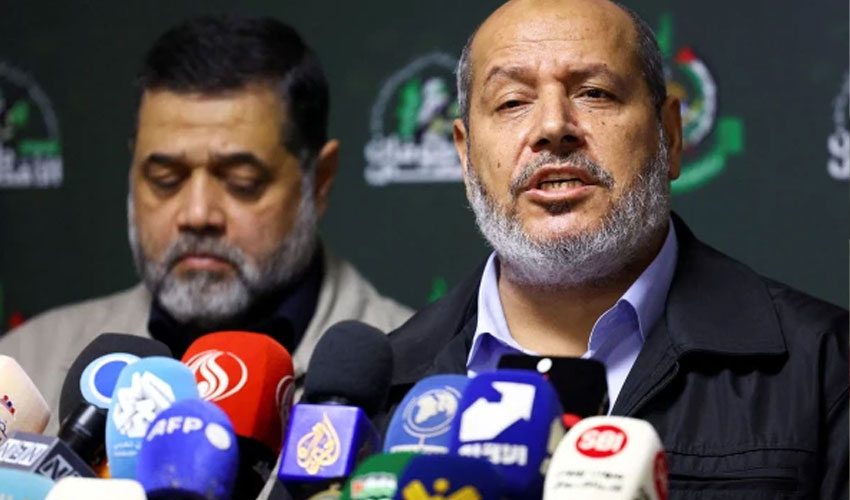
The Hamas leadership announced that major Palestinian factions have agreed to transfer the administration of Gaza to a non-political technocratic committee once the ongoing war ends.
The decision was made during a meeting of Palestinian groups convened by Hamas in Cairo, according to a joint statement released on the group’s official website.
“All factions have agreed that the administration of the Gaza Strip will be entrusted to a temporary Palestinian committee consisting of technocrats,” the statement said, adding that the body will “supervise daily life and basic services in cooperation with Arab countries and international organizations.”
Abbas camp absent from talks
The announcement, however, highlighted continuing divisions among Palestinian leaders, as President Mahmoud Abbas’s representatives did not attend the meeting.
According to Arab and Israeli media reports, Abbas — whose Fatah-led Palestinian Authority (PA) governs parts of the occupied West Bank — had instructed his aides to stay away due to disagreements over Hamas’s participation.
The statement did not specify whether the PA or Fatah would be part of the proposed technocratic setup, nor did it outline how members of the new committee would be chosen.
Push for national unity
In addition to the governance plan, the factions agreed to “adopt a unified stance” to confront the challenges facing the Palestinian cause and proposed a broader meeting to “agree on a national strategy and restore the Palestine Liberation Organization (PLO) as the sole legitimate representative of the Palestinian people.”
Hamas is not currently part of the PLO, which has long been dominated by Fatah. The renewed call to restructure the organization reflects a growing push among Palestinian groups for internal reconciliation and political unity amid the devastation of Gaza.
A source told AFP that Hamas and Fatah delegations also met separately in Cairo to discuss the second phase of the U.S.-backed ceasefire plan, agreeing to continue dialogue to “organize internal Palestinian unity.”
Egyptian intelligence chief Hassan Rashad reportedly met with representatives from Islamic Jihad, the Democratic Front for the Liberation of Palestine, and the Popular Front for the Liberation of Palestine, both members of the PLO.
Despite multiple reconciliation attempts since their split following the 2006 elections and ensuing civil conflict, deep distrust continues to divide Hamas and Fatah, undermining long-term governance prospects in Gaza.
Rubio calls for international stabilization force
Meanwhile, senior U.S. diplomat Marco Rubio called for the deployment of an international force in Gaza to monitor the ceasefire and ensure post-war stability.
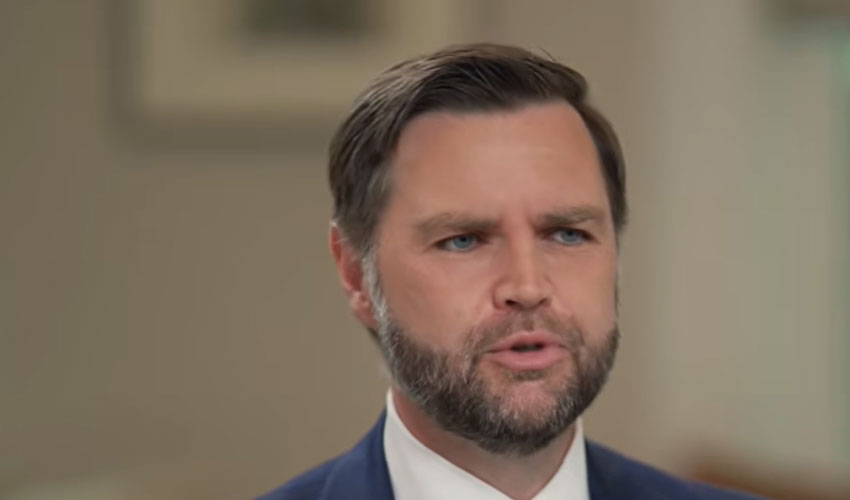
Speaking during his visit to Israel — following a similar trip by Vice President J.D. Vance — Rubio said Washington’s goal was to “work out an agreement that paves the way for the establishment of a stabilization force as soon as possible.”
Rubio met with Israeli, U.S., and Western military officials at a ceasefire monitoring center in southern Israel, expressing optimism about a “complete end to the two-year Gaza war.”
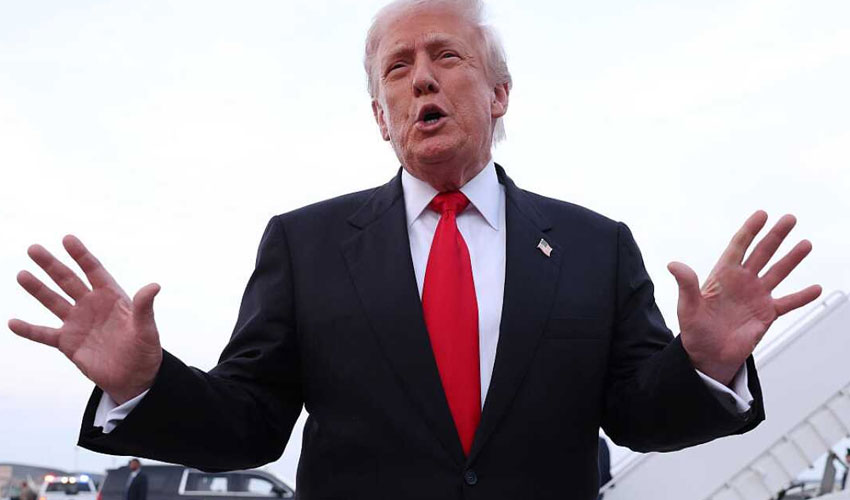
The plan, reportedly brokered by President Donald Trump, includes international monitoring mechanisms to oversee security and reconstruction efforts once a formal truce takes effect.
Humanitarian crisis persists
While fighting has eased since the October 10, 2025 ceasefire, Gaza remains in ruins. Vast areas of the enclave are still occupied by Israeli forces, with many residents unable to return to their homes.
According to latest reports, more than 68,000 Palestinians have been killed in Israel’s military offensive since October 2023, while millions remain displaced and face acute shortages of food and shelter.
Despite partial calm, aid deliveries are still restricted, and Gaza effectively remains divided into two zones — one under Hamas control and another under Israeli military occupation outside the so-called “danger zone.”


.jpg)