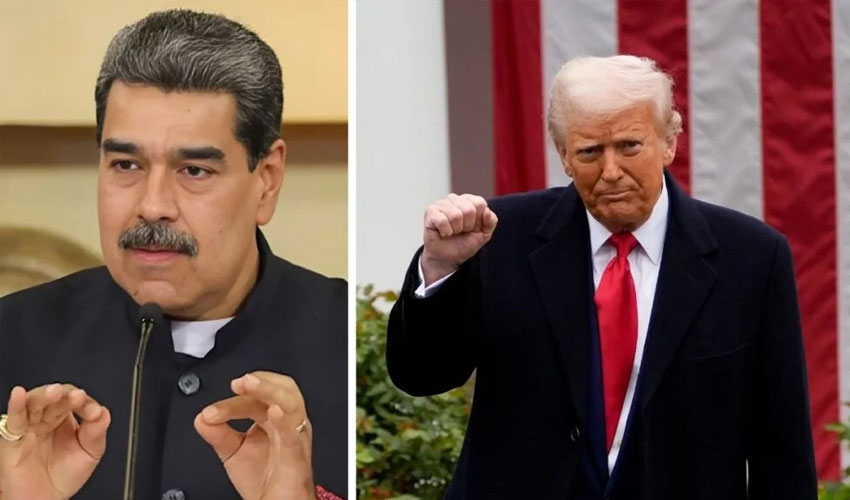
Venezuelan President Nicolás Maduro has accused the United States of “fabricating a war” following Washington’s decision to deploy the USS Gerald R Ford, the world’s largest aircraft carrier, towards the Caribbean.
“The US promised never to get involved in another war, and yet they are fabricating a new eternal war,” Maduro said on state television Friday, calling the move a deliberate act of provocation in Latin America.
The deployment marks a significant escalation in the US military presence in the region, where several airstrikes and naval operations have already stirred controversy.
US Defence Secretary Pete Hegseth ordered the carrier to move from the Mediterranean to the Caribbean on Friday. The USS Gerald R Ford—capable of carrying up to 90 aircraft—is being deployed as part of what the Pentagon describes as an anti-narcotics mission under US Southern Command, which covers Central and South America.
Pentagon spokesperson Sean Parnell said the additional forces would “enhance and augment existing capabilities to disrupt narcotics trafficking and degrade transnational criminal organisations.”
The move comes as the US has intensified its operations against alleged drug traffickers in the Caribbean, conducting ten airstrikes since early September. The most recent strike, on Friday, killed six people described by Hegseth as “male narco-terrorists” linked to Venezuela’s Tren de Aragua criminal network.
Critics question legality of strikes
The US-led strikes have sparked backlash in the region and raised questions in Washington about their legality. Lawmakers from both major parties have challenged President Donald Trump’s authority to order such operations without congressional approval.
On 10 September, 25 Democratic senators wrote to the White House, expressing concern that a vessel had been struck “without evidence that the individuals on the vessel posed a threat to the United States.”
Even Republican Senator Rand Paul warned that “such strikes require congressional approval,” while former US State Department lawyer Brian Finucane described the situation as a “constitutional crisis.”
“The US is experiencing an Article 1 crisis,” Finucane said, referring to Congress’s constitutional control over military force. “That control has been usurped by the White House, and it’s up to Congress to push back.”
Trump defends strikes, cites terror designation
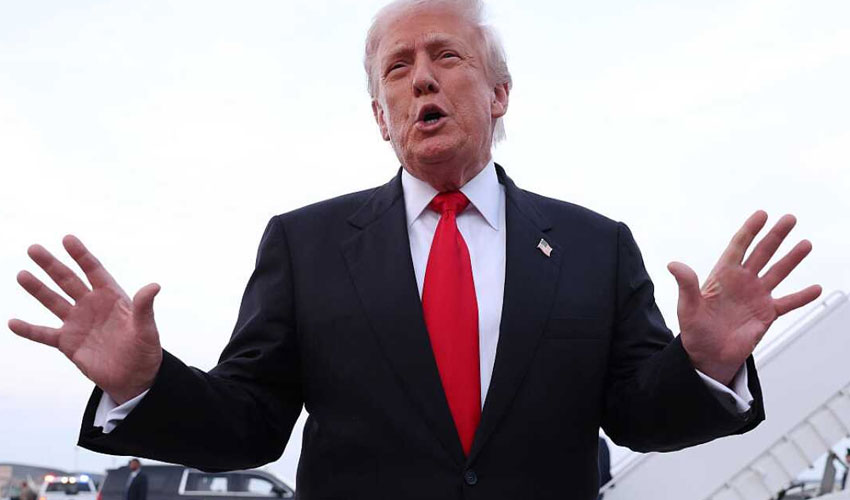
President Trump has defended the operations, saying he has the legal authority to conduct them after designating Tren de Aragua as a terrorist organisation.
“We’re allowed to do that,” he told reporters. “And if we go by land, we may go back to Congress.”
Secretary of State Marco Rubio added: “If people want to stop seeing drug boats blow up, stop sending drugs to the United States.”
Reports from CNN suggest the administration is considering expanding its campaign to include targets inside Venezuela, including cocaine production facilities and trafficking routes.
‘Signalling, not invasion,’ say analysts
Experts believe the deployment of the USS Gerald R Ford serves more as a strategic warning than preparation for direct confrontation.
“This is about regime change,” said Dr Christopher Sabatini, a senior fellow for Latin America at Chatham House. “They’re probably not going to invade — the goal is signalling. The military build-up is meant to strike fear in Maduro’s inner circle so they move against him.”
However, critics argue that such pressure tactics risk destabilising an already fragile region and inflaming tensions with Caracas.
The carrier’s relocation marks one of the largest US military escalations in Latin America in years. It remains unclear which vessels will accompany it, but the Ford-class carrier typically operates within a strike group that includes missile-equipped destroyers.
The warship last reported its position three days ago near Croatia’s Adriatic coast before heading west. Its deployment underscores Washington’s renewed focus on the Western Hemisphere amid growing instability and narcotics activity in the region.



.jpg)