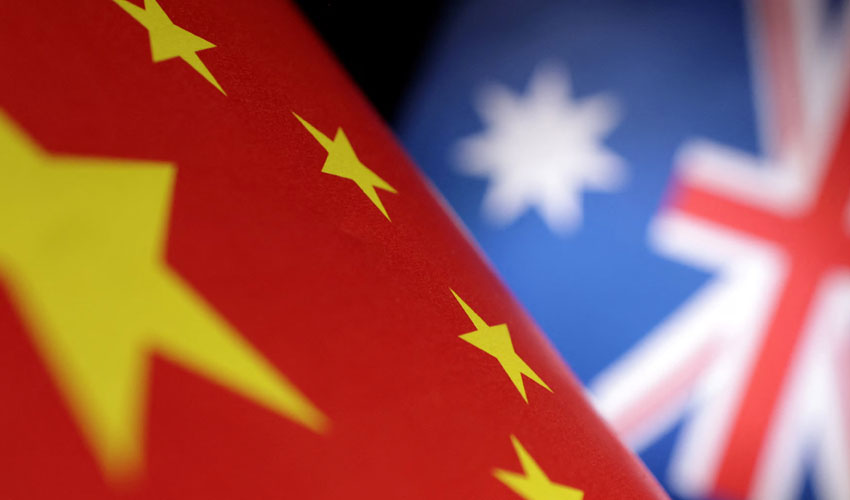
Tensions between China and Australia have flared again after Beijing accused Canberra of “covering up” an illegal airspace intrusion, following claims that a Chinese fighter released flares near an Australian aircraft over the South China Sea.
China’s Ministry of National Defence on Tuesday accused Australia of violating its airspace and “covering up” the incident.
Spokesperson Jiang Bin said Beijing had lodged a “solemn complaint” over what it described as an “egregious illegal intrusion” of an Australian military aircraft into Chinese territory.
Jiang added that Australia’s statement, which labelled China’s conduct as “unsafe and unprofessional,” was an attempt to “shift blame.”
He urged Canberra to “restrain its frontline naval and air forces” to avoid damaging bilateral relations.
Australia says its mission followed international law
Australia’s Defence Ministry responded a day earlier, saying one of its Air Force planes was conducting a routine maritime surveillance patrol in the South China Sea when a Chinese jet released flares dangerously close to it.
The ministry described the encounter as “unsafe and unprofessional,” noting that its aircraft had operated “in accordance with international law.”
While Australia did not specify the exact location of the incident, China claimed it took place over the Xisha Islands—Beijing’s name for the Paracel Islands, a chain of disputed territories in the South China Sea.
Disputed waters and past clashes
This latest confrontation echoes similar incidents earlier this year between Chinese and Australian aircraft.
China claims nearly the entire South China Sea, despite a 2016 international tribunal ruling that dismissed its claim as lacking legal basis.
The area remains one of the world’s most contested maritime zones, with overlapping territorial claims involving the Philippines, Vietnam, Malaysia, and Brunei.
The dispute also forms a key flashpoint in Beijing’s fraught relations with Western nations, including the United States and its allies.
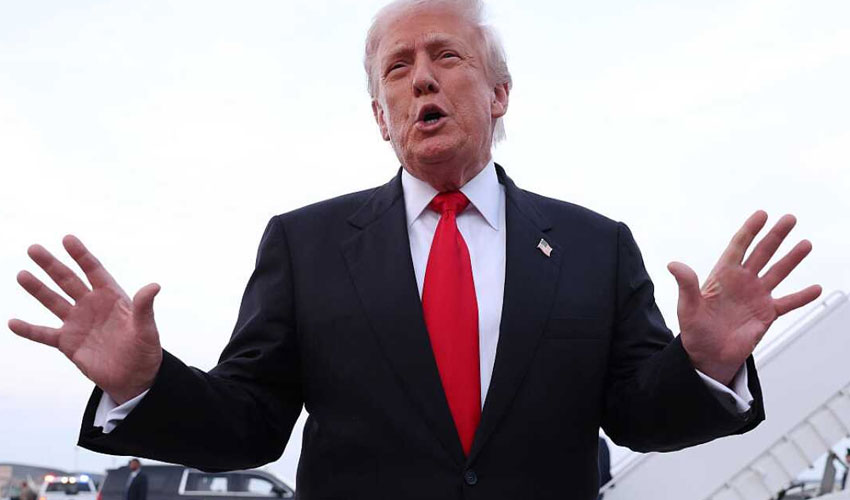
The incident occurred just as Australian Prime Minister Anthony Albanese met U.S. President Donald Trump at the White House, where both leaders signed a deal for Australia to supply rare earth and critical minerals to the U.S.—a move seen as reducing reliance on China.
Trump also confirmed progress on the AUKUS security pact, under which Australia will acquire nuclear-powered submarines from the U.S. and U.K.
In response, Beijing reiterated its opposition to the pact, warning that it risks “bloc confrontation” and could fuel an arms race in the region.



.jpg)