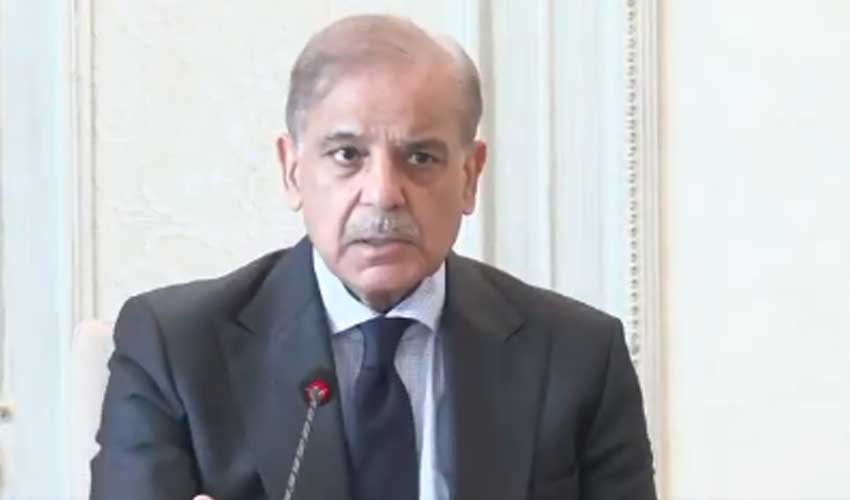
The recently signed strategic mutual defense agreement between Prime Minister Shehbaz Sharif and Saudi Crown Prince Mohammed bin Salman has completely changed the Gulf security dynamics. For the first time, the Muslim world’s only nuclear power and its wealthiest kingdom have joined hands to form a shield for the Gulf and a sword against aggression. This groundbreaking alliance has stirred a strong reaction worldwide and raised many eyebrows, leaving countries either envious or anxious, as it has the potential to reshape regional as well as global stability.
The accord establishes a strong partnership, uniting Pakistan’s formidable military capabilities—ranked 12th out of 145 globally with a Power Index score of 0.2513 per Global Firepower’s 2025 rankings—and Saudi Arabia’s economic dominance, with a nominal GDP of $1.14 trillion and a purchasing power parity of $2.25 trillion.
One aspect of the agreement that got the world talking is that it stipulates that an attack on either nation will be treated as an attack on both. It means the strength of one country will be present for another country in the face of any danger. Interestingly, unlike NATO’s Article 5, this collaboration does not have any ‘if’ clauses or exceptions, which makes it unprecedented, especially among Muslim nations. The agreement is likely to redefine regional security by using the influence of Pakistan’s nuclear arsenal and Saudi Arabia’s financial heft. It would not only counter emerging threats in the region but also reduce reliance on traditional Western guarantees. And that brings us to the timing of this development.
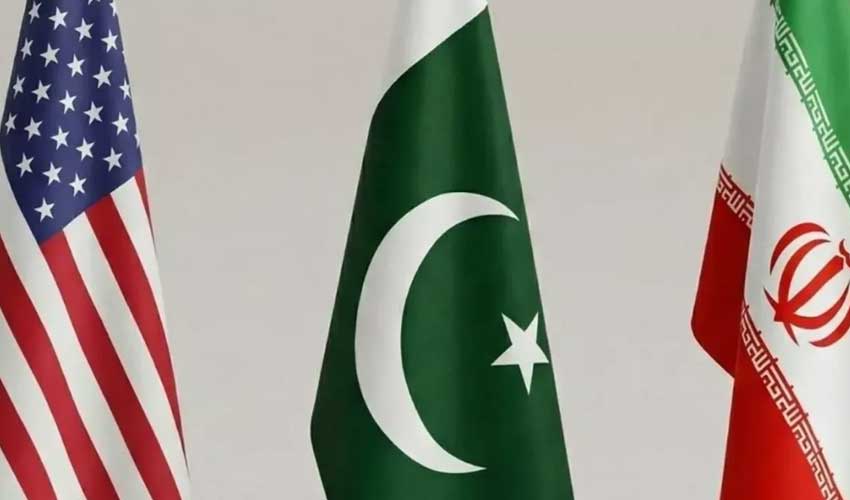
The strategic mutual defense agreement comes just a week after Israel’s attack on Qatar, which is one of America’s biggest non-NATO ally in the Middle East. Israel’s audacious Doha missile strikes not only undermined Qatar’s sovereignty but also raised questions on the US role in the equation. This is unlikely to sit well with the Arab League and Gulf Cooperation Council countries under the US security umbrella, and might prompt them to look for new cover.
Meanwhile, for India and Israel, the arrangement has resulted in bitterness born of envy, mainly because it strengthens a rival axis and sidelines their influence.
The real game-changer in this scenario lies in India’s vulnerabilities. This year’s May skirmishes once again exposed Delhi’s fragile security assumptions. Pakistan has not only the manpower but also the combat-tested capabilities to lead. For years, Indian threats of “surgical strikes” and “limited wars” echoed across the border. In response, Islamabad exercised restraint, which perhaps was taken for weakness. Two incidents reset the balance: first, when Pakistan downed Indian jets in what became the longest dogfight of recent times; second, when Israeli aircraft struck Qatar, despite America’s heavy military footprint there. One demonstrated Pakistan’s air power and military readiness, while the other proved the unreliability of existing security guarantees in the Gulf.
Pakistan will set up a NATO-style army. That force will consist of not just Pakistan Army soldiers but also personnel from other countries. This means there will be proper airbases, deployments, and training. That force will have around 1.5 million to 2 million soldiers, deployed in different zones; some in the air force, some in the army, some in the navy as well
India knows the situation is more worrisome for it, as it currently enjoys $100 billion in Saudi investments and has around 2.7 million Indian expats in the Kingdom. With the economy projected to slow to 6.5% growth in 2025 per IMF estimates, New Delhi cannot afford strained relations.
Now, when Bahrain, the UAE, and Qatar ask Pakistan for similar support, Pakistan will set up a NATO-style army. That force will consist of not just Pakistan Army soldiers but also personnel from other countries. This means there will be proper airbases, deployments, and training. That force will have around 1.5 million to 2 million soldiers, deployed in different zones; some in the air force, some in the army, some in the navy as well. And this will be a long-term, strategic force, always on standby for an operation. Pakistan will oversee this force in the beginning, manage their training and everything.
Long story short, this is how things are shaping up: the vision of a 1.5 million-strong army, drawing personnel from four or five countries, developed on NATO’s pattern. Units will be integrated, commands coordinated, and doctrines aligned. Even the option of US providing equipment for the force is on the table. For the first time, the Gulf could see a structured military alliance, with Pakistan at its center as its backbone.
Regional players have realized that Pakistan is the only country they can look up to. Even Turkiye does not have such a capacity, which is why Arab nations have no choice but to come under the security umbrella of the sole nuclear power of the Muslim world. 
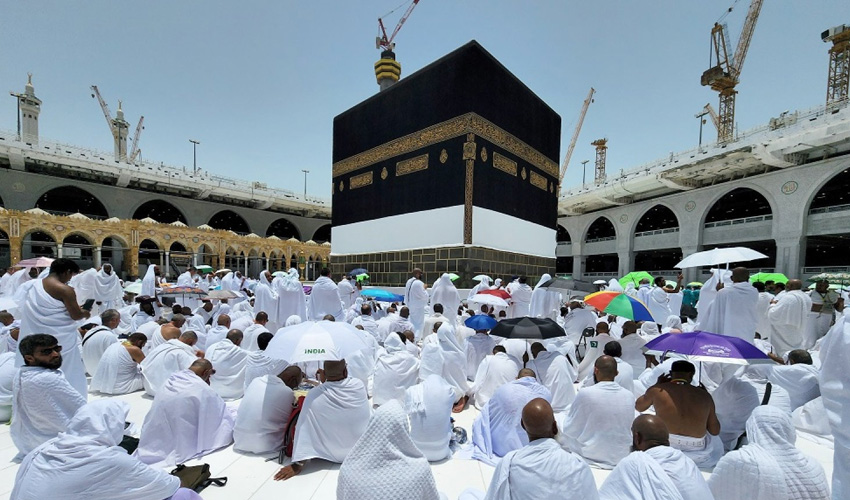
History lays bare that for Pakistan, the defense agreement is the culmination of decades of quiet, disciplined partnership dating back 1950s. Back then, Islamabad dispatched military missions to train Saudi forces. In 1969, Pakistani officers trained Saudi pilots in the, conducted raids on southern Yemen to repel border incursions, while a Pakistani battalion fortified the Saudi-Yemen frontier. In 1979, Pakistani troops helped retake the Grand Mosque in Makkah from ultra-fundamentalist insurgents.
The next few years saw joint exercises and intelligence sharing deepening, with Saudi Arabia procuring arms from the Pakistan Ordnance Factories. Additionally, the Saudi-Pakistan Armed Forces Organization Agreement was signed in 1982, following which 10,000-15,000 Pakistani troops were deployed to Saudi Arabia to provide security to the regime. Then during the 1990-91 Gulf War, more than 11,000 Pakistani troops reached Saudi Arabia to boost its defenses.
However, the definition of military cooperation changed following the September 11, 2001 terrorist attacks, as it shifted to counter-terrorism. In 2015, Pakistan opted for a limited role in Yemen, and training Saudi troops and Haramain Sharif guards. In addition, the 2016 formation of the 41-nation Islamic Military Counter-Terrorism Coalition, led by former COAS General (r) Raheel Sharif since 2017, underscored this alignment.
Economically, Saudi Arabia currently hosts 2.64 million Pakistani workers. The remittances they sent last year hit the $7.4 billion mark, sending $736.7 million in August 2025 alone. This contribution accounted for a 28.8% surge in Pakistan’s total inflows of $34.9 billion for the fiscal year. Saudi Arabia’s fiscal influence, including the $500 billion it has committed to Neom City under Vision 2030, ensures economic stability for both nations. The economic gains it holds for Pakistan will come as a result of Saudi investments and Gulf Cooperation Council support, set to boost the country’s GDP. It is a win-win situation for both countries, as this cooperation will not only counter their respective internal threats but also show regional strength.
Saudi Arabia has historically remained neutral in Arab-Israeli conflicts due to its focus on internal stability ever since 1948. Still, Houthi attacks on Saudi oil facilities in 2019, which disrupted 5.7 million barrels of daily production, proved that US support alone would not address its vulnerabilities. Under such circumstances, Pakistan’s military presence in the country offers it a reliable protection.
Meanwhile, former US special representative for Afghanistan Zalmay Khalilzad’s speculation about “secret annexures” reflects unease over Pakistan’s nuclear reach, capable of targeting Israel. Such rumors, or rather accusations, prompted a response from Defense Minister Khawaja Asif, who has brushed aside such assumptions. After all, the defense agreement is clear enough to a point that it leaves no room for interpretations. That being said, Asif has clarified that Pakistan’s nuclear program will be made available to Saudi Arabia if required, but hoped that the world would continue to remain “safe”. He has also conveyed that the door is not shut on other regional countries, hinting at inclusion of Middle Eastern nations in the defense agreement in the future.
One thing is clear that this agreement has placed Pakistan in a unique diplomatic position. The country has maintained good working relations not just with China and the West but with Iran and Turkey as well, and has the standing required for talking to every major regional player. There is no doubt that Islamabad has brilliantly balanced its military strength, nuclear deterrence, and diplomatic reach, securing its position as an indispensable actor in Gulf security. And in this situation, Saudi Arabia is the natural partner.
The world knows that Pakistan’s military steel and Saudi Arabia’s oil wealth now stand fused into a single security axis. This defense pact is reassurance for the two countries’ allies, and deterrence for their adversaries. However, it brings the promise of stability for the region and writes history for the Muslim world.
.jpg)