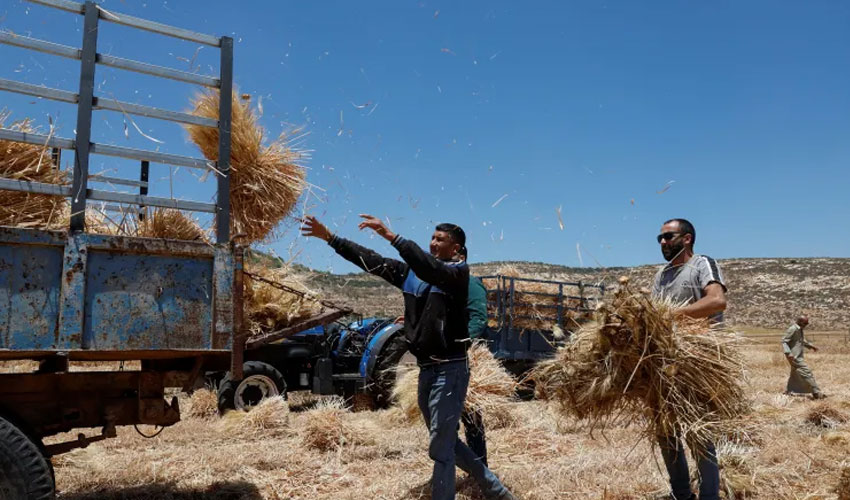
The Israeli military has uprooted about 3,000 olive trees in the Palestinian village of al-Mughayyir, northeast of Ramallah, sparking anger among residents who say the act is part of a wider campaign to displace communities from their ancestral lands.
According to Marzouq Abu Naim, deputy head of the village council, the Israeli army issued orders to clear a 0.27 sq km (0.1 sq mile) plot of farmland, claiming the trees posed a “security threat” to a nearby Israeli settlement road.
He told Palestinian news agency Wafa that soldiers stormed more than 30 homes early Saturday, damaging property and vehicles in the process.
RELATED: Israeli military leaked database reveals civilian death rate of 83%
The destruction has left families devastated in al-Mughayyir, a village of about 4,000 people where olive farming and livestock are the primary sources of livelihood. “This area is one of the most fertile parts of Ramallah,” said Palestinian researcher Hamza Zubeidat. “By uprooting trees, confiscating water springs, and blocking farmers’ access, Israel is creating more food and water insecurity.”
Part of long-running policy of displacement
The removal of olive trees in the occupied West Bank is not new. For decades, Israel has targeted agricultural land, which many Palestinians consider both an economic lifeline and a cultural symbol. Rights groups say such measures are part of a systematic effort to seize land and push Palestinians out.
Zubeidat noted that since 1967, Israel has continued a “continuous process” of eviction from both rural areas and cities. “This is not new; it’s the same plan being implemented for decades,” he said.
Rise in violence across West Bank
The incident comes as violence escalates in the West Bank amid Israel’s ongoing war on Gaza. According to the United Nations Office for the Coordination of Humanitarian Affairs (OCHA), there have been more than 2,370 settler attacks on Palestinians between January and July 2024. The Ramallah region alone recorded 585 incidents, followed closely by 479 in Nablus.
OCHA further reported that at least 671 Palestinians – including 129 children – have been killed by Israeli forces and settlers in the West Bank during the same period. Tens of thousands have been displaced, adding to the growing humanitarian crisis.
For Palestinians, olive trees represent more than economic security. They symbolize heritage, identity, and connection to the land. The loss of thousands of trees in al-Mughayyir has left many residents fearful of further land seizures and forced displacement.







.jpg)