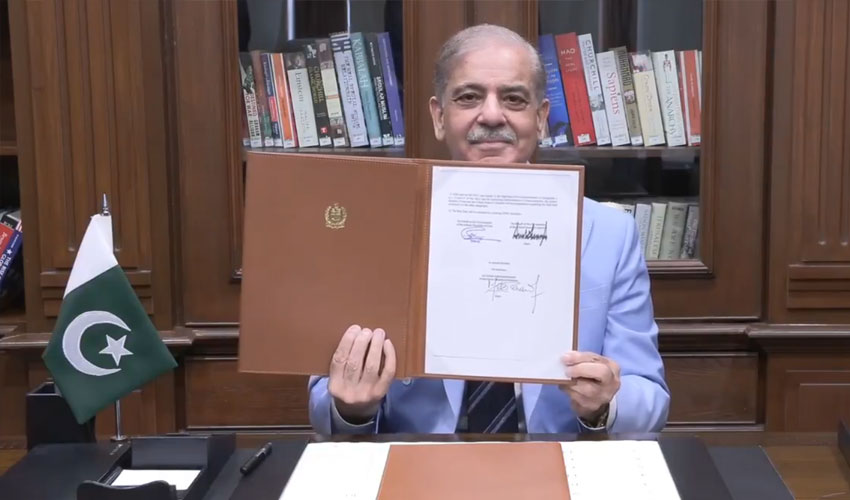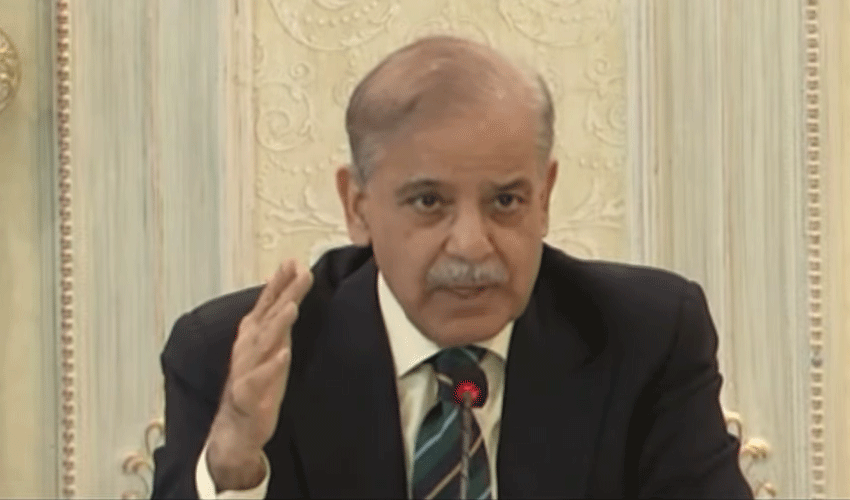
The federal cabinet on Wednesday unanimously approved the National Artificial Intelligence Policy 2025 and Hajj Policy 2026, during a high-level meeting chaired by Prime Minister Shehbaz Sharif.
The session, held in Islamabad, also ratified decisions taken during earlier meetings of the Cabinet Committee on Privatization (July 8), the Cabinet Committee on Legislative Affairs (July 17), and the Legislative Committee (July 25).
Prime Minister Shehbaz Sharif emphasized the need for leveraging modern technology to improve service delivery and governance, adding that AI would play a vital role in reshaping Pakistan's future.
Hajj Policy 2026: Digitization and facilitation
The cabinet also greenlighted the Hajj Policy 2026, which outlines comprehensive measures to improve the pilgrimage experience for Pakistani Hajjis.
A complete digitization of the Hajj operation has been planned for the upcoming year, a move welcomed by Prime Minister Shehbaz Sharif. “All necessary facilities will be ensured for the pilgrims, and the Ministry of Religious Affairs must implement the Hajj Policy effectively,” he said.
According to official sources, the government quota for Hajj 2026 has been set at 70%, while the private sector will be allowed a 30% share. The Ministry of Religious Affairs had initially recommended a 40:60 split, but the change reportedly came at the PM's insistence to accommodate more applicants through the government scheme.
"Many people were deprived of Hajj, so increasing the government quota is inevitable," PM Shehbaz was quoted as saying during the meeting. The cost of Hajj under the government scheme is expected to range between Rs1.1 to Rs1.2 million.
Arbaeen pilgrimage
The issue of a ban on pilgrims travelling by road for the Arbaeen pilgrimage was also raised in the meeting by Federal Minister Riyaz Hussain Pirzada. The minister had held a meeting on the issue with the Shia Ulema Council on behalf of the government where the council briefed about the problems faced by pilgrims.
The Shia clerics had asked the minister for quick resolution as thousands of visas have already been issued and transport and hotel arrangements are in place. The federal government and Shia scholars also considered alternative routes and other proposals in the talks.
Pakistan's strong stand on Gaza
Prime Minister Shehbaz Sharif also reiterated Pakistan’s strong support for the Palestinian cause, condemning Israeli atrocities in Gaza and pledging to raise the issue at the upcoming session of the United Nations in September.
“We will join the voices calling for a ceasefire in Gaza,” he stated, noting that humanitarian aid is being dispatched via Egypt and Jordan. “The plight of Gaza's children is heartbreaking, and the brutality witnessed there is unprecedented,” he added.
Shehbaz also acknowledged the role of Deputy Prime Minister Ishaq Dar, who raised Pakistan's stance at the recent Two-State Conference of the United Nations, hosted by Saudi Arabia and France.
Other key decisions and approvals
The cabinet meeting considered a seven-point agenda, which also included:
-
Approval to sign a Free Trade Agreement (FTA) with Gulf countries
-
Appointment of an anti-narcotics inspector at the Drug Regulatory Authority
-
Discussions on the energy sector, where the PM claimed several hundred billion rupees were saved through negotiations with independent power producers (IPPs)
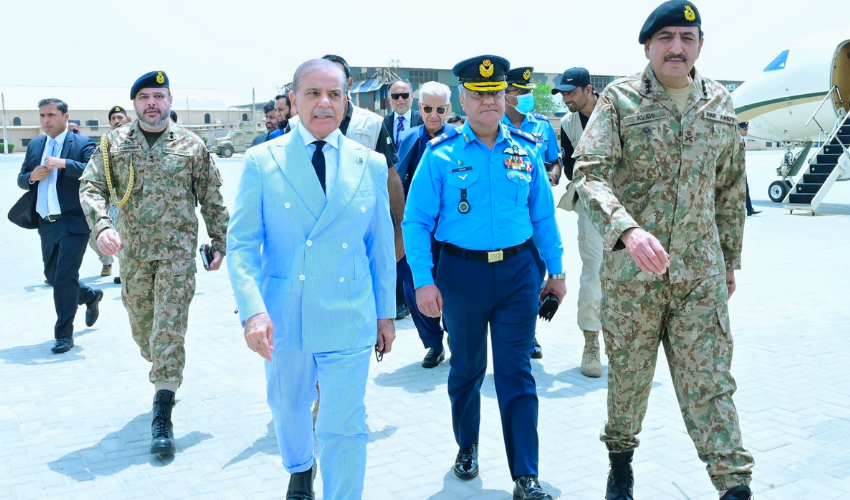
Shehbaz Sharif appreciated the efforts of Field Marshal Asim Munir and the Pakistan Air Force in leading from the security front. He also acknowledged that the army chief's team made great efforts in holding talks with the IPPs.



.jpg)