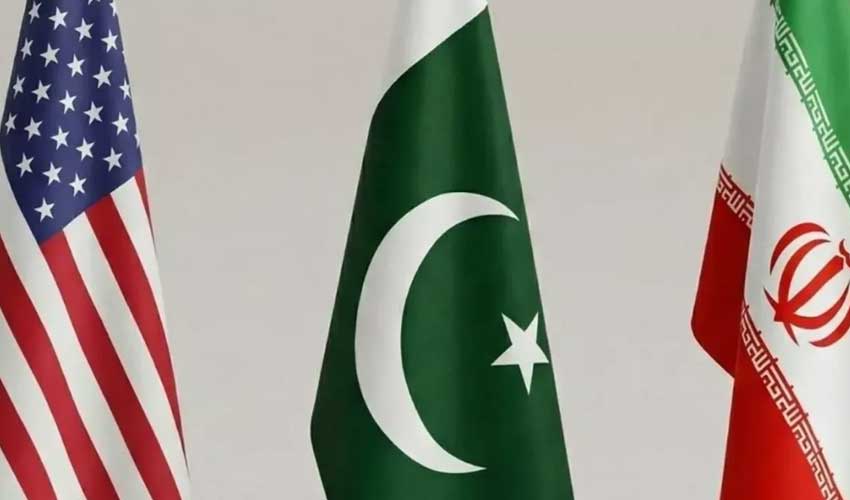
At a time when the world is demanding loyalty oaths under the garb of strategic alignment, Pakistan has walked into both Washington and Beijing like a man invited to two rival factions’ gatherings, and managed to get a seat at the head table at both. Call it clever diplomacy or a balancing act, but Pakistan has reminded global capitals once again that it is neither irrelevant nor finished, regardless of what financial analysts or Indian podcasters may suggest.
So many men, so many minds, but the fact remains that Pakistan has brilliantly executed a diplomatic double act and succeeded in securing back-to-back high-level engagements with both the United States and China. While the latter reaffirmed brotherhood and strategic trust, the former extended a long-missing courtesy.
In China, Chief of Army Staff Field Marshal General Asim Munir sat across the table from Foreign Minister Wang Yi, the man who also handles Beijing’s most sensitive portfolios, and separately had a detailed discussion with Vice President Han Zheng. The two sides reaffirmed the "ironclad" Pakistan-China strategic partnership, with the hosts saying their country prioritized Pakistan in its neighbourhood diplomacy. They praised Pakistan’s role in maintaining regional peace, and vowed to extend full support to Islamabad on core issues. Both sides also agreed on deeper defence cooperation, military integration, and strategic interoperability.
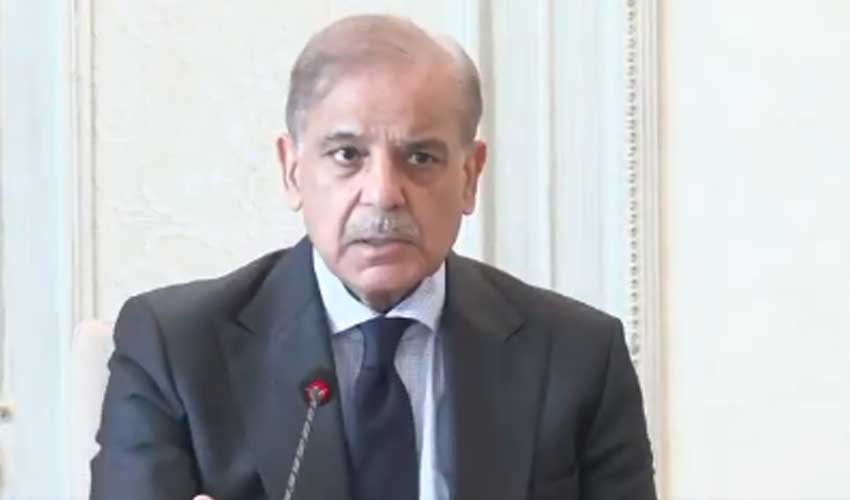
But what turned more heads was a meeting between Deputy Prime Minister/Foreign Minister Ishaq Dar and US Secretary of State Marco Rubio that was held almost simultaneously in Washington. The meeting was labelled “constructive”, during which they discussed tariffs, critical minerals, and regional stability. More importantly, US officials acknowledged Pakistan’s effort in dismantling terrorist networks, and urged Islamabad to remain on board with Afghanistan containment. They also thanked Pakistan for not letting things explode in the Middle East after the Iran-Israel flare up.
The meetings do give a feeling of déjà vu and remind us of how Pakistan in 1971 pulled off one of the boldest diplomatic maneuvers. Back then, it secretly facilitated then-US national security adviser Henry Kissinger’s covert trip to Beijing, acting as a bridge between two global rivals. That very trip laid the ground for a thaw in relations between the US and China. However, what pseudo-political analysts fail to see is that the situation now has completely changed. There should be no doubt about Pakistan’s capacity and capability to protect its territorial boundaries, as it demonstrated on May 10. Moreover, Pakistan has learnt the skill of diplomatic calibration, meaning it no longer relies on just one or two capitals to listen to its narrative.
This time, as Pakistan returned as a key focus in regional strategic discussions, India, by contrast, was not even in the room, primarily because its government busied itself in digital declarations, as well as hasty allegations and counter-statements. Resultantly, New Delhi has lost its standing, be it in Washington, where it tried hard to steer the narrative toward Kashmir-related designations, or in Beijing, where it has not had meaningful face-time since the June 2017 Doklam standoff. India has spent years building its image of regional dominance and a central pillar of South Asian stability. However, that image now stands shattered.
Meanwhile, for China, Pakistan is a priority when it comes to regional diplomacy. Strangely, this statement passed without an official Indian reaction. Of course, there were some predictable posts on the social media, along with red-faced commentary about “ironclad friendships” and “China’s interference”. However, for the most part, New Delhi remained silent.
In contrast, Pakistan maintains functional, long-term military relations with both the US and China, and continues to host key transit and energy infrastructure linked to China’s Belt and Road Initiative. The US might not say it, but it also cannot afford to ignore Pakistan, considering the evolving situation in not just Afghanistan but also in Iran. This is the very reason the pro-India head of the US State Department, Marco Rubio, sat down with Ishaq Dar without any hesitation.
New Delhi may continue to mock Pakistan’s engagement with both China and the US, calling it a desperate move. However, the facts are harder to laugh off. Pakistan has a clear posture of talking to both giants, but bowing to neither. It will continue to manage Afghanistan’s chaos, block regional spillovers, and cooperate on trade, but would not sign up for anyone’s Cold War sequel. The country knows it does not need to win every argument. Rather, it just needs to remain in the conversation. This past week, it was not just in the conversation but the reason the conversation actually happened. That alone is hard to digest for some.
.jpg)