A complete shutdown was observed across Indian Illegaly Ocuupied Kashmir (IIOJK) on Tuesday marking the ninth death anniversary of Burhan Muzaffar Wani, the slain commander of Hizbul Mujahideen whose killing in 2016 sparked a mass uprising and renewed calls for Kashmiri self-determination.
Shops, markets, and business centres remained closed across the Valley while public transport was largely off the roads. Authorities deployed a heavy contingent of security forces in sensitive areas including Pulwama, Anantnag, and Srinagar, with restrictions reported in parts of south Kashmir to prevent any untoward incidents.
Burhan Wani, once a promising student from Dadasar village in Pulwama district, emerged as the face of a new wave of resistance in Kashmir through his use of social media. He was killed in a gunfight with Indian forces in the Kokernag area of Anantnag on July 8, 2016.
His death led to weeks of unrest, resulting in the killing of over 100 civilians and injuries to thousands. A curfew lasting more than 50 days was imposed during that period, and mobile internet services remained suspended for months.
Born on September 19, 1994, into a middle-class and educated family, Wani excelled academically, reportedly securing over 90% marks throughout his schooling. He aspired to become a doctor, but an incident in 2010—when he and his cousin were allegedly beaten by Indian soldiers over a trivial matter—led him to join the Hizbul Mujahideen at the age of 16.
Wani’s ability to communicate through videos and online messages earned him widespread popularity among Kashmiri youth, with many hailing him as a symbol of defiance. In 2015, the Indian government announced a reward of ₹1 million for information leading to his capture, while his elder brother Khalid Wani was killed by security forces the same year.
The aftermath of Burhan Wani’s death saw one of the largest funeral gatherings in the region, with an estimated 200,000 people in attendance despite curfews and restrictions. The intense public reaction highlighted the deep-rooted anger and alienation felt by many in the Valley.
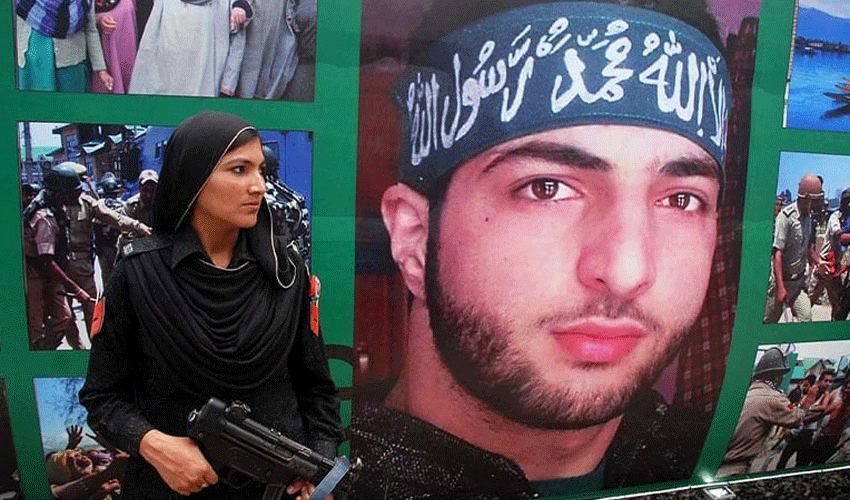
Though Wani's critics accused him of promoting militancy, his supporters continue to remember him as a martyr and a symbol of the unresolved Kashmir dispute. Over the years, murals and graffiti depicting Wani have appeared sporadically across the region, despite bans on his glorification.
While Indian authorities maintain a strict stance on separatist movements, civil society groups and human rights organisations continue to express concern over the curbs on dissent and freedom of expression in the region.


.jpg)