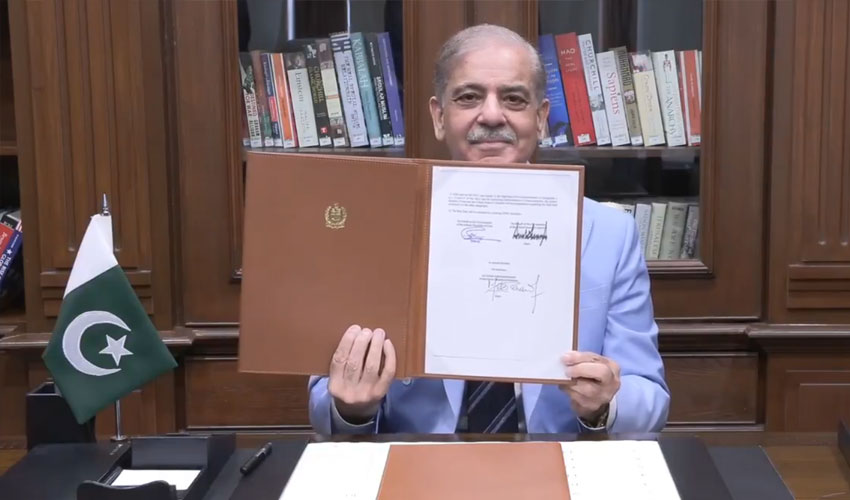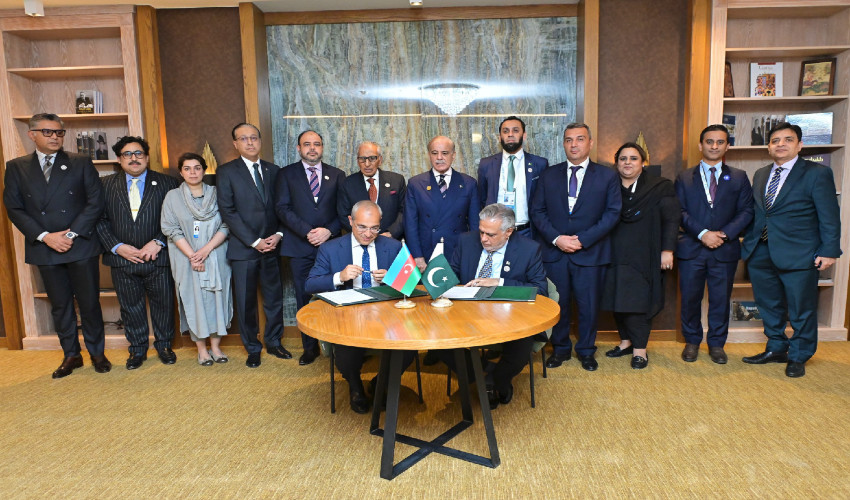
Prime Minister Shehbaz Sharif confirmed on Friday that Pakistan and Azerbaijan have signed investment agreements worth $2billion.
According to details, the premier witnessed the signing ceremony during his official visit to Shusha, Azerbaijan, on July 4. The prime minister congratulated President Ilham Aliyev on the successful convening of the summit and described their meeting as "excellent and result-oriented." He expressed gratitude for Azerbaijan’s significant investment commitment in Pakistan.
Moreover, the premier said the agreements mark a major breakthrough in bilateral economic cooperation and signify a new era of strategic partnership between the two brotherly nations. The member states also agreed to focus attention on critical issues such as glacial melting and environmental challenges.
It was further announced that Pakistan and Azerbaijan would expand their investment cooperation in the future. Member states of the Economic Cooperation Organisation (ECO) agreed to enhance collaboration in the areas of culture, trade, and investment.
In the presence of Prime Minister Shehbaz Sharif, Deputy Prime Minister and Foreign Minister Ishaq Dar and Azerbaijani Minister of Economy Mikayil Jabbarov signed the agreements on Azerbaijan’s behalf. The agreements involve a total investment of $2 billion in Pakistan’s economic sector. A Pakistani delegation accompanied the prime minister during the ceremony.
The signing followed a cordial and productive meeting between Prime Minister Sharif and President Ilham Aliyev in Khankendi. A comprehensive and final agreement is expected to be signed during the Azerbaijani President’s upcoming visit to Pakistan.
These agreements have elevated bilateral trade and investment ties to a historic level and are expected to further strengthen the fraternal relationship and strategic economic partnership between the two countries.
Prior to the prime minister’s visit, the framework and dimensions of the agreements were finalised through coordination between the deputy prime minister, Pakistan’s diplomatic mission and other high-level delegations. Both countries also agreed to enhance cooperation across various sectors under the Pakistan-Azerbaijan bilateral framework.
Also Read: Iran lauds Pakistan’s diplomatic backing; both vow to further strengthen ties
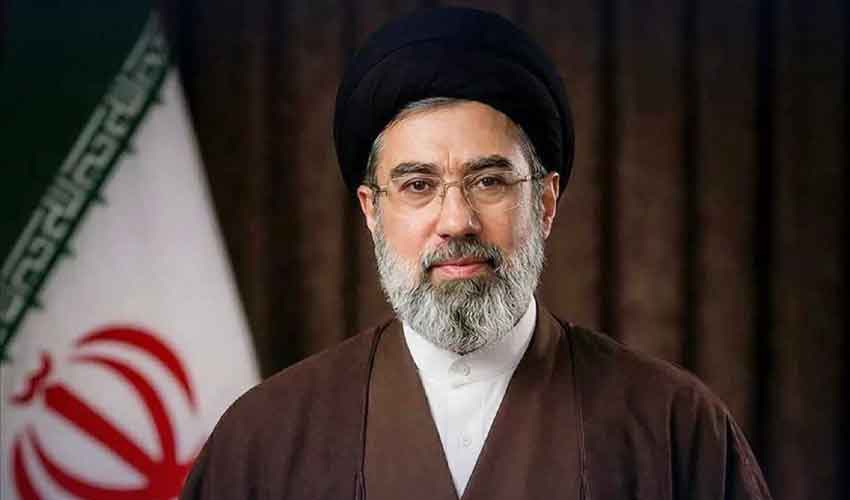
Earlier. PM Shehbaz met with Iranian President Dr Masoud Pezeshkian on the sidelines of the 17th Economic Cooperation Organization (ECO) Summit, where both leaders reaffirmed their commitment to advancing regional peace through dialogue and diplomacy.
During the meeting, Prime Minister Shehbaz and President Pezeshkian conducted a comprehensive review of the ongoing bilateral cooperation across various sectors and expressed satisfaction with the progress made on decisions taken during their previous interaction. The leaders pledged to further strengthen Pakistan-Iran relations through mutual coordination and constructive engagement.
A key focus of the discussion was the evolving regional situation, particularly in the wake of Israel's recent aggression against Iran. Prime Minister Shehbaz strongly condemned the Israeli actions and reaffirmed Pakistan’s unwavering solidarity with Iran, reiterating support for peaceful resolution of conflicts in the region.
“Iran’s decision to observe restraint and move toward a ceasefire was a wise and commendable step,” Shehbaz remarked, while praising President Pezeshkian’s leadership during the crisis.
Also Read: Shehbaz, Erdogan resolve to further bolster bilateral ties
Prime Minister Shehbaz Sharif and Turkish President Recep Tayyip Erdoğan resolved on Friday to further bilateral ties between the two countries.
According to details, the premier held a meeting with Turkish President Recep Tayyip Erdoğan on the sidelines of the 17th Economic Cooperation Organization (ECO) Summit in Khankendi.
The two leaders conducted a comprehensive review of bilateral relations between Pakistan and Türkiye and exchanged views on key regional developments. Both sides underscored the importance of strengthening collaboration in trade, defence, energy, regional connectivity, and investment.


.jpg)