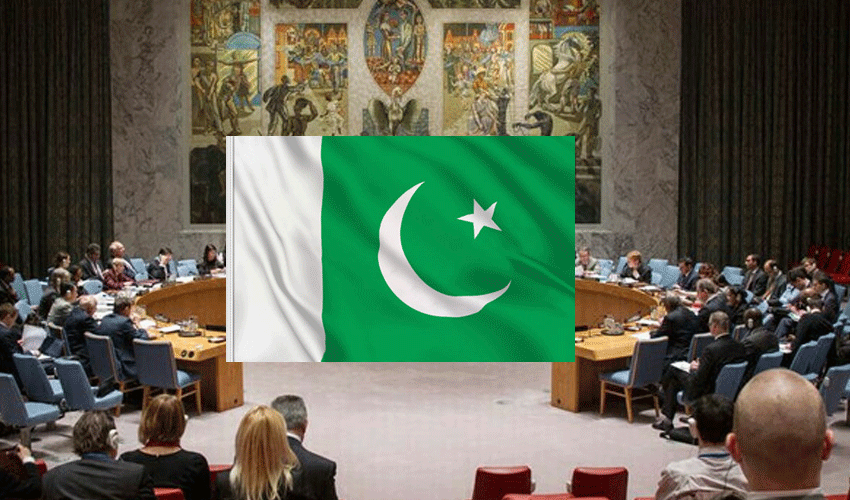
Pakistan on Tuesday assumed the presidency of the United Nations Security Council (UNSC) for the month of July.
This marks Pakistan’s eighth term on the 15-member Council and its first presidency since 2013. Islamabad began its current two-year term as a non-permanent member in January 2025, which will continue through the end of 2026.
Although the UNSC presidency rotates monthly and holds no executive power, it allows the presiding country to influence the Council’s agenda and discussions, particularly during times of global deadlock on key issues such as Gaza and Ukraine.
Dar says Pakistan assumes presidency with firm commitment
In a post shared on social media, Deputy Prime Minister and Foreign Minister Ishaq Dar said Pakistan assumes the presidency with “humility and a firm commitment” to the principles enshrined in the UN Charter. “In our time, conflicts and humanitarian crises are intensifying around the globe,” he noted.
During Pakistan’s presidency, Mr Dar is scheduled to chair two high-level sessions, including the quarterly open debate on the situation in Palestine — a session expected to draw significant international attention amid the ongoing humanitarian crisis in Gaza.
Envoy says ' we're determined to strengthen multilateral system'
In a statement, Pakistan’s Permanent Representative to the UN, Ambassador Asim Iftikhar Ahmed, said the world is navigating a phase of “severe uncertainty, escalating conflicts, complex geopolitical and strategic situations, and serious threats to global peace and security.”
“The presidency offers us an opportunity to bring a principled and balanced approach to the Council’s deliberations,” he said, adding that Pakistan will prioritise transparency, inclusiveness, and effectiveness in its stewardship of the body.
Ambassador Ahmed reaffirmed Pakistan’s longstanding commitment to the peaceful resolution of disputes, dialogue, and diplomacy.
“We are determined to strengthen the multilateral system and foster cooperation among member states,” he said.
“Our aim is to facilitate collective and timely actions that are in accordance with the UN Charter and the aspirations of the international community.”




.jpg)