Pakistan has welcomed the supplementary award issued by the International Court of Arbitration regarding the ongoing dispute over the Kishanganga and Ratle hydropower projects, terming it a validation of its long-held stance on the Indus Waters Treaty.
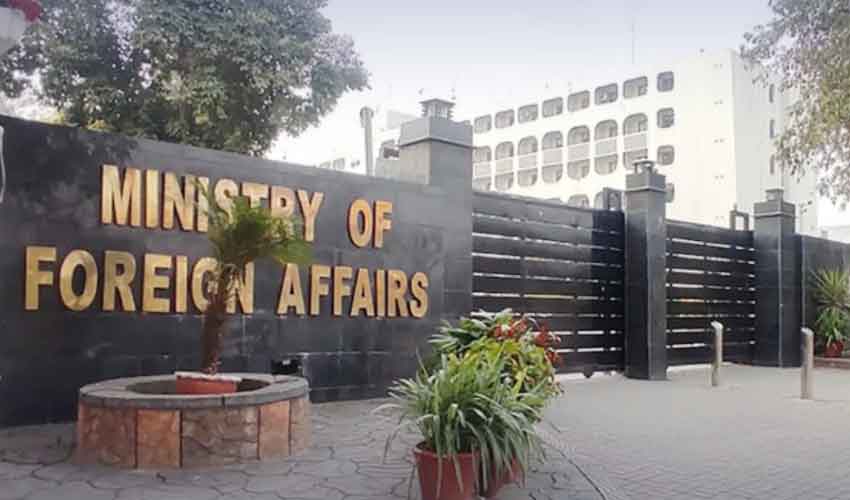
According to a statement issued by the Foreign Office on Monday, the international court reaffirmed its jurisdiction on the matter through a supplementary award released on June 27. The court declared that it retains full authority to continue proceedings in a timely, effective, and fair manner — despite India’s earlier decision to suspend its participation and place the treaty in abeyance.
“This decision confirms Pakistan’s position that the Indus Waters Treaty is fully functional and effective,” the Foreign Office spokesperson stated. “India has no right to take unilateral actions under this treaty.”
Also Read: International court rules in favour of Pakistan on Indus Waters Treaty
The court’s supplementary ruling came in response to India's move to unilaterally halt arbitration under the treaty, which governs the sharing of rivers and water resources between the two nuclear-armed neighbours.
The spokesperson emphasized that the supplementary award not only upholds the legitimacy of the court’s jurisdiction but also reaffirms Pakistan’s commitment to peaceful resolution of disputes through legal and diplomatic channels.
Calling on India to respect international norms and its treaty obligations, Pakistan urged New Delhi to “immediately resume normal implementation of the Indus Waters Treaty” and “fully and honestly fulfill its commitments under the agreement.”
The Kishanganga and Ratle hydroelectric projects, both located in Indian-held Kashmir, have long been a point of contention between the two countries. Pakistan has argued that these projects violate the provisions of the 1960 Indus Waters Treaty, brokered by the World Bank, which regulates the use of shared river waters.







.jpg)