Video games are often blamed for deteriorating vision, but new research from Japan suggests that certain types of games could actually improve it.
A small study conducted by researchers at Kwansei Gakuin University’s Graduate School of Science and Engineering has shown that a specially designed virtual reality (VR) game may help reverse short-sightedness, or more precisely, pseudo-myopia.
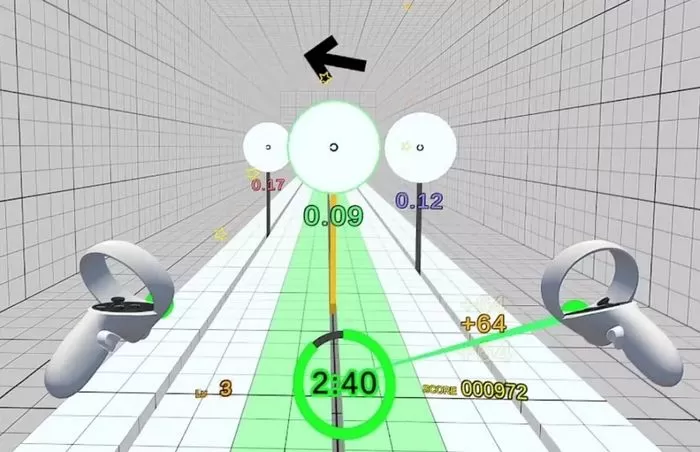
The study involved ten participants who played a simple VR shooting game over six weeks. The gameplay required users to shoot circular targets that moved progressively farther away after each successful hit, forcing players to shift their focus between near and far distances. These mechanics simulate visual exercises used by ophthalmologists to relieve eye strain and reverse pseudo-myopia.
Pseudo-myopia mimics the symptoms of myopia (or short-sightedness) but is generally reversible. It's often caused by prolonged screen time and can be improved through techniques like distance focusing and stereoscopic vision exercises. By incorporating these techniques into a game, researchers provided an engaging and consistent form of eye training.
The most notable results came from participants who had moderate to severe short-sightedness at the start of the trial. Researchers noted significant visual improvement in this group, likely because their symptoms were due to pseudo-myopia rather than true myopia, which typically requires glasses, lenses, or surgery to correct.
Interestingly, even players who used the game only every three days saw measurable improvement, suggesting the game’s effectiveness doesn’t require daily use. The research team plans to conduct larger studies to validate these findings and potentially commercialize the therapeutic VR game.
If further research confirms the results, this technology could offer a non-invasive, accessible solution to millions of screen users, particularly younger individuals at risk of developing myopia.