US President Donald Trump has claimed that the United States Navy has cleared Iranian mines from the Strait of Hormuz and now has complete control over the strategically vital waterway, even as Washington and Tehran remain locked in difficult negotiations.
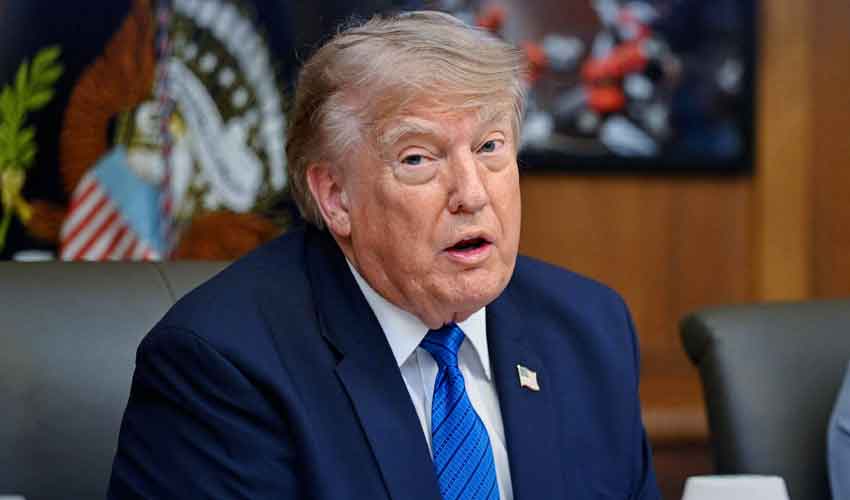
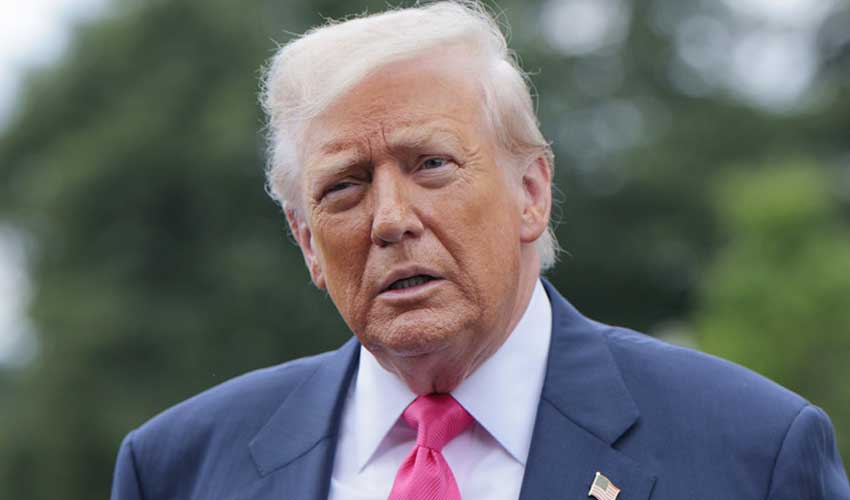
Speaking to reporters in the Oval Office on Monday, Trump said the US Navy had “mine-swept the entire strait” and that several ships were now passing through the passage.
Trump said the United States Navy is currently the only force controlling the Strait of Hormuz, describing US control of the waterway as effectively complete.
“It’s open now,” Trump said, while acknowledging that Iran could still attempt to lay mines. He said US forces detect and remove such mines when they are found.
Trump also described the US military posture as a “steel wall”, saying sporadic Iranian mine-laying had not changed Washington’s control over the waterway.
The United States has maintained a naval blockade of Iranian ports since mid-April, according to the report.
Shipping traffic remains below normal levels
Despite Trump’s claim that the strait is open, shipping activity remains significantly below levels seen before the conflict.
Shipping data showed that six vessels transited the Strait of Hormuz on Monday, compared with a 10-day average of around 11 vessels.
Kpler data showed that four commodity vessels, including two empty oil-product tankers, entered the waterway on Tuesday. Two other vessels — a small tanker carrying liquefied petroleum gas and another carrying residual fuels — exited the strait.
By comparison, 25 vessels passed through the Bab el-Mandeb Strait in the Red Sea on Monday, broadly in line with its 10-day average of nearly 24 ships.
Hormuz remains key global energy chokepoint
The Strait of Hormuz is one of the world's most important energy routes, with roughly one-fifth of global oil supplies passing through the waterway before the war.
The strait is also a major route for liquefied natural gas and fertilizer shipments, making its disruption a major concern for global energy markets.
Before the US-Israel war with Iran began in late February, commercial shipping through the strait was largely uninterrupted. The conflict subsequently brought traffic close to a standstill as attacks on vessels and threats against commercial shipping pushed global oil and gas prices sharply higher.
Iran sets conditions for reopening strait
Iranian officials have maintained that the Strait of Hormuz will not be fully reopened unless Washington meets a series of demands.
Mohammad Bagher Zolghadr, secretary of Iran’s Supreme National Security Council, said Tehran wants the US naval blockade and sanctions lifted, American forces withdrawn from the region, war reparations paid and frozen Iranian assets released.
Iran has also demanded an end to US attacks on its regional allies. Tehran has separately indicated that commercial vessels could be charged fees for using the waterway.
Iranian discussions with Oman over a possible shipping arrangement are not expected, according to Iranian officials, to result in a full reopening unless Tehran’s conditions are met.
Trump introduces new compensation demand
Trump has also reacted angrily to Iran’s demand for compensation for war-related damage.
In a Truth Social post early Tuesday, he said Tehran’s demand had given him an “interesting idea” and argued that Iran should instead compensate the United States for Americans killed or wounded in roadside bombings and other attacks that Washington links to Iran.
Trump also demanded compensation for the families of Iranian protesters whom he said had been killed by the Iranian regime over the past 50 years.
He said the compensation issue had never been discussed during previous negotiations and instructed US representatives to raise the demands in upcoming talks.
Trump specifically referred to compensation for those killed in the USS Cole attack as part of the demands being put forward by Washington.
Trump says negotiations with Iran ongoing
In an exclusive interview with Real America's Voice, hosted by Wayne Allyn Root on the “America Speaks” programme, Trump said he was currently in the negotiation phase with Iran.
Trump described Iranian negotiators as “very clever and smart”, while also accusing them of sometimes agreeing to something and later denying that they had made such a decision.
The US president has repeatedly characterized Iranian negotiators as smart, skilled, crafty and tough. On earlier occasions, he has said Iranian officials are better negotiators than fighters while criticizing Iran’s military performance.
Trump has also said the talks cover issues including the Strait of Hormuz, Iran’s nuclear capabilities and broader de-escalation, while maintaining that Washington’s maximum-pressure policy remains in place.
He has said he wants a deal and is giving Tehran what he described as an opportunity for an agreement, but has simultaneously warned that the US is prepared to take forceful action if negotiations fail.
US says Iran has laid mines in strait
US Vice President JD Vance said over the weekend that Iran had laid a large number of mines in the Strait of Hormuz at the beginning of the war.
According to Vance, Washington is working on a mechanism to ensure safe commercial shipping through the waterway, including mine clearance and commitments from Iran not to attack commercial vessels.
Trump had previously described the strait as “sort of open”, while warning that even a single mine could disrupt shipping because operators would be reluctant to risk billion-dollar vessels.
Iran rejects US sanctions policy
Iranian Foreign Ministry spokesperson Esmail Baqaei sharply criticized Washington’s economic pressure campaign on Tuesday.
Responding to US Treasury Secretary Scott Bessent’s claims that sanctions were “suffocating” Iran, Baqaei said Washington turns to sanctions whenever diplomacy fails and increases sanctions when they fail to produce the desired results.
The US Secretary of the Treasury has boasted of “suffocating” Iran through economic sanctions.
— Esmaeil Baqaei (@IRIMFA_SPOX) August 10, 2026
Beyond its sheer pathos, the claim is a stark testament to America’s compulsive addiction to sanctions. Whenever Washington proves itself incapable of pursuing diplomacy, it retreats…
He described the approach as no longer simply a US policy but a “habit” and an “addiction”, arguing that America’s reliance on sanctions had undermined its ability to think and pursue diplomacy effectively.
Baqaei said Iran had demonstrated over decades that it would not be “strangled” by sanctions and warned that continued pressure could instead reduce Washington’s chances of finding a less damaging way out of the crisis.
Strait remains central to US-Iran negotiations
With shipping gradually resuming but still below normal levels, the Strait of Hormuz remains one of the most contentious issues between Washington and Tehran.
Trump says the US has cleared the waterway and controls it, while Iran continues to link a full reopening to the lifting of the naval blockade and sanctions, withdrawal of US forces, compensation and other concessions.
The competing positions have added another layer of difficulty to negotiations that both sides say are ongoing.