





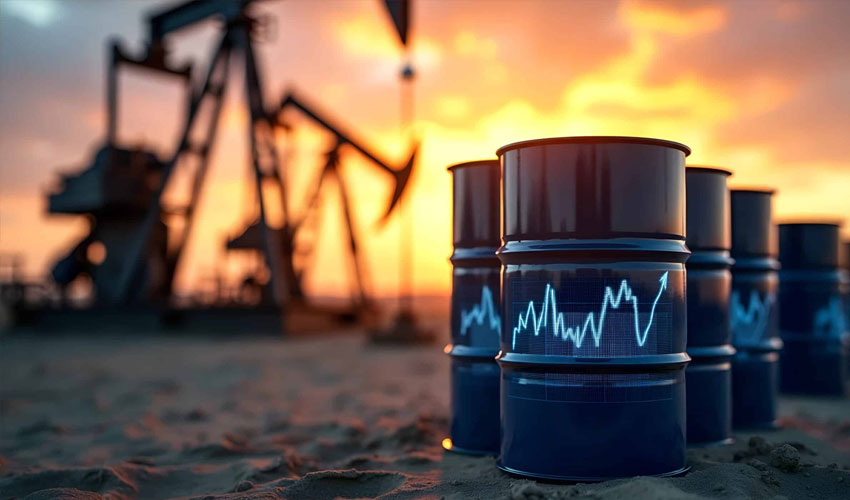
Oil prices rose on Monday after days of tit-for-tat strikes between the United States and Iran highlighted the fragility of their interim peace deal and again slowed energy shipping through the Strait of Hormuz.
Brent crude futures climbed 58 cents, or 0.8%, to $72.57 a barrel at 0207 GMT, while US West Texas Intermediate crude rose 88 cents, or 1.3%, to $70.11 a barrel.
ING analysts said there was still “plenty of risk” facing the oil market, even as traders appeared focused on what a continued recovery in oil flows could mean for global supply.
“This complacency is odd and clearly leaves significant upside risk if the supply recovery proves slow,” the analysts said in a note.
Brent crude fell 10.6% last week, marking its third weekly decline, after crude shipments through the Strait of Hormuz rose to their highest level since the US-Israeli war on Iran began in late February.
Renewed attacks slow Strait of Hormuz traffic
However, shipping traffic has slowed again after renewed attacks on vessels in the strait began on Thursday, including an attack involving a Qatar-linked oil tanker.
The incidents triggered fresh US and Iranian strikes in the worst escalation since the two sides signed an interim peace deal.
Oil price gains were capped after a US official said Iran and the United States had agreed to halt recent hostilities in the Gulf and resume talks over their dispute on the Strait of Hormuz.
ANZ analysts said the market was likely to reassess its expectation of a quick recovery in oil supply from the Persian Gulf.
Saudi oil giant Aramco resumed crude oil loadings on Friday at its Ras Tanura terminal, west of the Strait of Hormuz, after nearly four months of suspension. Oil producers had ramped up output and exports ahead of the interim agreement.
Loadings continued even after an Aramco helicopter crashed on Sunday at Ras Tanura, killing 14 Saudi nationals. The cause of the crash remained unknown.
“Physical flows are constrained by tanker backlogs, damaged infrastructure and production shut-ins. It could take the remainder of the year before supply is near pre-conflict levels,” ANZ analysts said.
Gold falls as oil-driven inflation fears grow
Gold prices eased on Monday as renewed US-Iran strikes pushed oil prices higher and expectations of US Federal Reserve interest rate hikes weighed on the non-yielding metal.
Spot gold fell 0.6% to $4,062.89 per ounce by 0423 GMT, while US gold futures for August delivery dropped 0.5% to $4,077.50.
The metal was heading for a fourth consecutive monthly loss, down 10.4%.
Tim Waterer, chief market analyst at KCM Trade, said the latest weekend strikes between the US and Iran had raised fresh doubts about how long oil prices could remain subdued and what that could mean for inflation and interest rates.
Oil prices rose after Iran launched missiles and drones at US military sites in Kuwait and Bahrain early on Sunday, shortly after US President Donald Trump threatened to wipe out the Iranian leadership if Tehran failed to stick to the agreement to end the war.
However, Tehran and Washington agreed to halt recent hostilities in the Gulf and renew talks over the Strait of Hormuz dispute, Axios reported on Sunday.
Investors await US jobs data
Higher crude oil prices can fuel inflation and increase the chances of interest rate hikes. Although gold is usually seen as an inflation hedge, it becomes less attractive in a high-rate environment because it does not generate yield.
Traders expect three Fed rate hikes this year and are pricing in about an 80% chance of a December increase, according to the CME FedWatch Tool.
Investors are now awaiting June’s ADP employment data and US nonfarm payrolls figures later this week for further clues on the Federal Reserve’s monetary policy path.
Waterer said gold could return to the $5,000 level this year, but only if there is further de-escalation, oil makes a sustained move back to pre-war levels, inflationary pressure from the conflict eases and the dollar softens.
Silver falls, platinum and palladium gain
Among other precious metals, spot silver fell 1.2% to $58.47 per ounce.
Platinum gained 0.2% to $1,617.15, while palladium rose 0.4% to $1,213.60.





.jpeg)




.jpg)







