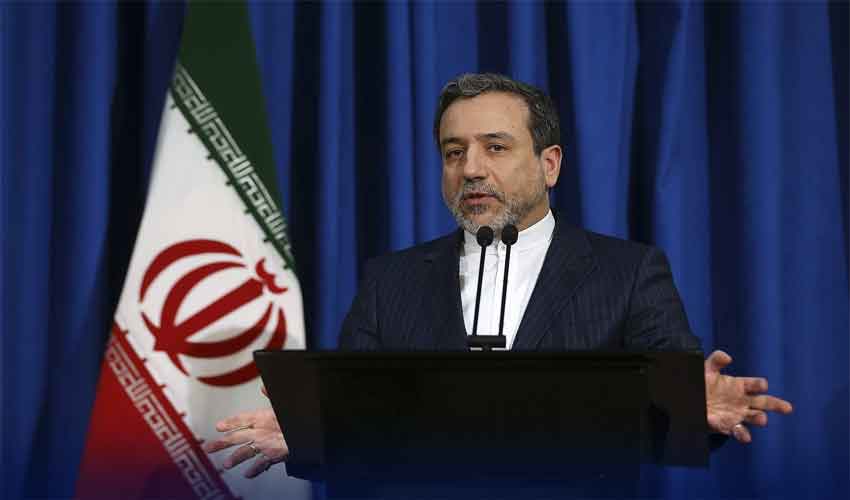
Iranian Foreign Minister Abbas Araghchi has said that Mojtaba Khamenei is leading Iran with full authority and that communication with the country’s revolutionary leadership remains ongoing despite recent regional tensions.
In an interview with Lebanese media, Araghchi also called for a ceasefire across all fronts, including Lebanon, while reiterating that Iran does not seek war but is prepared to respond forcefully if attacked.
Araghchi said Khamenei is currently leading Iran with full authority. He added that there is constant contact with the Leader of the Revolution and that instructions from the leadership continue to reach the relevant authorities without interruption.
According to the foreign minister, the chain of command and communication within Iran remains fully operational.
Iran warns of decisive response
The Iranian foreign minister stressed that Iran does not want war. However, he warned that if aggression is imposed on the country, Tehran would deliver a decisive response.
Araghchi said Iran had already informed Gulf countries that American military bases in the region could become targets if attacks were launched against Iran from those facilities.
Also Read: Trump says Iran deal not needed to access uranium
He argued that if US military bases did not exist in neighboring countries, there would be no reason for attacks on those locations.
Criticism of US role in Gulf security
Araghchi accused the United States of making Gulf countries less secure rather than protecting them. According to him, Washington’s military presence has increased regional risks instead of enhancing stability.
He also claimed that US President Donald Trump and Israeli Prime Minister Benjamin Netanyahu did not expect Iran to respond as strongly as it did during recent confrontations.
Attack on Supreme Leader’s office
The foreign minister revealed that he was present in the office of Iran’s Supreme Leader during an attack on February 28. He said that at the time, he was more concerned about the safety and well-being of Ayatollah Ali Khamenei than about his own life.
Also Read: US-Iran peace deal could bring $20bln boost to Pakistan
According to Araghchi, there was uncertainty regarding Ayatollah Khamenei’s condition for two days following the incident. He added that despite recommendations to move to a safer location, Ayatollah Ali Khamenei refused to leave.
Call for ceasefire across all fronts
Araghchi emphasized that any ceasefire should apply to all fronts in the region. He specifically stated that Lebanon should also be included in any broader ceasefire arrangement.
The foreign minister said regional stability requires comprehensive de-escalation rather than isolated agreements.
In his remarks, Araghchi also made allegations regarding the role of the United Arab Emirates during recent tensions. He claimed that the United States and Israel used UAE territory against Iran.
Also Read: US-Iran talks enter final stages; frozen funds key hurdle
According to Araghchi, Iran possesses documentary evidence supporting these claims and can present it if necessary. He further alleged that the UAE itself participated in some military operations.
Relations with UAE under strain
Araghchi said Iran’s strained relationship with the UAE is linked to Abu Dhabi’s ties with Israel. He argued that relations between Tehran and the UAE would have been significantly better if the Emirati government had adopted policies similar to those of other Gulf countries.
According to the foreign minister, Iran views the UAE’s relationship with Israel as a key source of tension between the two countries.
Araghchi’s comments come at a time of heightened regional uncertainty, with ongoing discussions about ceasefires, security arrangements and diplomatic efforts across the Middle East.
His remarks highlighted Iran’s position on regional security, Gulf relations and the broader geopolitical challenges facing the region.

.jpg)