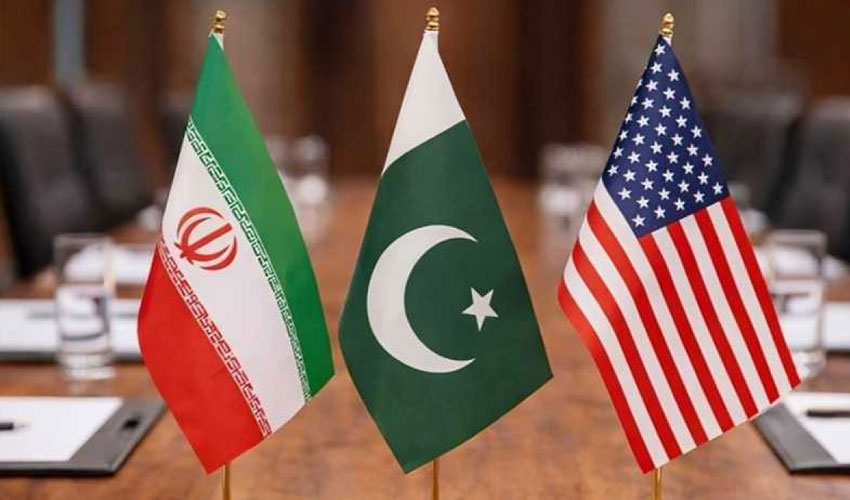
A potential US-Iran peace agreement could generate economic gains of up to $20 billion for Pakistan, according to a report by KTrade Securities.
The report describes Pakistan as one of the largest relative beneficiaries among emerging markets if a phased settlement is reached and the Strait of Hormuz resumes normal commercial operations.
It adds that Pakistan’s strategic geography could position it as a key intermediary in regional economic realignment.
Six major economic channels identified
The report outlines six key areas of potential economic impact:
-
A 75–150 basis point improvement in country risk rating
-
Foreign exchange reserves rebuilding beyond $20 billion
-
Around $4 billion in export recovery to GCC markets
-
Inflation reduction of 125–150 basis points as oil prices ease
-
Current account surplus of $3.75–5 billion annually
-
Revival of Saudi Vision 2030 labour demand for up to 800,000 Pakistani workers per year
Economic impact of Hormuz disruption
According to the report, the closure of the Strait of Hormuz has already cost Pakistan an estimated $10–14 billion, equivalent to 2–3% of GDP.
It also contributed to rising inflation, which reached 11.7% in May 2026, pushed the current account into deficit, and forced the State Bank of Pakistan to raise policy rates by 100 basis points in April 2026.
Gwadar’s rising strategic importance
The report highlights Gwadar Port as a key beneficiary of regional instability, noting its strategic location outside the Hormuz chokepoint.
Container throughput at Gwadar reportedly rose to 11,000 TEUs in April 2026, surpassing the entire previous year’s total.
At sustained levels, Gwadar could generate $50–80 million annually in port revenues, alongside transit and SEZ-related income.
Saudi Arabia is also reportedly investing in oil storage infrastructure at Gwadar and has already transferred $2 billion to Pakistan, with an additional $3 billion pledged.
Trade opportunities with Iran
The report estimates that Pakistan-Iran trade could reach $2 billion in the near term if sanctions ease and a stable corridor is established.
Key export opportunities include cement, textiles, rice, fruits, and medical goods, while imports could include energy products, chemicals, plastics, and steel.
It also notes reconstruction demand in Iran could boost Pakistan’s cement exports due to large-scale infrastructure damage estimates.
Iran-Pakistan gas pipeline savings
A major structural gain identified is the Iran-Pakistan gas pipeline project, which could significantly reduce energy costs.
Pakistan currently imports LNG from Qatar at about $13 per MMBtu, while Iranian pipeline gas is estimated at $6–8 per MMBtu.
The report estimates annual savings of $1.5–2 billion if the pipeline becomes operational.
Saudi investment and defence agreement impact
The report also highlights a Pakistan-Saudi defence and investment agreement signed in September 2025, valued at an estimated $15 billion economic impact.
It includes $10 billion in Saudi investments and expanded trade targets, alongside Pakistan’s deployment commitments of 25,000 troops under the agreement.
China-Pakistan Economic Corridor (CPEC) expansion is also cited as a long-term beneficiary, with total investment projected to reach $62 billion by FY2030.
Iran’s potential inclusion in CPEC could strengthen regional connectivity linking South Asia, Central Asia, and Europe.
The report suggests Pakistan’s stock market could benefit from improved sentiment, with the KSE-100 index still below its recent peak.
It also notes that easing global oil prices could reduce inflation to the 5–7% range by late 2026, potentially enabling monetary easing and economic stabilization.


.jpg)