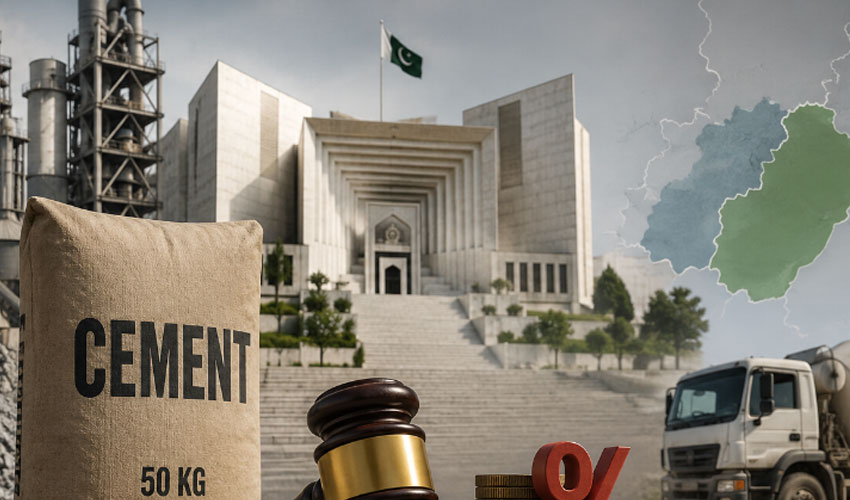
The Federal Constitutional Court has raised serious concerns over Punjab’s 6% royalty imposed on the ex-factory price of cement, questioning whether the levy is being applied within legal limits.
During proceedings, the bench observed that royalties are traditionally meant to be charged on raw minerals such as limestone and argillaceous clay, rather than on processed cement products.
Judges noted that the current mechanism appears to shift the royalty from extracted minerals to finished cement bags.
According to the court, this change could alter the constitutional nature of the levy, raising questions about whether it functions as a royalty or a production-based tax.
Industry argues double taxation
Cement manufacturers argued before the court that provincial governments are only authorized to impose royalties on mineral extraction.
They contended that linking the levy to cement sales results in double taxation and increases financial pressure beyond the mining stage.
The court also observed that any increase in royalty is likely to be passed on through the supply chain, ultimately affecting end consumers through higher cement prices rather than being absorbed by producers.
This raises concerns about affordability in the construction sector, where cement costs play a critical role.
Regional cost disparities highlighted
Industry estimates suggest that the 6% royalty translates into approximately Rs. 1,350 to Rs. 1,400 per tonne in Punjab.
In contrast, Khyber Pakhtunkhwa applies a fixed royalty of around Rs. 350 per tonne, creating a significant cost difference between provinces.
Due to lower costs, cement producers in Khyber Pakhtunkhwa reportedly enjoy a competitive advantage, allowing them to sell cement at Rs. 25 to Rs. 30 per bag cheaper in major markets such as Lahore and Rawalpindi.
This disparity has intensified competition and reshaped pricing dynamics across the industry.



.jpg)