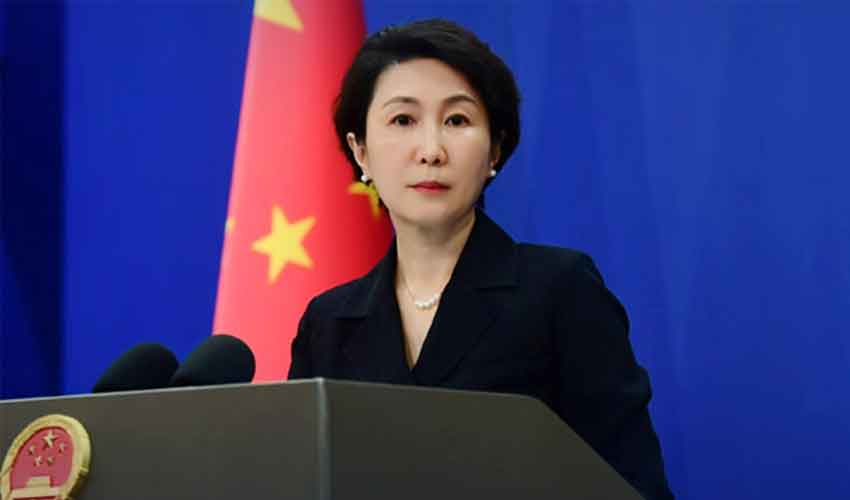
China has called on the United States and Iran to respect the existing ceasefire and avoid renewed conflict after fresh military exchanges heightened tensions across the Middle East.
The appeal came as Washington reported strikes on Iran’s Qeshm Island and the interception of multiple missiles and drones, while regional countries also reported security incidents linked to the ongoing confrontation.
Speaking to reporters in Beijing on Wednesday, Chinese Foreign Ministry spokeswoman Mao Ning said China was closely monitoring developments.
“China is deeply concerned over the current situation,” Mao said.
She warned that renewed fighting would not benefit any party involved and stressed the importance of preserving peace efforts.
Beijing urges both sides to honour ceasefire
China called on both Washington and Tehran to remain committed to the ceasefire agreement and avoid actions that could trigger another escalation.
Mao said “renewed warfare serves no one’s interest.”
She urged all relevant parties to value opportunities for peace, honour their ceasefire commitments and continue negotiations.
“We hope relevant parties can cherish the opportunities of peace, honour ceasefire commitment and keep momentum of negotiation, stick to dispute settlement through political and diplomatic means, and realize a comprehensive and lasting ceasefire at an early date and create necessary conditions for the restoration of peace and tranquility in the Middle East,” she said.
US reports strikes on Qeshm Island
China’s comments came after the United States announced military operations targeting Qeshm Island.
According to US officials, the strikes were carried out in response to what Washington described as attempted Iranian attacks across the Middle East.
The United States said its military, along with partner forces, intercepted multiple Iranian missiles and drones during the latest escalation.
The renewed tensions extended beyond the direct confrontation between the United States and Iran. Kuwait confirmed that its air defense systems were activated in the early hours of Wednesday to respond to what authorities described as hostile missile and drone attacks.
The incident highlighted growing concerns that the conflict could further destabilize the wider Gulf region.
China backs diplomatic solution
Beijing reiterated its support for a political and diplomatic resolution to the crisis. Chinese officials emphasized that negotiations remain the best path toward reducing tensions and preventing a broader conflict.
Mao urged all parties to maintain the momentum of diplomatic engagement and focus on resolving disputes through dialogue rather than military action.
The latest military exchanges come despite a ceasefire that has been in place since April 8.
The truce followed a conflict that began on February 28, when military operations involving the United States and Israel against Iran triggered a broader regional confrontation.
Recent air strikes and missile interceptions have raised concerns that the ceasefire could come under increasing pressure if diplomatic efforts fail to hold.
Middle East stability remains at stake
With both military activity and diplomatic efforts continuing simultaneously, regional stability remains uncertain.
China’s intervention reflects growing international concern that any collapse of the ceasefire could have wider consequences for security, energy markets and political stability across the Middle East.
As tensions persist, Beijing is urging all sides to prioritize dialogue and work toward a comprehensive and lasting ceasefire.

.jpg)