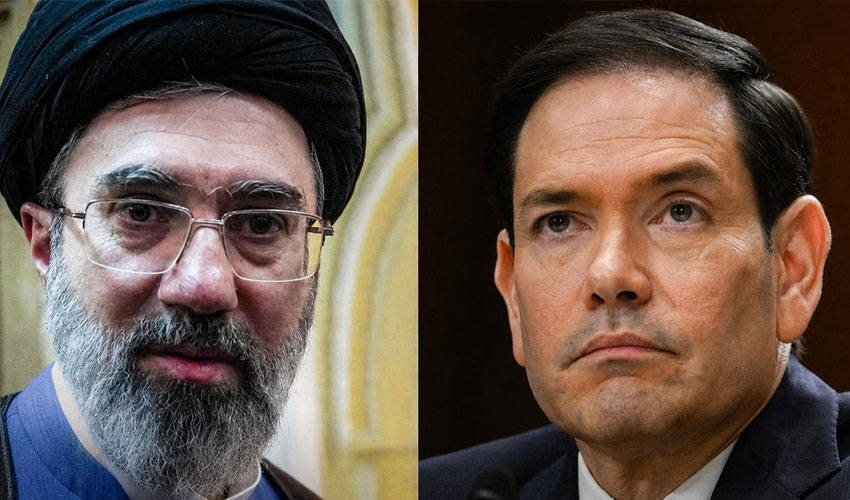
US Secretary of State Marco Rubio has said that Iran’s Supreme Leader Mojtaba Khamenei is alive and increasingly engaging in state affairs, as tensions between Washington and Tehran remain high following recent military escalation and ongoing diplomatic uncertainty.
Testifying before Congress, Rubio stated that Mojtaba Khamenei is alive and becoming more active in Iran’s political and strategic communication channels.
He said the situation reflects continued shifts within Iran’s leadership structure following earlier reports about the killing of former Supreme Leader Ayatollah Ali Khamenei in US strikes earlier this year.
Mojtaba Khamenei, son of Ayatollah Ali Khamenei, has not appeared publicly in recent months.
However, written messages attributed to him have been circulated through Iranian state media, raising questions about his current role and level of authority.
Concerns over targeting and security
Rubio’s remarks come amid concerns that Mojtaba Khamenei could be a potential target for assassination by the United States and Israel, given the ongoing regional tensions.
Security analysts say his limited public presence adds to speculation about internal security arrangements within Iran’s leadership structure.
US position on Iran sanctions
Rubio also told lawmakers that the United States will not lift sanctions on Iran in exchange for reopening the Strait of Hormuz.
He said no such deal has been discussed, and any sanctions relief would be strictly “condition-based,” linked to Iran giving up enriched uranium and other nuclear-related activities.
US defends military action against Iran
Defending recent US strikes, Rubio described the military campaign as “highly successful,” claiming it significantly weakened Iran’s defense-industrial capabilities.
He said:
“There is no Iranian navy. It lies at the bottom of the ocean.”
The comments underline Washington’s continued hardline stance following the conflict with Iran.
Nuclear Talks
Rubio suggested that for the first time, Iran may be open to discussing aspects of its nuclear programme that were previously off-limits.
However, he cautioned that such discussions do not guarantee a final agreement acceptable to Washington.
Rubio appeared before US House and Senate committees as part of the State Department’s annual budget hearings, but the focus quickly shifted to the ongoing conflict with Iran.
Lawmakers from both parties raised concerns about the financial and strategic costs of the war, especially as the US faces domestic political pressures ahead of upcoming elections.

.jpg)