US President Donald Trump said he is unconcerned about the political fallout of a prolonged conflict with Iran, insisting Tehran miscalculated if it believed November’s midterm elections would force him into a deal.
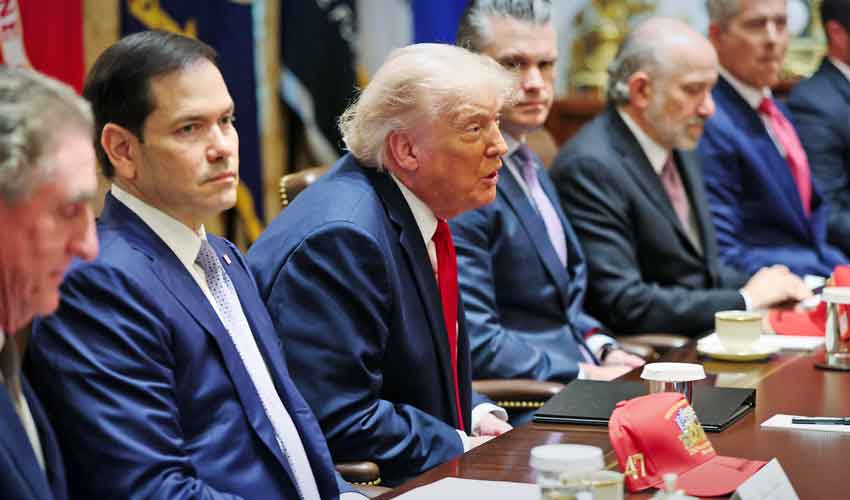
Speaking at a White House cabinet meeting on Wednesday, Trump said Iran was “negotiating on fumes” and warned that the United States could resume military action if no agreement is reached.
Trump said Iranian leaders believed they could wait for US political pressure to weaken his position.
“They thought they were going to outwait me,” Trump said, referring to Iran’s leadership. “You know, ‘We’ll outwait him. He’s got the midterms.’ I don’t care about the midterms.”
His comments came as the nearly three-month-old conflict approaches its fourth month, despite Trump initially saying the war would last four to six weeks.
At times, the president has suggested the conflict could end within days, only to later say it may continue for some time.
Political pressure builds over war costs
Trump’s dismissal of midterm pressure could deepen concerns among Republican allies already uneasy with his earlier remarks downplaying the war’s economic impact on Americans.
Voter frustration over high prices, especially gasoline, has added pressure on the Republican Party.
Also Read: Rubio says Trump prefers diplomacy with Iran
Republicans are widely expected to struggle to keep control of the House of Representatives and possibly the Senate in November’s elections.
Trump rejects reported Strait of Hormuz deal
Trump also rejected an Iranian report claiming an imminent deal had been reached to reopen the Strait of Hormuz, with Iran and Oman jointly managing traffic.
The Strait of Hormuz has been central to negotiations because of its importance to global energy flows. Trump said no single country would control the strategic waterway.
“Nobody’s going to control the strait,” he said. “It’s international waters and Oman will behave just like everybody else or we’ll have to blow them up. They understand that, they’ll be fine.”
He added that under any potential framework, the strait would open immediately.
Also Read: White House rejects Iranian media claims on proposed memorandum
“We’ll watch over it, but nobody’s going to control it,” Trump said. “That’s part of the negotiation that we have. They would like to control it. Nobody’s going to control it.”
The White House did not immediately respond to a request for comment on Trump’s remarks about Oman. Oman’s embassy in Washington also did not immediately respond to a request for comment.
Trump says US not satisfied with Iran deal terms
Trump said he was “not satisfied” yet with the terms being negotiated with Iran. He said Tehran was “very much intent” on reaching an agreement to end the conflict but had not yet met Washington’s conditions.
“Iran is very much intent, they want very much to make a deal,” Trump told reporters. “So far they haven’t gotten there and we’re not satisfied with it, but we will be.”
He added: “We will be either that or we’ll have to just finish the job.”
Also Read: Iran receives preliminary unofficial draft of memorandum framework
Trump also said: “They just want to make a deal — I don’t think they have a choice.”
White House calls Iranian draft report fabrication
Trump’s remarks came after Iranian state TV reported what it described as details of a draft agreement. The reported draft included reopening the Strait of Hormuz and the withdrawal of US forces from the region.
The White House dismissed the text as a “complete fabrication". Both sides had signalled late last week that progress had been made toward a deal, sparking speculation that an announcement could be close.
But Tehran later cautioned that a deal was “not imminent,” while Trump said he had told negotiators “not to rush into” an agreement.
Sanctions, uranium stockpile remain sticking points
Trump denied reports that he was considering easing American sanctions on Tehran. He also rejected suggestions that he would allow Russia and China to remove Iran’s highly enriched uranium stockpile.
The president said he was not comfortable with Russia or China taking Iran’s stockpile of highly enriched uranium.
Such terms would likely trigger political criticism in the United States.
Trump is seeking a settlement that would reopen the Strait of Hormuz and allow him to argue that Iran’s nuclear capability has been reduced enough to declare victory.
The conflict has been politically unpopular for Republicans and has unsettled the global economy. Over the weekend, Trump said his administration and Tehran had “largely negotiated” a settlement, but the talks remained uncertain.

.jpg)