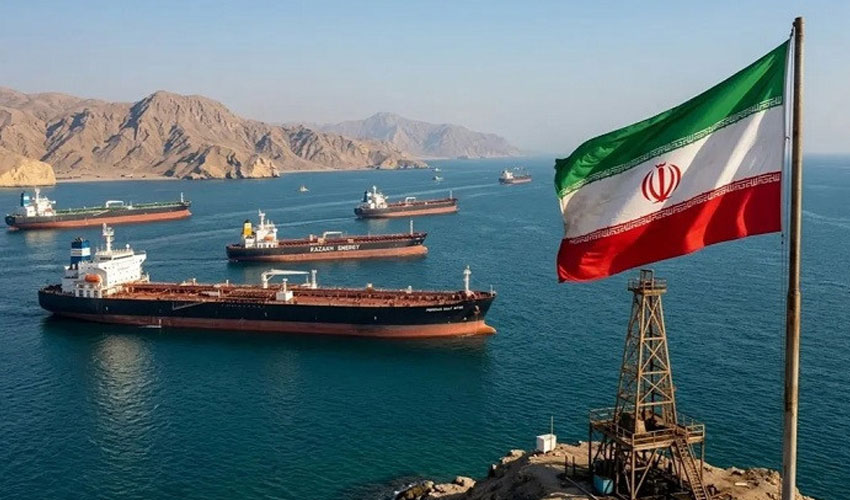
At least 25 vessels, including oil tankers and cargo ships, have passed through the Strait of Hormuz in the past 24 hours, according to Iran’s Islamic Revolutionary Guard Corps (IRGC) Navy.
The development comes amid ongoing tensions and disruption in one of the world’s most critical shipping routes, with reports of thousands of sailors still stranded at sea.
The IRGC Navy said the vessels were allowed passage after obtaining coordination and security clearance from Iranian authorities.
According to a statement reported by Iran’s semi-official Fars News Agency, the ships included oil tankers, container vessels, and other commercial ships.
The Strait of Hormuz remains a vital global energy corridor, and even limited disruptions in the area can have wide-reaching effects on international trade and oil transport.
Thousands of sailors still stranded in the Gulf
Despite recent vessel movements, humanitarian concerns continue to grow for seafarers stuck in the region.
Reports indicate that more than 20,000 sailors are currently stranded on around 2,000 ships across the Gulf, unable to disembark due to ongoing restrictions and security risks.
Many crews are reportedly facing shortages of food, water, and basic supplies while remaining confined to ships for extended periods.
Blockade claims and maritime restrictions
Iran has been widely reported to have effectively restricted movement through the Strait of Hormuz following escalating tensions linked to military developments in the region.
Authorities have also reportedly asserted control over a wider maritime zone on both sides of the strait, further complicating shipping operations.
A newly issued map by Iranian authorities reaffirmed these territorial assertions, adding to concerns among shipping operators and international observers.
The International Transport Workers’ Federation (ITF) has raised alarm over deteriorating conditions for stranded sailors.
According to the ITF, sailors are experiencing delayed wages, supply shortages, and difficulties in repatriation.
One sailor described life on board as a constant struggle, saying crews are focused only on surviving each day amid fear and uncertainty.
“Isolated lives” on stranded vessels
Many of the affected sailors have reportedly been stuck for nearly three months, living in confined conditions aboard ships anchored across the Gulf.
They move between small living quarters, dining areas, and open decks under extreme weather conditions, with limited access to communication and external support.
Some sailors say they receive minimal meals and only brief internet access to contact families or seek help.
Shipping experts and maritime organizations warn that the crisis is putting severe pressure on global supply chains.
The ITF has reportedly received over 2,000 requests for assistance from sailors since the escalation of tensions began.
Gulf authorities have made limited efforts to support resupply operations and crew transfers, but conditions remain challenging for many vessels still waiting at sea.



.jpg)