Amidst the snow-capped peaks and the chilling winds of Gilgit-Baltistan, a profound political heat is currently reaching its peak.
The upcoming elections, scheduled for June 7, are far more than a mere democratic exercise; they represent a turning point for the region's destiny. Looking at the political scene as an observer, the loud roar of electioneering echoes with the deep-seated problems and hopes of a people longing for change.
Political observations: Personality vs platform
The political landscape of Gilgit-Baltistan has always been unique. Here, the voters do not blindly follow a party flag; instead, an individual candidate’s personal reputation, family background, and availability to the public remain the main deciding factors.
Once again, the "personality over party" trend is very strong, with local community support expected to play a key role in several areas. While various political parties have entered the field with big promises, the reality on the ground shows a tough competition. The people of this region are no longer moved by empty talk; their decision will be based on past work and local influence.
Strategic planning of Istehkam-e-Pakistan Party
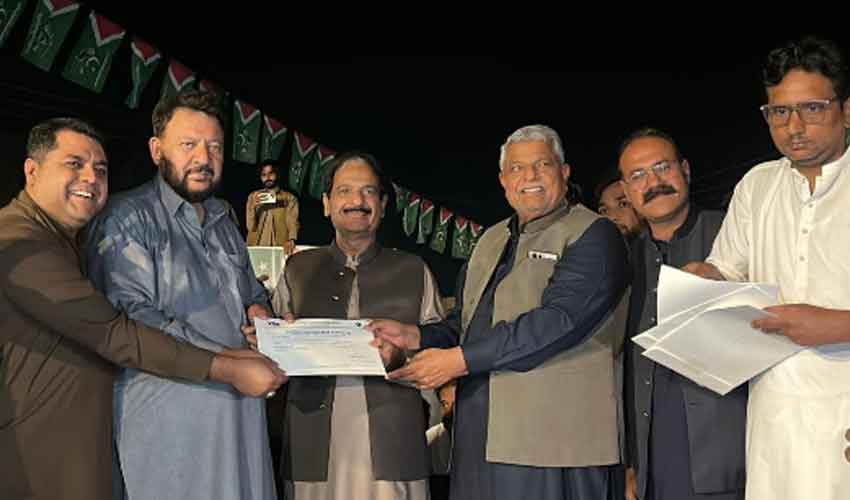
In this complex political game, the Istehkam-e-Pakistan Party (IPP) has emerged as a new and strong contender. The party leadership, especially under Abdul Aleem Khan, has managed the distribution of tickets with a focus that shows they are not just participating, but are aiming for a big win. By choosing experienced and popular figures, the IPP has strengthened its position across the region.
The official IPP candidate lineup:
GBA-1 (Gilgit-I): Maulana Sultan Rais
GBA-2 (Gilgit-II): Fatahullah Khan
GBA-3 (Gilgit-III): Captain (R) Muhammad Shafi Khan
GBA-6 (Hunza): Iman Shah
GBA-7 (Skardu-I): Raja Jalal Hussain Khan
GBA-10 (Roundu): Muhammad Khan Wazir
GBA-14: Shams-ul-Haq Lone
GBA-15 (Diamer-I): Haji Shah Baig
GBA-16 (Diamer-II): Advocate Atiq Ullah
GBA-18 (Diamer-IV): Haji Gulbar Khan
GBA-19 (Ghizer-I): Atif Salman
GBA-20: Khan Akbar Khan
GBA-21 (Ghizer-III): Jamila Khatoon
GBA-22: Raza-ul-Haq
Public priorities and political cooperation
The campaign shows that the main concerns of the people are better healthcare, quality education, and job opportunities. The IPP has made ending these problems, promoting tourism, and improving roads and energy its top priorities. Furthermore, the expected alliance with Islami Tehreek Pakistan suggests that the region's politics is moving toward joint efforts and coalition-building.
Future picture
Analysts believe that getting a full majority will be a difficult task for any single party. The most likely result seems to be the formation of a joint government, where the IPP, with its strong candidates, could play a central role. While the candidates look determined, the final question remains: can they truly fix the decades of neglect in Gilgit-Baltistan once they are in power?
That question remains unanswered until the evening of June 7th.


.jpg)