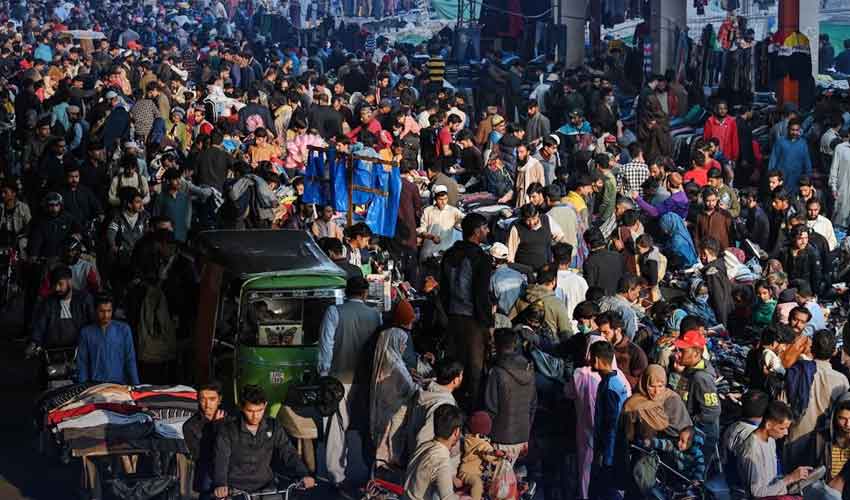
Pakistan’s population is projected to rise from 250 million to 400 million by 2050, according to a new Population Projection Report issued by the Planning Commission.
The report warns that the growing population will create serious pressure on health, education, employment, water, food and other essential facilities.
The Planning Commission has prepared population estimates for the period from 2023 to 2050.
According to the report, Pakistan’s population is expected to increase sharply over the next three decades, making long-term planning for basic services more urgent.
The report states that even under a rapid decline scenario, Pakistan’s population is projected to reach 371.9 million by 2050. This means that even with a faster reduction in population growth, the country will still face major demographic pressure.
Provincial population projections for 2050
Punjab’s population is expected to increase from 127.7 million to 200 million by 2050, according to the report. Sindh’s population is projected to reach 91.1 million, while Khyber Pakhtunkhwa’s population is estimated to rise to 67.6 million by 2050.
Balochistan’s population is predicted to reach 25 million by 2050.
The report also projects a significant increase in Islamabad’s population. According to the Planning Commission, Islamabad’s population is likely to rise from 2.4 million to 6.5 million by 2050.
Birth rate expected to decline
The Population Projection Report predicts that the birth rate will decline from 28.3 in 2023 to 16.8 by 2050. However, the report also shows a slight increase in the death rate due to the aging of the population.
The Planning Commission warned that population growth will put severe pressure on key public services and resources.
Health care, education, employment opportunities, water supply, food security and other basic facilities are expected to face growing demand as the population expands.


.jpg)