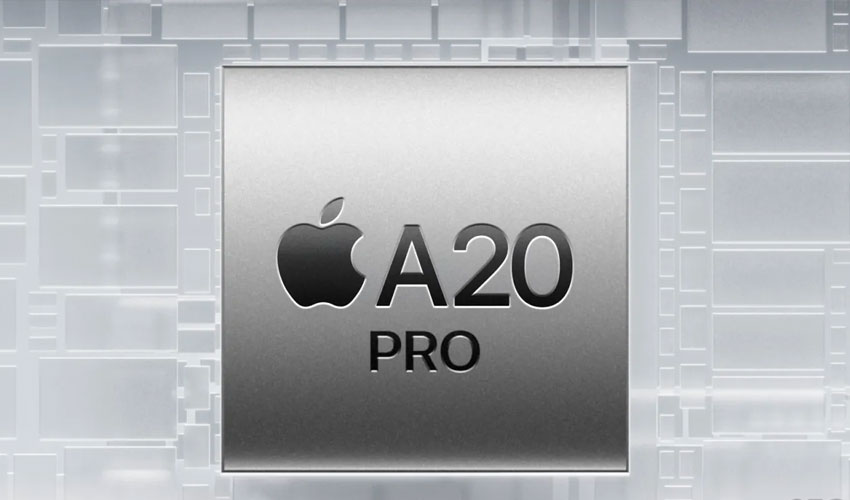
Apple is reportedly preparing one of its biggest iPhone chip upgrades in years with the upcoming A20 Pro processor expected to power the rumored iPhone 18 Pro and iPhone Ultra models later this year.
According to recent reports, the next-generation chip could introduce two major improvements focused on speed, power efficiency, and AI performance.
The biggest rumored upgrade is Apple’s planned shift to a 2-nanometer chip manufacturing process through TSMC.
Apple’s current iPhone chips are based on a 3nm process, but moving to 2nm would allow the company to pack more power and efficiency into a similarly sized chip.
Historically, major advancements in chip fabrication have led to noticeable improvements in smartphone performance and battery efficiency. Apple has consistently worked years ahead to secure access to TSMC’s most advanced manufacturing technologies for products including iPhones, iPads, and Macs.
While the company has not revealed specific performance targets, the transition to 2nm is expected to give Apple more room to improve processing power and energy management.
Beyond the 2nm transition, the A20 Pro is also rumored to introduce a new packaging innovation known as Wafer-Level Multi-Chip Module, or WMCM.
What is WMCM?
WMCM allows multiple chip components, including the SoC and DRAM memory, to be integrated directly at the wafer level before being separated into individual chips.
The approach reportedly improves thermal performance and signal integrity while reducing the distance between the processor and onboard memory.
As a result, the A20 Pro could deliver faster communication between components, lower power consumption, and stronger overall performance for demanding tasks.
Focus on AI and gaming
The new architecture is expected to particularly benefit AI-related processing and high-end mobile gaming.
Reports suggest Apple is heavily focusing on AI-powered features for the rumored iOS 27 update, making the A20 Pro’s improvements especially important for future on-device AI capabilities.
The upgraded chip may also improve multitasking, graphics performance, and overall responsiveness in Apple’s next flagship smartphones.
Apple continues its push for chip leadership
Apple has built a strong reputation around its custom silicon strategy, using in-house chip development to maintain tighter integration between hardware and software.
The A20 Pro appears to continue that strategy with a combination of advanced manufacturing and next-generation chip packaging technologies.
If the rumors prove accurate, the chip could become one of the most significant hardware upgrades introduced in recent iPhone generations.




.jpg)