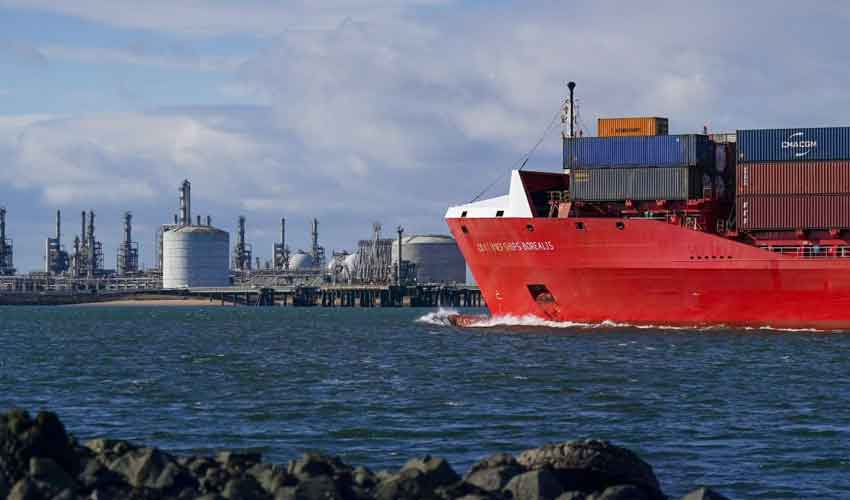
Iran’s military warned US forces on Monday not to enter the Strait of Hormuz after President Donald Trump said Washington would begin helping ships stranded in the Gulf due to the US-Israeli war on Iran.
The unified command of Iran’s armed forces said US forces should stay away from the Strait of Hormuz.
In a statement, the command warned that its forces would “respond harshly” to any threat and told commercial ships and oil tankers not to move without coordination with Iran’s military.
“We have repeatedly said the security of the Strait of Hormuz is in our hands and that the safe passage of vessels needs to be coordinated with the armed forces,” said Ali Abdollahi, head of the unified command.
“We warn that any foreign armed forces, especially the aggressive US army, will be attacked if they intend to approach and enter the Strait of Hormuz,” he added.
Khatam al-Anbiya Headquarters issues warning
A spokesperson for the Khatam al-Anbiya Headquarters, the joint command of the Iranian Armed Forces, also addressed the issue during a press briefing. The spokesperson said shipping in the Strait of Hormuz would only take place with the permission of Iranian forces.
“The security of the Strait of Hormuz is completely under our control,” the spokesperson said. He warned that any threat within Iranian borders would be met with a strong response.
Iran rejects US interference in maritime order
Iran also rejected what it called US interference in the Strait of Hormuz.
Ebrahim Azizi, head of the National Security Committee in the Iranian parliament, said the management of the Strait of Hormuz and the Persian Gulf would not be based on Trump’s “imaginary statements.”
He said any US interference in the maritime order would be considered a violation of the ceasefire.
Also Read: Iran says Pakistan sole mediator in talks with US
Iranian officials also warned that aggressive actions would further complicate the current situation and endanger the security of ships in the Gulf.
Commercial ships and tankers were told to avoid movement without permission from Iranian armed forces.
Trump says US will guide stranded ships
The Iranian warning came after Trump said the United States would start helping ships and crews that have been “locked up” in the vital waterway and are running low on food and other supplies.
“We have told these Countries that we will guide their Ships safely out of these restricted Waterways, so that they can freely and ably get on with their business,” Trump wrote on Truth Social on Sunday.
Trump gave few details about how the operation would work or which countries would receive US help.
The White House did not immediately respond to a request for comment.
Also Read: Trump says US to help ships stranded in Strait of Hormuz
US Central Command said it would support the effort with 15,000 military personnel, more than 100 land and sea-based aircraft, along with warships and drones.
“Our support for this defensive mission is essential to regional security and the global economy as we also maintain the naval blockade,” Admiral Brad Cooper, the CENTCOM commander, said in a statement.
CENTCOM said the latest effort would combine “diplomatic action with military coordination.”
The Trump administration has also been seeking help from other countries to form an international coalition to secure shipping in the strait.
Hundreds of ships stuck in the Gulf
According to the International Maritime Organization, hundreds of ships and as many as 20,000 seafarers have been unable to transit the Strait of Hormuz during the conflict.
Iran has been blocking nearly all Gulf shipping apart from its own for more than two months, sending energy prices sharply higher. Some vessels attempting to transit the strait have reported being fired on, while Iran has seized several other ships.
Last month, the United States imposed its own blockade on ships from Iranian ports.
Also Read: Oil slips after Trump says US will assist stranded Hormuz ships
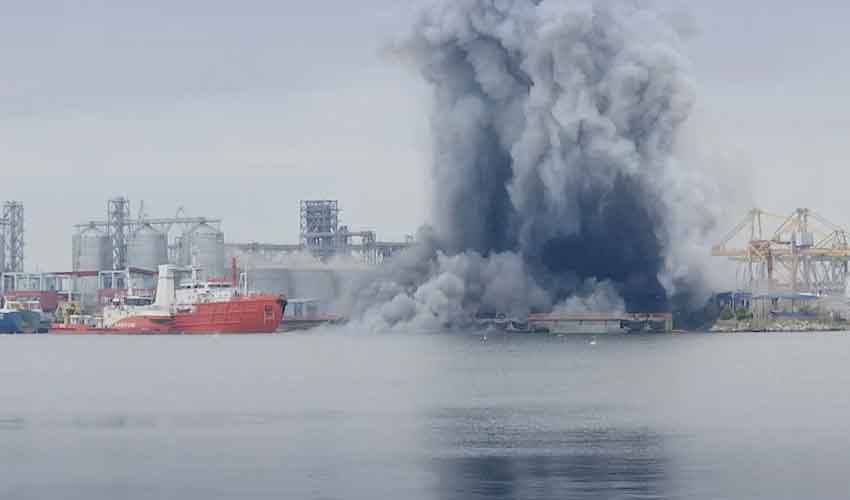
Soon after Trump’s remarks, the United Kingdom Maritime Trade Operations agency said a tanker reported being hit by unknown projectiles in the Strait of Hormuz. The incident took place 78 nautical miles north of Fujairah in the United Arab Emirates.
The agency said all crew members were reported safe, but few other details were immediately available.
US operation details remain unclear
It was not immediately clear which countries the US operation would assist or whether US Navy vessels would directly escort commercial ships.
Axios reporter Barak Ravid said in a post on X that the plan would not necessarily include US Navy ships escorting commercial vessels. Trump warned that any interference with the US operation would “have to be dealt with forcefully.”
Iran reviews US response to peace proposal
The military tensions came as Iran said it had received a US response to its latest offer for peace talks. The response came a day after Trump said he would probably reject the Iranian proposal because “they have not paid a big enough price.”
Asked by reporters on Sunday evening about the talks, Trump said they were going “very well,” but did not elaborate.
Iranian state media said Washington had conveyed its response to Tehran’s 14-point proposal via Pakistan and that Iran was reviewing it.
There was no immediate confirmation from Washington or Islamabad regarding the US response.
No nuclear talks at this stage, Iran says
“At this stage, we do not have nuclear negotiations,” Iranian state media quoted Foreign Ministry spokesperson Esmaeil Baghaei as saying.
The comment appeared to refer to Iran’s proposal to delay nuclear talks until after the war ends and both sides agree to lift opposing blockades on Gulf shipping.
The United States and Israel suspended their bombing campaign against Iran four weeks ago.
US and Iranian officials held one round of talks, but attempts to arrange further meetings have so far failed.
Also Read: Trump reviews Iran’s 14-point response to US proposal
Iran’s proposal to delay nuclear talks appears to be at odds with Washington’s repeated demand that Tehran accept strict restrictions on its nuclear programme before the war can end.
Washington wants Iran to give up its stockpile of more than 400kg, or 900 pounds, of highly enriched uranium, which the United States says could be used to make a bomb.
Iran says its nuclear programme is peaceful, but has said it is willing to discuss some curbs in return for the lifting of sanctions.
Tehran had accepted such restrictions under the 2015 nuclear deal, which Trump later abandoned.
Oil prices and markets react
Equity markets edged higher on Monday, while crude oil prices were little changed. Oil had surged back above $100 a barrel last week amid uncertainty over when and how the conflict would be resolved.
Trump has repeatedly said he is in no hurry, but he faces domestic pressure to break Iran’s hold on the Strait of Hormuz. The disruption has choked off around 20% of the world’s oil and gas supplies and pushed up US gasoline prices.
Also Read: Trump signals possible military response in Iran standoff
Trump’s Republican Party also faces the risk of voter backlash over higher prices ahead of midterm congressional elections due in November.
What Iran’s 14-point proposal includes
Iranian media said Tehran’s 14-point proposal includes the withdrawal of US forces from nearby areas. It also calls for lifting the blockade, releasing frozen assets, paying compensation, lifting sanctions and ending the war on all fronts, including Lebanon.
The proposal also includes creating a new control mechanism for the Strait of Hormuz.

.jpg)