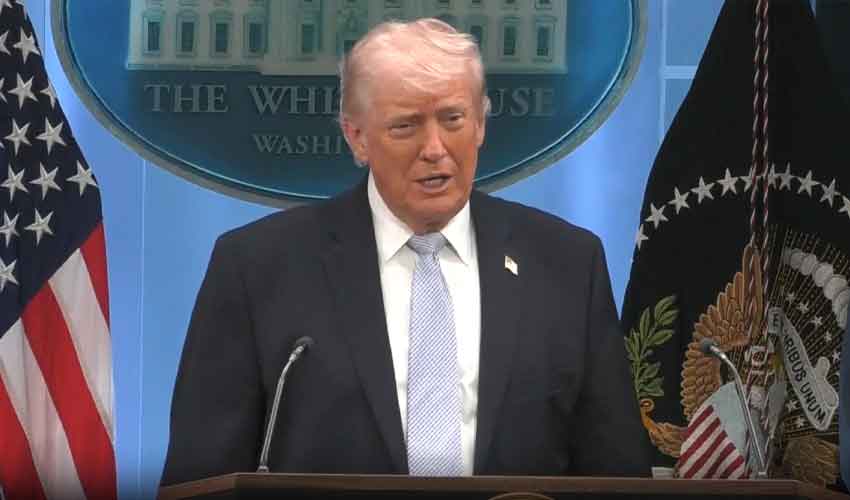
US President Donald Trump has instructed aides to prepare for an extended blockade of Iran as stalled talks leave the future of the Strait of Hormuz uncertain, according to US officials cited by The Wall Street Journal.
The move signals Washington may be preparing for a longer standoff with Tehran, keeping pressure on Iran’s economy and oil exports while insisting that any agreement must address its nuclear program.
In recent meetings, including a Monday discussion in the Situation Room with top security officials, Trump chose to continue preventing shipping to and from Iranian ports.
Officials said the president assessed that maintaining the blockade carried less risk than his other options: resuming bombing or walking away from the conflict altogether.
The blockade is being used as a high-risk attempt to force Tehran into nuclear concessions it has long resisted.
US targets Iran’s oil revenue
The US has been blocking ships traveling to and from Iranian ports in an effort to cut off oil revenue and squeeze the regime’s finances. Trump told aides to prepare for an extended US naval blockade as the war enters its third month and diplomatic efforts remain stalled.
Also Read: Trump says Iran in ‘state of collapse’ as Hormuz talks stall
The decision suggests the conflict could enter a prolonged phase in which major fighting remains paused, but no lasting political or nuclear agreement is reached.
Iran’s Hormuz offer fails to satisfy Trump
Trump signaled Monday that he was unlikely to accept Iran’s latest proposal to end the war. According to reports, Tehran proposed reopening the Strait of Hormuz while leaving questions about its nuclear program for later negotiations.
Iran has indicated it may accept an interim deal to reopen the key waterway in exchange for Washington ending its blockade of Iranian ports.
However, Tehran is also insisting on keeping some control over shipping through the strait, a condition Washington is unlikely to accept.
Trump says Iran not negotiating in good faith
Trump rejected Iran’s offer, according to The Wall Street Journal, and told aides it showed Tehran was not negotiating in good faith. The report said the Iranian proposal included a three-step plan to reopen the Strait of Hormuz while postponing nuclear talks.
Trump is reportedly unwilling to drop his demand that Iran, at minimum, suspend nuclear enrichment for 20 years and accept restrictions after that period.
Also Read: Trump says King Charles agrees Iran can't have nuclear weapon
White House spokeswoman Anna Kelly said the United States had met its military objectives in the war with Iran. She said the blockade of Iranian ports had given Washington “maximum leverage” over Tehran in negotiations aimed at preventing Iran from acquiring a nuclear weapon.
The administration continues to frame the blockade as a way to compel nuclear concessions without immediately returning to full-scale military strikes.
Mediators expect revised proposal
Mediators in Pakistan expect Iran to submit a revised proposal to end the war in the coming days, CNN reported Tuesday, citing sources close to the mediation process.
The diplomatic process remains fragile after the inconclusive first round of talks in Pakistan in mid-April. Hostilities could resume if both sides fail to agree on a path back to negotiations.
Earlier Tuesday, Trump said Iran had asked the United States to lift the naval blockade while both sides negotiate an end to the two-month war.
Also Read: US ground invasion of Iran less likely, airstrikes on leaders on table
He said Tehran wanted the Strait of Hormuz reopened “as soon as possible” while trying to resolve what he described as internal leadership problems.
Posting on Truth Social, Trump claimed Iran had said it was in a “State of Collapse.”
Blockade carries political risks for Trump
Extending the blockade could prolong a conflict that has already driven up gasoline prices and weighed on Trump’s poll numbers.
Reports said the war has also darkened Republican prospects ahead of the midterm elections.
The blockade has led to the lowest number of transits through the Strait of Hormuz since the US and Israel launched their attacks on Iran on February 28.
The lack of a clear path forward has led some US officials to conclude that the eight-week conflict may end without either a nuclear deal or a return to full-scale war.
That assessment was first reported by Axios.
For now, Trump appears to have chosen a middle course: keep the ceasefire largely intact, maintain the blockade and continue pressing Tehran for nuclear concessions.
But with Hormuz still disrupted, Iran resisting Washington’s nuclear demands and global energy pressure rising, the standoff shows little sign of a quick resolution.

.jpg)