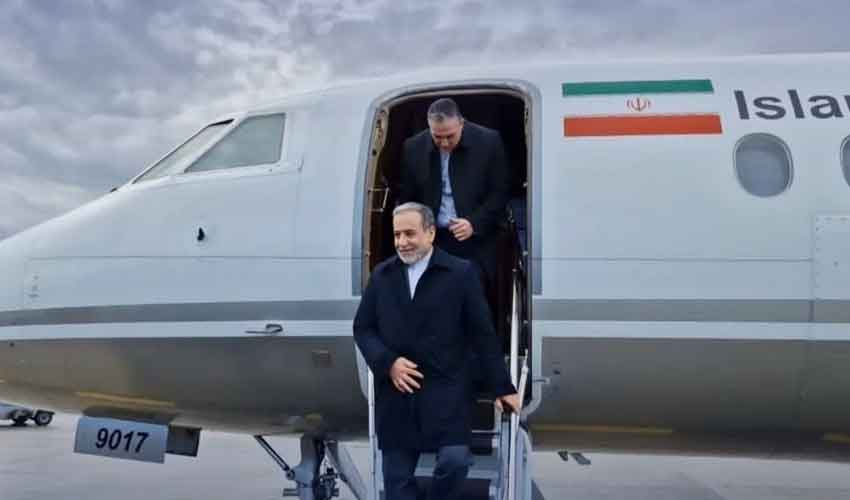
Iranian Foreign Minister Abbas Araghchi arrived in Russia on Monday for high-level talks with President Vladimir Putin, after visiting Pakistan and Oman as part of diplomatic efforts linked to the war, the Strait of Hormuz and stalled Iran-US negotiations.
Speaking to the media after arriving in Russia, Araghchi said Pakistan had played a “very important role” in mediation efforts. He said there had been “many new developments” in the negotiation process, making it necessary for him to return to Pakistan for further consultations.
“We held good consultations with our friends in Pakistan. The trip was successful,” Araghchi said, according to Iranian state media.
He added that Iran had reviewed the outcome of recent meetings and discussed the direction and conditions under which talks could move forward.
Iran reviews conditions for future talks
Araghchi said Tehran had examined the circumstances needed for negotiations to continue.
“We reviewed what has taken place in the negotiations so far and the conditions under which they can continue,” he said shortly after landing in Russia.
Also Read: Iran sends US new proposal through Pakistan to end war
The Iranian foreign minister also said what he called the “unnecessary demands” of the United States had become an obstacle to the success of previous negotiations.
Peace efforts between Tehran and Washington remain stalled, with the latest diplomatic activity focused on regional mediation rather than direct Iran-US talks.
Iran shares ‘red lines’ through Pakistan
Iran’s state-run Fars news agency reported that Araghchi gave mediators in Pakistan a list of Iran’s “red lines” to be conveyed to the United States. According to Fars, the red lines included “nuclear issues and the Strait of Hormuz.”
However, the agency said the exchange of messages was not part of formal Iran-US negotiations. It described the communication as an effort to “clarify” the regional situation and Iran’s red lines.
No further details were provided.
Oman talks focused on Strait of Hormuz
Before reaching Russia, Araghchi also visited Oman, where talks focused on the Strait of Hormuz. He described Oman as a friendly country and said Muscat had taken “a very good stance” during the war.
Araghchi said Iran and Oman, as the two coastal states of the Strait of Hormuz, needed to maintain close coordination. “Safe passage through the Strait of Hormuz is now an important global issue,” he said.
He added that both countries must remain in dialogue to secure shared interests and coordinate any steps linked to the strategic waterway.
Also Read: Araghchi wraps up another visit to Pakistan
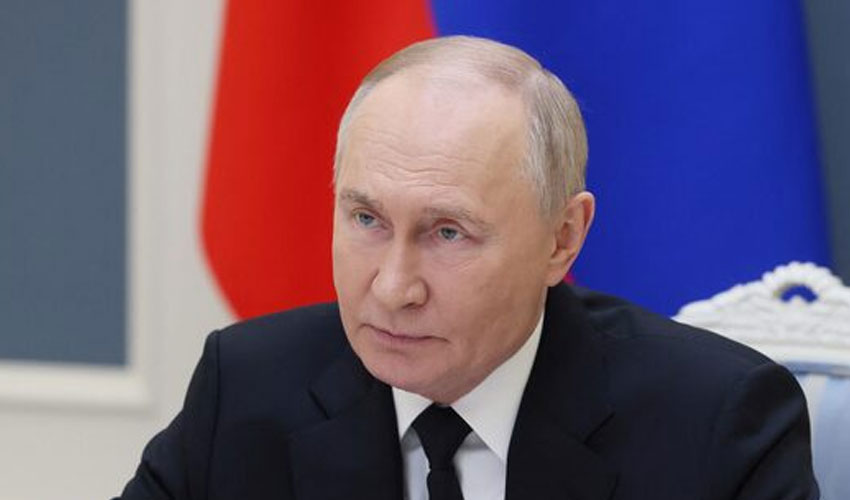
Araghchi arrived in St. Petersburg on Monday, where he is expected to meet Russian President Vladimir Putin. He said the visit was “a good opportunity” for Iran to consult Russian officials on developments related to the war.
“As you know, we have always held meetings with Russia to discuss broad issues, especially regional and international matters,” Araghchi said in a video interview published by Iranian state media IRNA.
He added that Tehran and Moscow have also maintained constant bilateral consultations on many issues.
Talks with Putin and Lavrov expected
Besides his planned meeting with Putin, Araghchi said on Telegram that he would also meet Russian Foreign Minister Sergey Lavrov.
Tehran’s ambassador to Moscow, Kazem Jalali, said the Araghchi-Putin meeting would focus on “coordinating interactions and advancing joint programs at the regional and international levels.”
Russia and Iran are longstanding strategic partners, and Moscow has been a key diplomatic ally for Tehran throughout the war with the United States.
Also Read: Araghchi holds calls with regional, European counterparts
The Kremlin has reportedly offered to take custody of Iran’s enriched uranium by storing or reprocessing it on Russian soil. However, US President Donald Trump reportedly rejected that proposal.
While Russia has supported Iran diplomatically, Moscow has also been cautious about becoming directly drawn into the latest Middle East conflict as it continues its full-scale war in Ukraine.

.jpg)