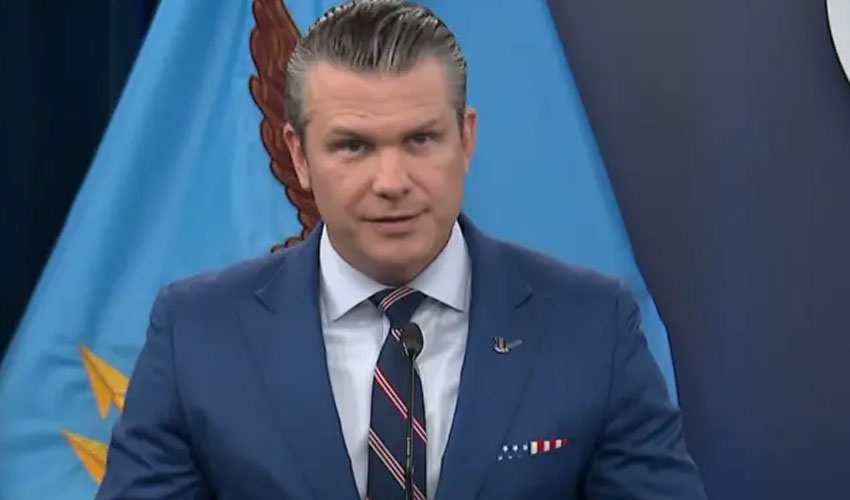
US Secretary of Defence Pete Hegseth said the message to Iran was that it was under constant observation, adding that while Iran claimed control of the Strait of Hormuz, it had no effective navy.
Speaking at a news briefing, Hegseth said the United States remained as strong as before. He said Iran’s navy, air capability, launchers and missiles had been eliminated. Hegseth said Iran was retrieving missile launchers damaged in bombardment.
Hegseth said that the United States was aware of the movement of Iranian military assets and that Iran could not, under any circumstances, possess nuclear weapons. He added that a negotiating team was in talks with Iran and warned that infrastructure would be destroyed to ensure the Strait of Hormuz remained open.
He said key targets in Iran had been identified and secured, adding that Iran could not match American capability. He said if Iran failed to reach an agreement, the United States stood ready for further action.
He said the blockade would remain in place for as long as required, adding that threats to fire on commercial vessels amounted not to control but to piracy. He said American successes were not reflected in what he termed as false reporting.
Meanwhile, Dan Caine said a naval blockade had been in force against Iran since Monday. He said any vessel assisting Iran would be pursued. He said Iranian exports had halted as a result of the blockade, which aimed to stop oil shipments. He said armed naval warships had been deployed in the region, adding that 13 vessels had already turned back. He warned that failure to comply with the blockade would result in the use of force.
:

.jpg)