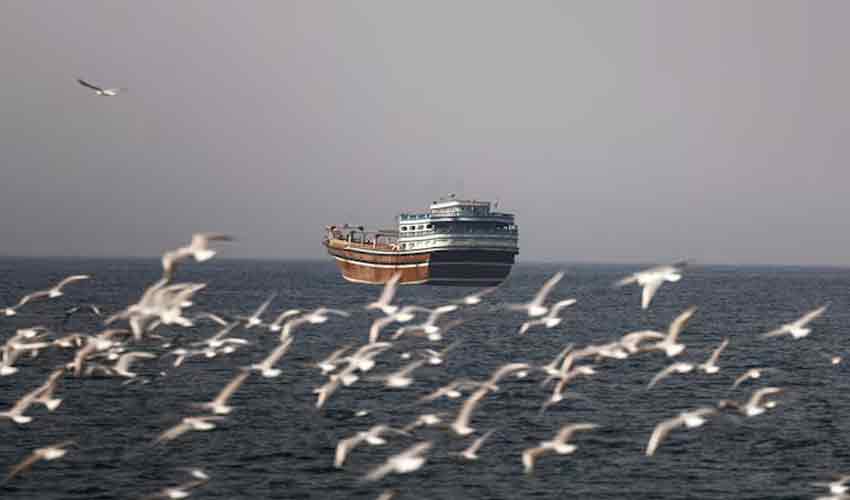
US President Donald Trump has announced a military blockade of the Strait of Hormuz after high-stakes talks with Iran failed to produce a deal, sharply escalating tensions despite a fragile two-week ceasefire.
The move has already rattled energy markets, sent oil above $100 a barrel, and raised fears of a wider regional crisis.
President Donald Trump said the United States would begin blockading the Strait of Hormuz from 10am ET on Monday after Tehran failed to honour what he said was a promise to reopen the vital shipping route.
In media remarks and social media posts, Trump said “many good things” were happening in the Strait, claimed Iran’s military had been badly damaged, and said its army had been destroyed, its navy sunk, and 58 ships along with vessels laying sea mines had been destroyed.
He said the blockade was aimed at ensuring Iran could no longer sell its oil and added that other countries would also be joining the US effort.
Trump also argued that many ships were now heading to the United States to load oil there instead, saying America produces more oil than both Russia and Saudi Arabia.
US military outlines scope of operation
The US Central Command said American forces would begin implementing the blockade of all maritime traffic entering and exiting Iranian ports and coastal areas at 10am ET (1400 GMT) on Monday.
According to CENTCOM, the blockade would be enforced “impartially” against vessels of all nations entering or departing Iranian ports, including all Iranian ports on the Arabian Gulf and Gulf of Oman.
At the same time, the US military said vessels transiting the Strait of Hormuz to and from non-Iranian ports would not be impeded. It added that commercial mariners would receive additional formal notice before the blockade begins.
Also Read: UK refuses role in US Strait of Hormuz blockade
Trump also warned that the US would take action against any vessel in international waters that had paid a toll to Iran. He said no ship paying what he called an illegal toll would have safe passage and warned that any Iranian who fired at US forces or peaceful vessels would be “blown to hell.”
He further said the US Navy would start destroying mines that Iran had placed in the Strait, a choke point through which about 20% of global energy supplies normally pass.
Failed Islamabad talks pushed tensions higher
The blockade announcement came after marathon negotiations between the US and Iran in Islamabad failed to end the war, putting a fragile two-week ceasefire under pressure.
The talks ran from Saturday into early Sunday and marked the first direct US-Iran meeting in more than a decade as well as the highest-level discussions since Iran’s 1979 Islamic Revolution.
The negotiations followed a ceasefire that began on Tuesday, intended to stop six weeks of fighting that has killed thousands across the Gulf, disrupted crucial energy supplies, and fueled fears of a broader regional war.
Trump said the US had negotiated with Iran for 21 hours and insisted Washington had the best understanding of the situation. He made clear that Iran would never be allowed to develop a nuclear weapon.
Also Read: Iran says deal possible if US respects Iranian nation's rights
At one stage, Trump said he believed Iran would return to the table and described the discussions as “very friendly,” arguing Tehran had no real cards to play. But later, he struck a harder tone, saying he did not care whether a “desperate” Iran came back for more talks.
He also accused Iran of lying, saying Tehran had promised to open the Strait of Hormuz but failed to do so.
Strait, nuclear demands main disputes
A US official said Iran rejected Washington’s demands for a full end to uranium enrichment, the dismantling of major enrichment facilities, and the transfer of highly enriched uranium.
The same official said Tehran also refused US demands to stop funding Hamas, Hezbollah, and the Houthis, and to fully reopen the Strait of Hormuz.
Iranian media, however, said agreement had been reached on a number of issues, but the Strait of Hormuz and Iran’s nuclear programme remained the main sticking points.
Iran’s semi-official Tasnim news agency said “excessive” US demands had stood in the way of a deal.
US showed ‘maximalism’ near Islamabad MoU
Iranian Foreign Minister Abbas Araqchi said Tehran had engaged in the talks in good faith and had come within inches of an “Islamabad MoU.”
But he said Iran encountered “maximalism, shifting goalposts, and blockade” just as an agreement was close.
“Zero lessons learned,” Araqchi said, adding: “Good will begets good will. Enmity begets enmity.”
His comments reflected growing frustration in Tehran that the negotiations broke down just when momentum appeared to be building.
Also Read: Iran says ‘Islamabad MoU’ was within reach before US talks collapsed
Iran’s Islamic Revolutionary Guards warned that any military vessel attempting to approach the Strait of Hormuz would be considered a breach of the ceasefire and would be dealt with “harshly and decisively.”
That warning underscored the risk that the blockade could quickly trigger a dangerous military escalation.
Iranian Parliamentary Speaker Mohammad Baqer Qalibaf, who led Tehran’s delegation alongside Araqchi, said Trump’s new threats would have no effect on Iran.
“If you fight, we will fight, and if you come forward with logic, we will deal with logic,” he said in remarks carried by state media.
Qalibaf also blamed the United States for failing to win Tehran’s trust, despite what he described as his side offering “forward-looking initiatives.”
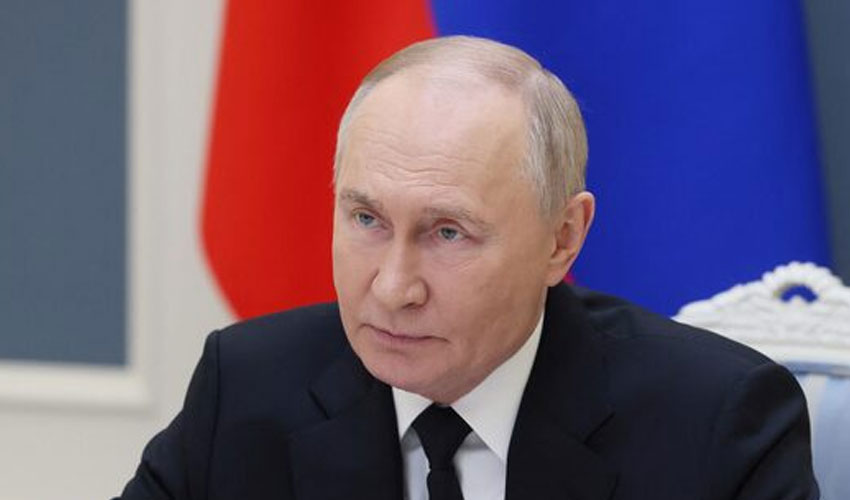
Iranian President Masoud Pezeshkian, who discussed the talks in a call with Russian President Vladimir Putin, said Tehran still wanted “a balanced and fair agreement.”
He said that if the United States returned to the framework of international law, reaching a deal would not be far off.
US Vice President JD Vance, who led the American delegation in Islamabad, said after the talks that failing to reach a deal was “bad news for Iran much more than it’s bad news for the United States of America.”
His remarks reinforced the White House view that Tehran now faces greater pressure following the collapse of diplomacy.
Shipping traffic begins to shift
Even before the blockade formally began, shipping patterns were already changing. Data showed oil tankers were steering clear of the Strait of Hormuz on Monday ahead of the US action.
Still, three fully loaded supertankers passed through the Strait on Saturday, appearing to be the first vessels to exit the Gulf since the ceasefire was announced.
On Sunday, Pakistan-flagged tankers Shalamar and Khairpur entered the Gulf, according to LSEG and Kpler data. The Aframax tanker Shalamar was heading to the United Arab Emirates to load Das crude, while the Panamax-sized Khairpur was heading to Kuwait to load refined products.
Liberia-flagged VLCC Mombasa B also transited the strait and was later reported ballasting in the Gulf.
Meanwhile, Malta-flagged VLCC Agios Fanourios I, which had tried to enter the Gulf on Sunday to load Iraqi Basra crude for Vietnam, later turned back and anchored near the Gulf of Oman. It was then reported to be planning to head to Iraq instead.
Managers of several of the vessels did not immediately respond to requests for comment outside office hours.
Oil, dollar and markets react sharply
The announcement jolted global markets.
Benchmark crude prices surged by more than 7% in Asian trading on Monday, pushing oil above $100 a barrel. The US dollar also strengthened as investors rushed toward safer assets, while US stock futures fell.
The renewed disruption is likely to keep fuel prices elevated and add to global inflationary pressure even if the ceasefire survives.
Trump himself acknowledged the likely political fallout, saying oil and gasoline prices could stay high through November’s midterm elections.
Dana Stroul, a former senior Pentagon official during the Biden administration who is now at The Washington Institute for Near East Policy, said Trump appeared to want a quick solution but warned the mission would be difficult to sustain alone over the medium to long term.
Also Read: Oil jumps 7% to above $100 ahead of US blockade on Iran
Trump also used the moment to criticize NATO allies, saying the United States provides the alliance with trillions of dollars in budget support but does not get sufficient help in times of need.
He said that now the immediate danger had passed, other countries were coming forward to assist. He added that several allies wanted to help with operations in the Strait, though there was no immediate public confirmation from Washington’s partners.
Qalibaf mocks rising US fuel prices
As tensions rose, Qalibaf took to social media to taunt Americans over the likely impact on gasoline prices.
He posted a map of Washington-area petrol prices and wrote: “Enjoy the current pump figures. With the so-called ‘blockade’, soon you’ll be nostalgic for $4–$5 gas.”
The remark highlighted Tehran’s confidence that economic pressure from any prolonged disruption in the Strait will be felt far beyond the region.

.jpg)