NASA has released rare images captured on an iPhone 17 Pro Max during the Artemis II mission.
The photos show Earth from orbit, proving that even everyday smartphones can perform in extreme space conditions.
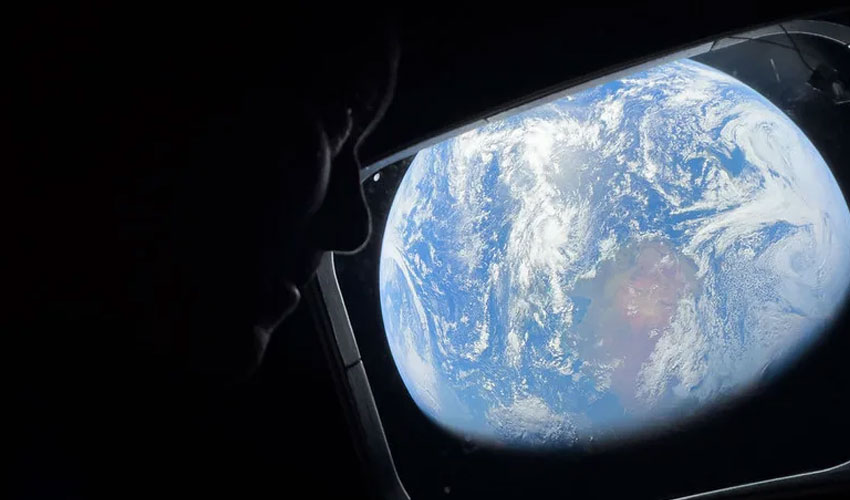
The newly released images were taken aboard the Orion spacecraft, offering a striking view of Earth framed through a cabin window.
According to details shared by NASA, the photos were captured on April 2, just two days into the mission, using the phone’s front-facing camera.
The use of the iPhone 17 Pro Max was not accidental. The device had been approved for extended orbital use before launch, marking a significant step for consumer technology in space missions.
Each astronaut carried one for personal use, integrating a familiar device into daily operations aboard the spacecraft.
Space presents unique challenges, including radiation exposure and extreme temperature shifts. Standard electronics are not typically built for such environments.
Despite this, the smartphone functioned effectively, capturing clear images without the need for specialized equipment.
Simple yet powerful results
The images include moments of Commander Reid Wiseman and Mission Specialist Christina Koch looking back at Earth.
Notably, these photos were taken using the front camera, highlighting how even secondary sensors can perform reliably in demanding conditions.
Unlike traditional space photography, no complex rigs or setups were needed. Astronauts simply used the phone in hand, making it easier to capture spontaneous moments inside the spacecraft.
Professional cameras still lead
Despite the impressive results, smartphones are not replacing professional equipment. Most official imagery from the mission still relies on high-end cameras like the Nikon D5, Nikon Z 9, and GoPro HERO4 Black.
These devices offer greater control, range, and precision, which are critical for scientific and mission documentation.
Instead, smartphones serve as a convenient tool for quick, personal captures, especially in tight spaces where speed and simplicity matter.
What this means for future missions
The Artemis II mission is the first crewed journey toward the Moon since 1972. The crew is expected to travel to the far side of the Moon and return to Earth by April 10.
The inclusion of smartphones signals a broader shift in how space missions are documented.
Going forward, everyday devices like smartphones may play a larger role alongside professional cameras. While high-end equipment will continue to handle precision tasks, phones offer flexibility and accessibility in capturing human moments in space.