Israel has claimed to have killed Iran’s top security official, Ali Larijani, and Basij commander Gholamreza Soleimani in fresh airstrikes, marking a major escalation in the ongoing war.
However, Iran has not confirmed the deaths, keeping uncertainty around the high-profile claims.
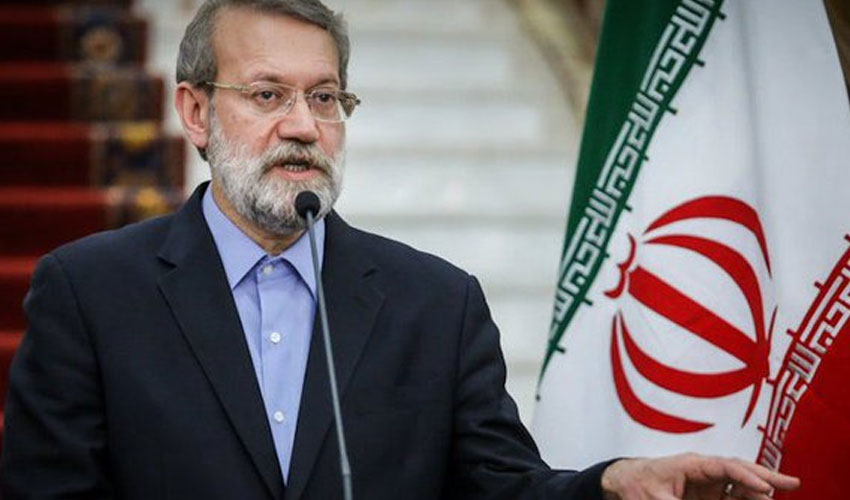
Israel’s Defence Minister Israel Katz said on Tuesday that the military had killed Ali Larijani, Iran’s security chief and secretary of the Supreme National Security Council, in overnight airstrikes.
Katz also claimed that Gholamreza Soleimani, commander of Iran’s Basij militia, was killed in the same wave of strikes. The Israeli military said the operations were based on precise intelligence and targeted senior Iranian regime figures.
Israeli Prime Minister Benjamin Netanyahu’s office confirmed that he had ordered the “elimination of senior officials of the Iranian regime.”
No confirmation from Iran
Despite the claims, there has been no official confirmation from Tehran.
Iranian state media published a handwritten note attributed to Larijani, commemorating 84 Iranian sailors killed in a US attack on a naval vessel. The note, shared on his social media, was linked to funerals expected on Tuesday, but it did not clearly confirm whether Larijani is alive.
Larijani was last seen publicly on Friday, attending Quds Day rallies in Tehran alongside President Masoud Pezeshkian.
If Larijani’s death is confirmed, he would be the most senior Iranian official killed since Supreme Leader Ayatollah Ali Khamenei, who was reportedly killed on the first day of US-Israeli airstrikes on February 28.
Larijani has long been a key figure in Iran’s political system, previously serving as a nuclear negotiator and speaker of parliament, and remained a close ally of Khamenei.
Targeting of Basij leadership
Israeli officials and media reports also said strikes targeted Gholamreza Soleimani and other senior Basij figures, although the outcome remains unclear.
The Basij is a paramilitary force under the Islamic Revolutionary Guard Corps (IRGC), often deployed to suppress protests and maintain internal security across Iran.
Soleimani, born in 1965, has been sanctioned by the United States, European Union, and others for his alleged role in suppressing dissent. The Basij has played a central role in crackdowns on protests, including the 2009 demonstrations and more recent anti-government unrest.
Just days before the reported strike, Larijani had issued strong statements addressing Muslim-majority countries.
He criticised what he called the lack of support from Islamic nations against US and Israeli actions, citing religious duty and unity.
“Whoever hears a man calling out, ‘O Muslims!’ and fails to answer him is not a Muslim?” he said.
Larijani also defended Iran’s regional actions, rejecting accusations of aggression while warning that there is no middle ground in the conflict.
“Which side are you on?” he asked, while stressing that Iran does not seek domination over its neighbours.
No end to war in sight
The US-Israeli war on Iran has entered its third week, with at least 2,000 people reported killed so far.
Fighting continued overnight, with Iran launching missile attacks on Israel, demonstrating its ability to carry out long-range strikes despite sustained bombardment.
In response, Israel said it is targeting “Iranian regime infrastructure” in Tehran and has also struck Hezbollah sites in Beirut. Israeli officials say plans are in place for at least three more weeks of war.
Strikes have not been limited to Tehran, with attacks reported in cities including Ahvaz, Isfahan, and Shiraz.
The conflict has also had wider global implications.
The Strait of Hormuz remains largely closed, disrupting a key global energy route through which around 20% of the world’s oil and liquefied natural gas passes. Efforts by US President Donald Trump to convince allies to help reopen the waterway have so far been unsuccessful.
Iran has also continued attacks against Gulf neighbours, contributing to rising global energy prices.
Limited strategic impact
Experts caution that even high-profile assassinations may not decisively alter the conflict.
Analyst Mohamad Elmasry described the situation as a “game of whack-a-mole,” noting that removing leaders does not necessarily weaken the broader system.
“Even if Larijani has been assassinated, that does not mean the whole regime has fallen,” he said, adding that such actions are symbolically and psychologically significant but not decisive.
As both sides intensify attacks and claims remain unverified, the conflict continues to escalate with no clear resolution in sight.
The reported killings, if confirmed, would mark a major turning point—but for now, uncertainty remains at the heart of an already volatile war.