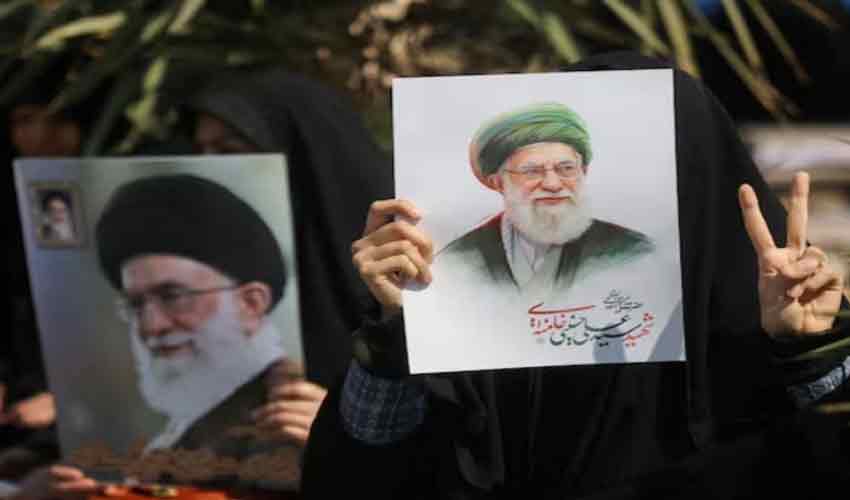
Iran was set to reveal its new supreme leader on Sunday, following a week of US-Israeli air strikes that destroyed fuel depots and shrouded Tehran in thick smoke.
The clerical body responsible for selecting a successor to the late Ayatollah Ali Khamenei, who was reportedly assassinated in the strikes that sparked the conflict, has reached a decision but has not yet publicly named the new leader.
“The vote to appoint the leader has taken place, and the leader has been chosen,” said Ahmad Alamolhoda, a member of the Assembly of Experts, according to Iran’s Mehr news agency. He added that the assembly’s secretariat would announce the name at a later time. Other assembly members confirmed a decision had been made, with some suggesting the late leader’s son could assume the post.
Meanwhile, Israel issued a warning that it would not hesitate to target the new supreme leader and members of the assembly involved in confirming him. Overnight operations demonstrated that capability, including strikes on fuel depots in and around Tehran and an attack on a hotel in central Beirut targeting suspected Iranian commanders.
As the conflict entered its ninth day, Iran’s Revolutionary Guards reported having sufficient supplies to continue missile and drone operations in the region for up to six months. Guards spokesman Ali Mohammad Naini stated that while only early-generation missiles had been used so far, “advanced and less-used long-range missiles” could be deployed in the coming days.
The escalation has spread across the Middle East. Saudi Arabia intercepted drones targeting its capital Riyadh, Kuwait reported an attack on fuel tanks at its airport, and Bahrain said a water desalination plant was damaged. Air strikes around Tehran hit five oil facilities, killing four people, according to the CEO of the national oil products distribution company. Tehran’s governor added that fuel distribution had been temporarily halted while repairs were carried out.
A haze hung over Tehran, carrying the smell of burning as residents reported growing anxiety under heavy security. The Iranian health ministry reported at least 1,200 civilian deaths and around 10,000 injuries, while Lebanon’s health ministry said 294 people were killed in Israeli air strikes over the past week. Lebanon’s Prime Minister Nawaf Salam warned of a looming humanitarian disaster.
US President Donald Trump attended the return of six American service members killed in a drone strike on a US base in Kuwait. Trump reiterated that US forces might still be sent into Iran, insisting that the conflict was under control, and suggested that Iran’s economy could be rebuilt if a leader “acceptable” to Washington replaced the late supreme leader—a proposal Tehran has rejected.
China and Russia have largely remained on the sidelines. Speaking in Beijing, China’s top diplomat Wang Yi condemned the war, stating, “A strong fist does not mean strong reason. The world cannot return to the law of the jungle,” and emphasizing that the conflict “should never have happened.”
Analysts warn that there is still no clear path to ending the conflict, which US and Israeli officials suggest could last weeks or longer.