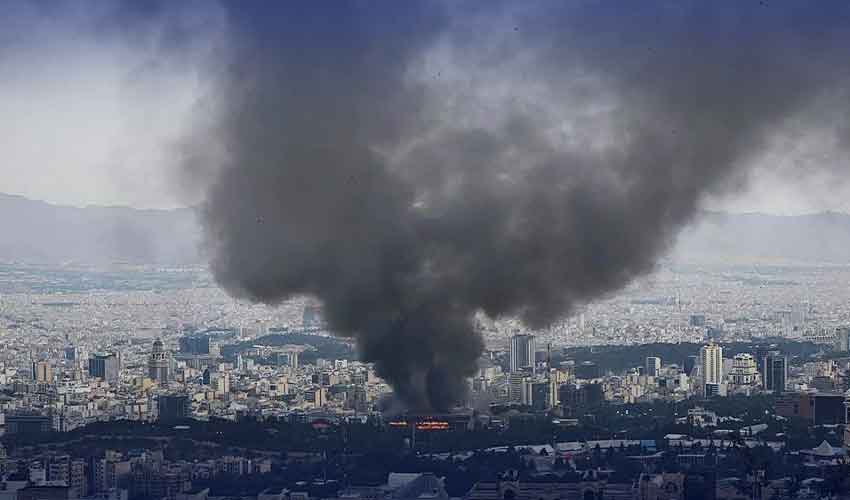
The death toll in Iran has climbed to 555 after three days of sustained US and Israeli airstrikes, according to Iranian Red Crescent officials.
As the conflict widens, missile attacks, drone strikes and retaliatory bombardments have spread across multiple countries in the Middle East, with six countries suffering casualties.
According to Al Jazeera:
- The highest number of civilian deaths occurred in Iran, where 555 civilians were killed in the bombing.
- In Israel, 10 people have been killed so far.
- In Lebanon, 31 people were killed and 149 injured in Israeli airstrikes.
- In the United Arab Emirates, 3 people were killed and 58 injured.
- Four US soldiers were killed and four others injured.
- In Iraq, 2 people were killed and 5 injured.
- In Kuwait, 1 person was killed and 32 injured.
- In Qatar, 16 civilians were injured, and in Oman, 6 civilians were injured.
According to the Iranian Red Crescent, the United States and Israel have attacked 131 cities across Iran. The total number of deaths in Iran has reached 555. Authorities said 100,000 workers are currently engaged in relief operations nationwide, while four million volunteers have been placed on high alert.
Iranian media also reported that eight military personnel were killed in US and Israeli attacks, including five members of the Iranian Army and three from the Revolutionary Guard.
In Iran’s Fars province alone, 35 people were killed in strikes, according to Reuters.
Strikes hit Sanandaj, Natanz nuclear facility
At least two people were killed in a missile strike on residential areas in the Iranian city of Sanandaj, local media reported.
Six missiles struck different locations across the city, including areas near a police station, causing fatalities and structural damage. Officials confirmed two deaths, though additional casualty figures are still awaited.
Also Read: 31 killed in Lebanon as Israeli strikes target Hezbollah leaders
Iran’s ambassador to the UN nuclear watchdog confirmed that the sprawling nuclear facility at Natanz Nuclear Facility was struck during US and Israeli operations.
Reza Najafi told reporters at a meeting of the International Atomic Energy Agency that Iran’s “peaceful, safeguarded nuclear facilities” were attacked again, specifically naming Natanz.
Iran retaliates with over 100 missiles at Israel
In response, Iran fired more than 100 missiles toward Israel. Eleven people were killed in the retaliatory strikes, while 777 were injured, according to Israeli authorities.
The Israeli Health Ministry said 86 seriously injured patients are still being treated in hospitals, with four in critical condition. Nine people were killed in a missile strike on the Israeli area of Shemesh a day earlier.
Also Read: US confirms 3 troops killed, 5 seriously injured in Iran strikes
Air raid sirens sounded across Tel Aviv and central regions, forcing residents to huddle in shelters.
Chinese citizen killed
China’s Foreign Ministry confirmed that one Chinese citizen was killed in Tehran during the attacks. More than 3,000 Chinese nationals have been evacuated as embassies and consulates in neighboring countries mobilized assistance teams.
Spokesperson Mao Ning said work groups have been set up to receive and assist evacuees, though she did not clarify how they would return home.
China said it was not informed in advance about US military actions against Iran. Mao denied reports of a pending missile deal between Iran and China, reiterating that China “always fulfilled its international obligations.”
Also Read: Several US military aircraft crash as Iranian strikes escalate: Kuwait
She strongly condemned the attacks and the killing of Ayatollah Ali Khamenei, urging all parties to immediately cease military action to prevent further escalation.
Mao also stressed that the sovereignty and territorial integrity of Gulf states must be respected and called for strengthened communication among regional countries.
US-Israeli strikes, broader escalation
The United States and Israel described the attacks as “pre-emptive” strikes targeting Tehran and other locations across Iran.
The bombings killed Ayatollah Ali Khamenei, who had served as Iran’s Supreme Leader since 1989.
In addition to missile exchanges, Iranian media reported that Iran shot down another US MQ-9 drone in Isfahan airspace, destroying the American strike drone.
With Iran, Israel, Lebanon and Gulf nations now affected, the conflict has rapidly evolved into one of the most volatile crises in recent Middle Eastern history.
As casualty figures rise and military operations continue, international calls for de-escalation are growing louder — but the path forward remains uncertain.



.jpg)