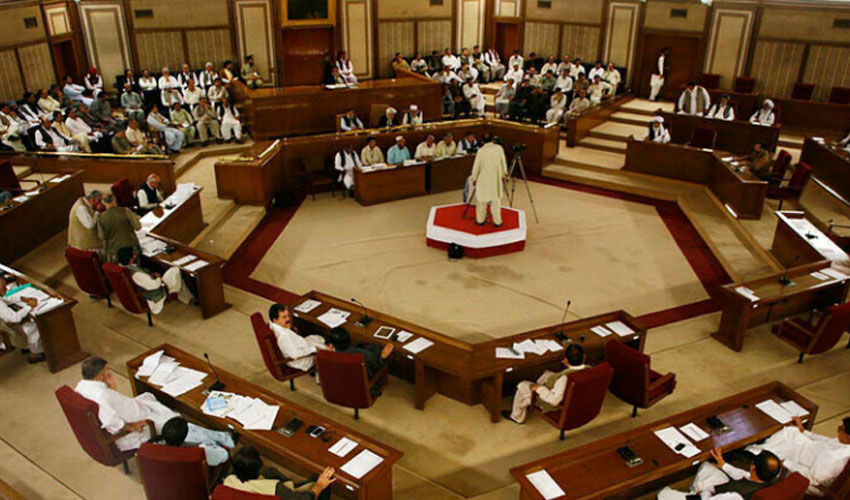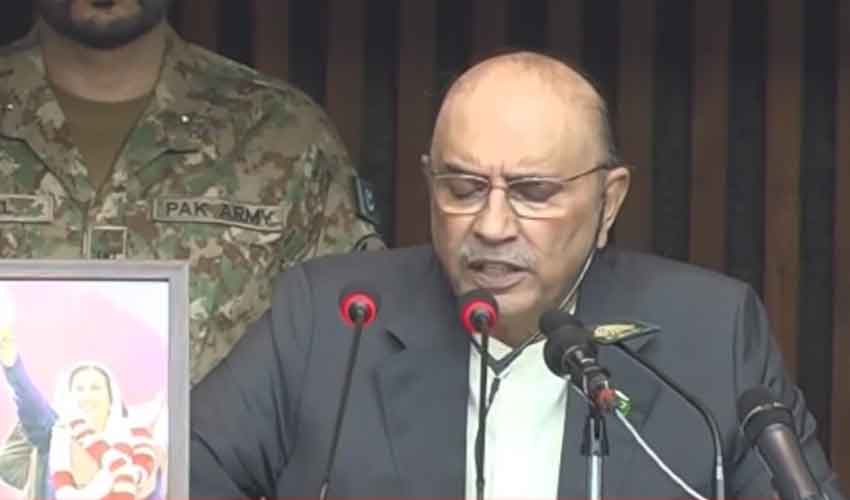
President Asif Ali Zardari delivered his ninth address to a joint session of parliament as the re-elected head of state, calling it a “unique honor” and a symbol of democratic continuity.
In a wide-ranging speech, he underscored national sovereignty, constitutional rule, economic recovery and regional peace, while issuing strong warnings to India and terrorist groups operating from Afghanistan.
Zardari said every presidential address is a reminder of the continuity and responsibility of the democratic system. He emphasized that the strength of the Republic lies in the Constitution, the steadfastness of the people, the responsibility of parliament and government, and the morale of the armed forces.
Recalling Pakistan’s democratic journey, he said Quaid-e-Azam Muhammad Ali Jinnah envisioned a democratic state based on constitutional supremacy and rule of law.
He paid tribute to Shaheed Zulfikar Ali Bhutto for giving the nation a unified Constitution and to Benazir Bhutto for strengthening democracy through sacrifice and leadership.
Zardari noted that presidential powers were unilaterally returned to parliament in the past and said the 18th Amendment transformed the presidency into a symbol of federal unity and guardian of constitutional laws.
National security, regional tensions
The president said the past 10 months brought complex challenges, but whenever sovereignty was tested, Pakistan responded with restraint and determination.
He praised the armed forces for professionalism in the face of unprovoked attacks on both eastern and western borders, calling the response to Indian aggression a “historic strategic victory.”
Referring to February 26, he said the Taliban regime launched attacks on the western border, and Pakistan’s security forces made it clear that no infiltration would be tolerated.
He thanked the nation’s defenders and said every martyr represents a family that made immense sacrifice. He said he feels the same pain for martyrs’ families as he did after the assassination of Benazir Bhutto, and pledged continued state support with honour and dignity.
Warning to India, stance on Kashmir
Zardari said 2025 proved to be a decisive turning point and a brilliant victory against external aggression.
While confronting Indian aggression, Pakistan succeeded on military and diplomatic fronts, he said, adding that the international community recognized Pakistan’s principled and decisive action.
He reiterated diplomatic and moral support for the people of occupied Jammu and Kashmir and said South Asia cannot be safe until Kashmir is liberated.
Calling on India to move “from the battlefield to the negotiating table,” he warned that in the event of war, the aggressor should be prepared for another humiliating defeat.
Afghanistan, terrorism, UN Charter
The president said India had increased proxy operations through Afghanistan and warned that Pakistan had shown both India and Afghanistan part of its capabilities.
He stressed that war is always the last option, but attacks on Pakistan’s territory are unacceptable. Citing Article 51 of the UN Charter, he affirmed Pakistan’s right to defend its sovereignty.
Referring to a UN Security Council report, he said terrorists operating from Afghanistan pose a global threat. He warned that ignoring the issue could expose any country to devastating attacks.
He said despite diplomatic efforts, the Afghan regime had given sanctuary to groups including al-Qaeda, BLA and TTP, and had forgotten commitments made under the Doha Agreement.
He urged the Afghan Taliban to eliminate terrorist safe havens, saying the Afghan people deserve peace and an end to endless wars.
Condemnation of war against Iran
Zardari said Pakistan is deeply concerned about recent serious incidents in the region. He strongly condemned war being waged during negotiations with Iran and expressed support for the sovereignty and territorial integrity of the brotherly country.
He condoled the martyrdom of Iran’s Supreme Leader Ayatollah Ali Khamenei and prayed for his elevated status in Paradise.
He stressed peace, tolerance and negotiated solutions, warning that a devastating war could have engulfed the entire world.
Foreign policy, strategic partnerships
The president said new avenues of strategic cooperation have opened with the United States and that future relations will be more constructive.
He described Pakistan-China ties as reaching new heights and called the “iron brothers” relationship vital for economic development and regional stability.
Thanking Xi Jinping for solidarity, he said CPEC 2 would revolutionize Pakistan’s infrastructure.
He also highlighted expanded relations with Gulf countries, Azerbaijan and Turkey, and termed the Pakistan-Saudi Arabia strategic mutual defense agreement an important milestone.
On Palestine, he reaffirmed Pakistan’s principled position and continued support for an independent Palestinian state based on previous borders.
Water security, Indus Waters Treaty
Zardari called water security a strategic concern and warned that India’s suspension of the Indus Waters Treaty amounts to “water terrorism.”
He said using water as a political weapon violates international and humanitarian law and threatens regional stability.
Rivers are a symbol of life, he said, adding that international law does not permit unilateral water disruption. Pakistan will defend its water rights with unity and determination.
As elected president, he pledged to protect the unity of the federation and parliament. He said provincial autonomy under the Constitution has strengthened participatory governance and stressed the need for coordination rather than centralization.
He called for effective functioning of constitutional forums like the Council of Common Interests and fair distribution of resources under the National Finance Commission Award.
Special attention, he said, is needed for Balochistan to ensure local communities benefit from mineral wealth and the blue economy.
Economy, reforms, inclusive growth
Zardari said economic stability and national security are interconnected. He praised government steps to stabilize key economic indicators after the 2022 crisis but acknowledged hardships faced by the salaried class, pensioners, workers and small traders.
He called for expansion of the tax base, institutional reforms and inclusive development focused on jobs and direct relief. Energy reform, clean energy transition and digital innovation are prerequisites for industrial revival, he said.
Agriculture, food security and environmentally compatible water management are strategic priorities.
Social protection, women’s empowerment
The president said the Benazir Income Support Programme (BISP) aims to empower marginalized groups. He emphasized removing barriers to women’s development and ensuring daughters of the nation have protection, digital access and financial freedom.
“Security, economy and constitutional governance are interconnected,” he said, adding that strength in one pillar strengthens all.
Concluding his address, President Zardari said Pakistan has emerged from severe pressure with restored credibility and renewed confidence. He urged lawmakers to consolidate gains, protect sovereignty, eliminate terrorism, promote development and strengthen democratic governance.
“Let us protect our borders by creating opportunities,” he said, calling for unity in times of trial and institutionalized reforms for a prosperous future.
.png)


.jpg)