China is believed to have loaded more than 100 intercontinental ballistic missiles (ICBMs) across its latest silo fields, according to a draft Pentagon report, signaling Beijing’s rapid nuclear buildup and reluctance toward arms control discussions.
The draft Pentagon report, reviewed by Reuters, notes that China has likely deployed more than 100 solid-fuel DF-31 ICBMs near its border with Mongolia. While the Pentagon had previously reported the presence of new silo fields, this report is the first to indicate the missiles may be actively loaded.
China’s nuclear warhead stockpile remains in the low 600s as of 2024, but the report projects the stockpile could exceed 1,000 warheads by 2030. Despite this expansion, Beijing maintains its official no-first-use nuclear policy.
US denuclearization talks and strategic concerns
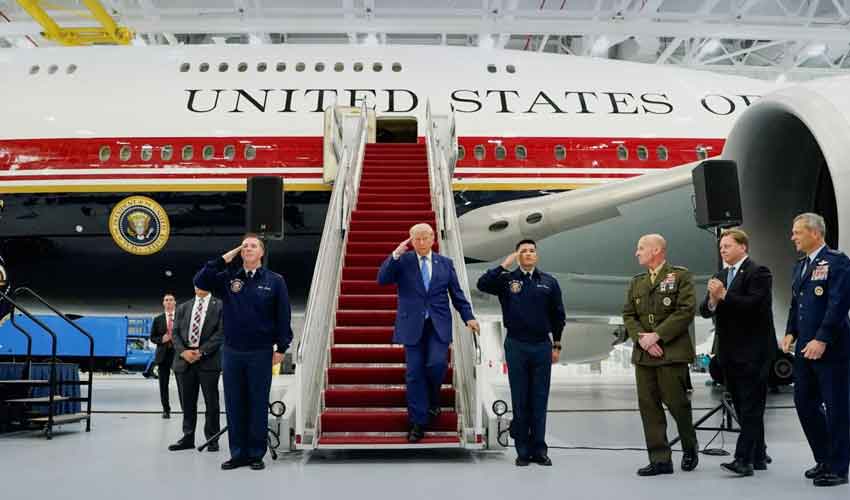
Last month, former U.S. President Donald Trump expressed interest in negotiating denuclearization with China and Russia. However, the Pentagon report concludes that China has shown no appetite for arms control discussions.
The report warns that China is also modernizing its military for potential conflict over Taiwan, suggesting the PLA could launch strikes up to 1,500–2,000 nautical miles from Chinese territory to challenge U.S. presence in the Asia-Pacific.
Implications of new START expiration
The report arrives ahead of the expiration of the 2010 New START treaty, which limits U.S. and Russian strategic nuclear warheads. Experts caution that China’s expanding arsenal, combined with the treaty’s lapse, could trigger a three-way nuclear arms race.
Daryl Kimball, executive director of the Arms Control Association, stated, “More nuclear weapons and an absence of diplomacy will not make anyone safer, neither China, Russia, nor the United States.”
The Pentagon report also notes that President Xi Jinping’s anti-corruption campaign has targeted the PLA, potentially affecting short-term nuclear readiness but strengthening long-term military efficiency.
At least 26 top managers in state-owned defense firms have been investigated or removed in the past 18 months, covering missiles, shipbuilding, and nuclear sectors, which has temporarily slowed arms procurement.
China has denied reports of military buildup, calling such claims efforts to “smear and defame” the country and mislead the international community. The Pentagon declined to comment on the draft report, and Beijing’s embassy in Washington did not immediately respond.