







A divided US appeals court has ruled that most of Donald Trump’s tariffs are unlawful, striking a blow to one of the cornerstones of his economic and foreign policy agenda.
The decision sets up a high-stakes legal battle that could soon land before the Supreme Court.
In a 7-4 ruling, the U.S. Court of Appeals for the Federal Circuit found that the former president overstepped his authority by using the International Emergency Economic Powers Act (IEEPA) to justify tariffs on imports.
The judges noted that while the law gives presidents broad powers during national emergencies, it does not explicitly authorize the imposition of tariffs or taxes.
RELATED: At least 69 dead after migrant boat capsizes off Mauritania
The ruling applies to Trump’s so-called “reciprocal tariffs” introduced in April and additional levies placed in February against China, Canada and Mexico. Tariffs issued under other statutes, such as those on steel and aluminum, remain unaffected.
Trump’s defense and reaction
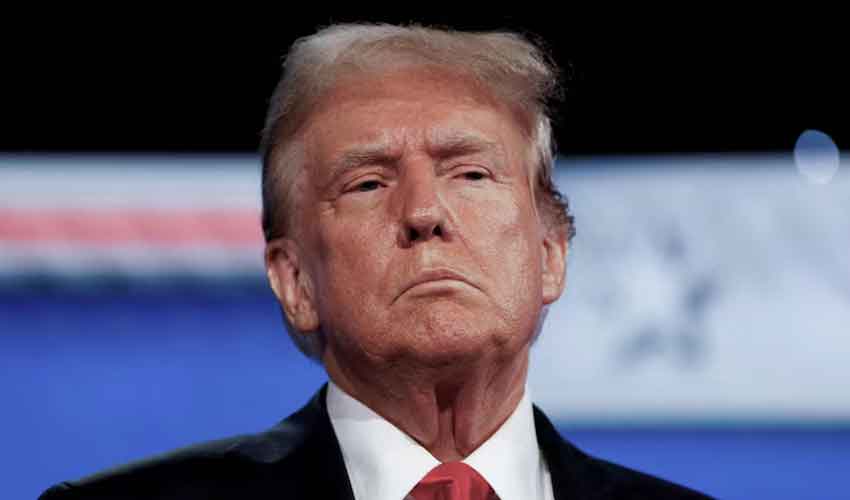
Trump, who has made tariffs a central tool of his trade policy, dismissed the ruling as partisan. On Truth Social, he warned that removing the tariffs would be a “total disaster” for the United States but expressed confidence that the Supreme Court would overturn the decision.
The former president had declared a national emergency to justify his actions, citing persistent trade deficits, loss of U.S. manufacturing, and the flow of fentanyl across borders. His Justice Department argued that emergency provisions gave him the power to regulate or block imports altogether.
Economic and political fallout
The decision has created new uncertainty in markets already sensitive to trade disputes. Analysts say the administration was prepared for the setback and may try to use other statutes to keep tariffs in place.
“The last thing corporate America needs is more trade uncertainty,” said Art Hogan, chief market strategist at B. Riley Wealth.
The case adds to a broader legal showdown over Trump’s economic policies, including his ongoing battle with the Federal Reserve. Experts suggest the Supreme Court, with its conservative majority, will ultimately decide the fate of Trump’s trade agenda.
The court has allowed the tariffs to remain until October 14, giving Trump’s team time to appeal. With multiple lawsuits still pending, the legal fight could redefine presidential powers on trade and reshape U.S. economic policy for years to come.




.gif)


.jpg)







