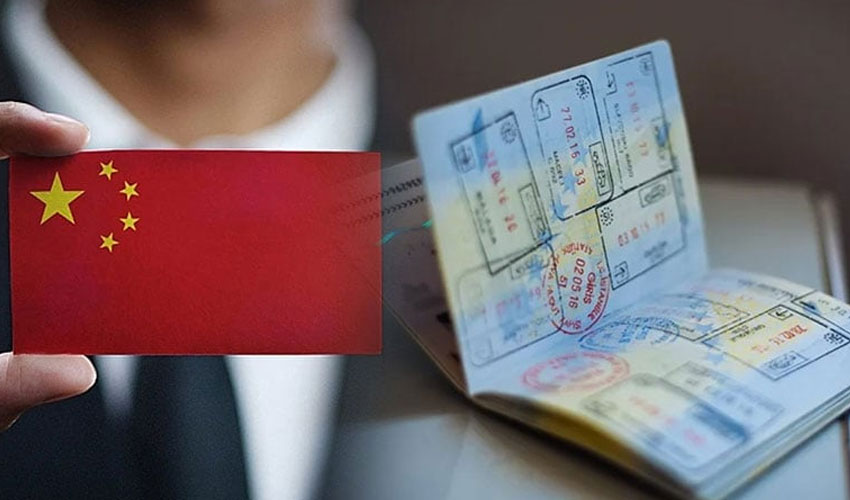
China has announced the launch of a new K visa, effective October 1, 2025, aimed at drawing young professionals, students, and researchers in the fields of science, technology, engineering, and research (STEM).
The move is part of Beijing’s broader push to strengthen its innovation capacity and global talent strategy.
Who is eligible for China’s K visa?
The K visa will target early-career talent with strong academic or professional credentials. Applicants who can benefit include:
-
Graduates holding a bachelor’s degree or higher from reputable international universities.
-
Young researchers and professionals working in scientific or technical fields.
-
Candidates who wish to contribute to China’s education, technology, or research sectors.
A major advantage is that unlike most work or research visas, the K visa does not require an invitation letter from a Chinese employer or institution, making the process more accessible.
Key benefits of the K visa
Holders of the new K visa will gain broader opportunities and more flexibility compared to traditional visas:
-
Longer duration and multi-entry options, reducing the hassle of frequent renewals.
-
Eligibility to participate in research projects, academic programs, technology ventures, entrepreneurship, and cultural exchanges.
-
Access to a wider network of innovation hubs, from major cities like Beijing and Shanghai to emerging tech centres such as Shenzhen and Hangzhou.
This could make China a more attractive destination for early-career STEM talent seeking international exposure.
Why China is launching the K visa
The visa scheme aligns with national priorities outlined at the 20th National Congress, which placed science, technology, and talent at the heart of China’s long-term growth.
RELATED: Pakistan sets fees and timelines for crypto and security devices evaluations
By focusing on younger candidates, Beijing hopes to:
-
Encourage global collaboration in education and technology.
-
Build long-term international partnerships that strengthen its innovation ecosystem.
-
Attract overseas Chinese graduates back under foreign citizenship, creating a possible “reverse brain drain.”
Opportunities for pakistani students and professionals
For countries like Pakistan, the policy presents a significant opportunity. Many young Pakistanis pursuing STEM studies or research can apply for the K visa without needing job offers or institutional backing in China.
This could pave the way for more Pakistani students and researchers to advance their careers in Chinese universities, research centres, and startups, boosting bilateral cooperation in science and technology.
While the policy has been widely welcomed, some challenges remain. China has yet to publish the full eligibility criteria and documentation requirements, and the effectiveness of the scheme will depend on streamlined application processes and integration support for newcomers.
Local governments in innovation hubs are expected to release pilot schemes with incentives such as housing assistance and access to research clusters before the official rollout in October 2025.


.jpg)




.jpg)