A string of violent killings targeting Indian-origin businessmen in Canada has triggered urgent calls for the federal government to designate India’s Lawrence Bishnoi gang as a terrorist organisation, amid claims the group operates with backing from Indian intelligence.
On May 14, 2025, 51-year-old Harjit Singh Dhadda was gunned down outside his office in Mississauga, Ontario. Hours later, a Facebook post claimed the murder on behalf of the Lawrence Bishnoi gang, an Indian-origin syndicate accused of orchestrating a growing wave of violence across Canada.
RELATED: Gangster Goldy Brar confesses to killing Sidhu Moose Wala
Dhadda’s killing was followed by two more fatal shootings of Indian-origin businessmen — Satwinder Sharma in Surrey and MP Dhanoa in Brampton — all with alleged links to the Bishnoi network.
Police have made arrests in some cases, but victims’ families and community members say the masterminds remain untouched.
Officials push to designate Bishnoi gang as terrorist entity
In response, political leaders across Canada — including British Columbia Premier David Eby, Alberta Premier Danielle Smith, and multiple lawmakers — are urging the federal government to formally designate the Bishnoi gang a terrorist group.
“The terrorist designation enables police to use the necessary tools,” Eby said.
Designating the gang would empower law enforcement to seize assets, criminalize support for the group, and strengthen international cooperation under Interpol and the Five Eyes alliance.
Alberta’s Public Safety Minister Mike Ellis cited “credible intelligence” linking the Bishnoi gang to extortion and targeted violence against the South Asian community in Canada.
India connection: is the Bishnoi gang an intelligence asset?
Canadian officials allege that the Bishnoi network is not just an organised crime syndicate but may be working on behalf of Indian intelligence services to silence critics of Prime Minister Narendra Modi abroad.
This claim came to the forefront after the 2023 assassination of Sikh separatist leader Hardeep Singh Nijjar, for which Canada blamed India directly. At the time, then PM Justin Trudeau accused Indian diplomats of collaborating with criminal gangs like Bishnoi’s to track and harm political opponents.
Read also : ₹1.11 crore reward announced for Lawrence Bishnoi’s encounter
India has denied the charges and, in turn, accused Canada of harbouring extremists. New Delhi has sent multiple extradition requests for Bishnoi gang members — none of which Ottawa has yet acted upon.
Growing insecurity in the diaspora
For many in the Indian-origin community in Canada, especially in cities like Surrey and Brampton, fear has become a part of daily life.
Gurleen Dhadda, daughter of the slain businessman Harjit Singh, recalls the day he received a threatening extortion call demanding C$500,000, warning of violent consequences. Despite alerting police, her father was shot dead months later.
“Police arrested three young men, but I want to know who ordered my father’s killing,” she said.
In another chilling case, Satish Kumar, a 73-year-old temple leader, received death threats and was asked to pay C$2 million in extortion. When he refused, his business properties were shot at, and the gang sent him footage of the attacks.
Kumar says law enforcement has failed to adequately protect his family.
“They could execute me at any moment. My family lives in fear,” he told Al Jazeera.
Blurring lines: organised crime or terrorism?
Experts say the Bishnoi gang’s operations — including transnational assassinations, extortion rackets, and social media claims of murder — go beyond conventional organised crime.
Amarnath Amarasingam, an extremism researcher, supports the idea of designating the group as a terrorist entity. He notes that such a move would unlock critical legal and surveillance powers and send a strong signal to global allies.
However, he cautions that labeling a non-ideological criminal group as a terror entity could set a risky legal precedent and lower the bar for future designations.
“The Bishnoi gang lacks a political or religious ideology — a traditional marker for terror designations,” he warned.
Bishnoi's rise: From local gangster to global threat
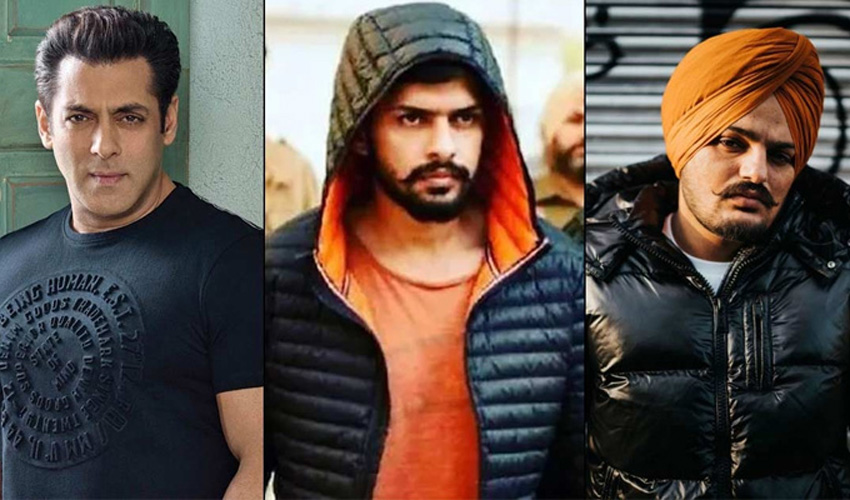
Lawrence Bishnoi, 32, is currently jailed in India but is believed to control hundreds of sharpshooters across borders via encrypted communications. His gang gained infamy after the 2022 assassination of Punjabi singer Sidhu Moosewala, allegedly ordered by Bishnoi’s associate Goldy Brar from Canada.
Canadian and Indian authorities say Bishnoi’s network spans continents — from Mumbai to Mississauga, Delhi to Vancouver — and has been linked to attacks on celebrities like Salman Khan, AP Dhillon, and Gippy Grewal.
Just this week, on August 7, a Bishnoi-linked attacker claimed responsibility for gunfire at a café owned by comedian Kapil Sharma in British Columbia.
What happens if Canada lists Bishnoi as a terrorist group?
If the federal government agrees to label the Bishnoi gang a terrorist entity, it could:
-
Freeze bank accounts and seize property
-
Criminalize financial support or public endorsement
-
Enable arrests and prosecutions under terror laws
-
Trigger international arrest warrants via Interpol
-
Ban visas and impose travel sanctions on affiliates
But the debate continues. Officials must balance public safety with legal precision, as misusing terror designations could open the door for political abuse in the future.
Community members have begun posting surveillance videos of shootings, demanding justice and protection. Statistics show that gang-related homicides in British Columbia have surged to 46% of all murders in 2023 — up from 21% in 2003.
“I forget about the threats when I’m at work,” says Satish Kumar. “But once I’m home, the fear returns.”
As the Canadian government weighs its next move, many South Asian Canadians are demanding swift action — before another name is added to the list of victims.

.jpg)