The Pakistan Bureau of Statistics (PBS) has released its weekly inflation data, showing a 0.35 per cent decline in overall prices. The year-on-year inflation rate was recorded at 1.98 per cent.
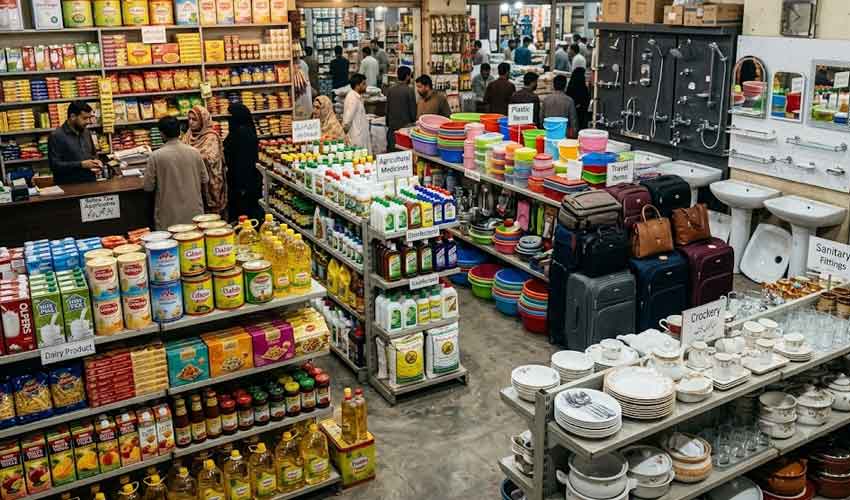
According to the PBS, prices of 11 essential items increased during the week under review, while the rates of 12 items fell. Items that saw a price increase included eggs, beef, powdered milk, garlic, mutton, jaggery and onions.
Prices of firewood, energy savers and cigarettes also rose last week. Tomatoes, chicken, sugar, moong dal, potatoes, mash dal and wheat flour were among the items that became cheaper.
The price of sugar fell by 0.71 per cent, with the average rate recorded at Rs179.33 per kilogram. However, sugar was sold at up to Rs190 per kilogram in various cities, according to PBS.
In Karachi, Peshawar and Faisalabad, the price reached Rs190 per kilogram. In several cities across Punjab, it was sold at Rs173 per kilogram, and in Rawalpindi and Islamabad, the rate stood at Rs185 per kilogram.
Slight decreases were also noted in the prices of chickpea lentils and liquefied petroleum gas (LPG), the report added.
Prices of 28 essential commodities remained stable during the week.
Inflation remained moderate in July
Adviser to the finance minister, Khurram Schehzad said that social media platform X that inflation remained moderate in July 2025.
Inflation for July 2025 stays moderate
— Khurram Schehzad (@kschehzad) August 1, 2025
- Pakistan CPI inflation for July 2025 clocks in at *4.1%* (July 2024: 11.1%).
- Food inflation (rural) stays low, comes at *2.2%* (urban even lower at 1.5%) (July 2024: 3.4%/1.3%)
- Core inflation (non-food, non-energy) closes in at…
He said the inflation rate stood at 4.1 per cent during the month, compared to 11.1 per cent in July 2024.
Food inflation in rural areas was recorded at 2.2 per cent, while in urban areas, it declined further to 1.5 per cent. In comparison, these figures were 3.4 per cent and 1.3 per cent respectively in July 2024.
The core inflation rate fell from 11.7 per cent to 7.0 per cent year-on-year, Schehzad added.