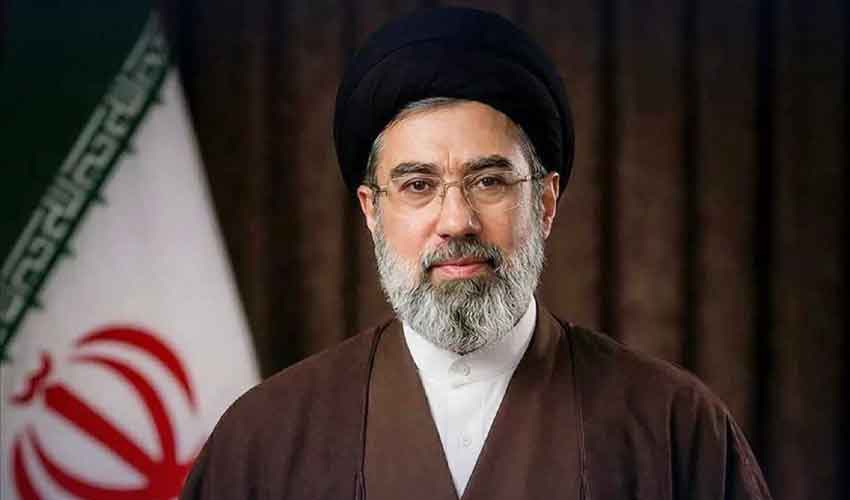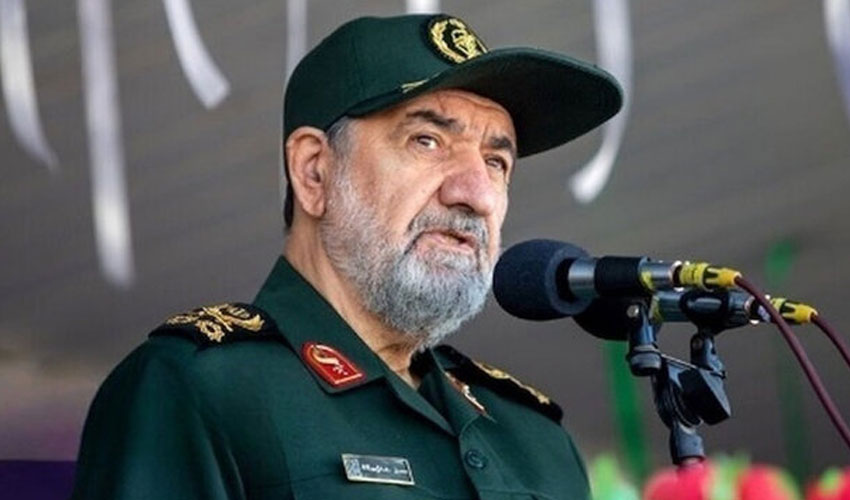
Iran has appointed veteran Revolutionary Guards commander Mohsen Rezaei as secretary of the Supreme National Security Council (SNSC), placing one of the Islamic Republic's most experienced military figures at the centre of national security and foreign policy decision-making.
The 71-year-old replaces Mohammad Baqer Zolqadr, who had been appointed to the position only in late March following the death of his predecessor, Ali Larijani, in an air strike during the conflict involving Iran, the United States and Israel.
No reason was immediately given for the change.
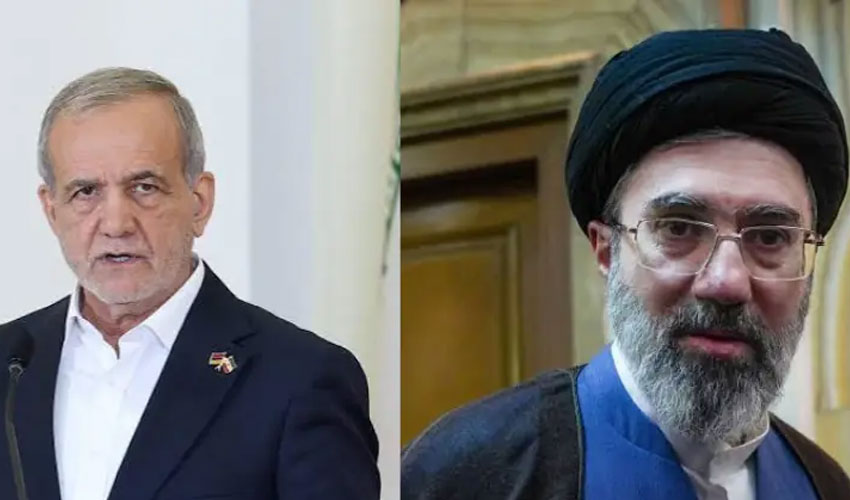
The SNSC is formally chaired by President Masoud Pezeshkian and brings together senior military, intelligence and government officials. However, Iran's Supreme Leader has the final authority over major state and security decisions.
Rezaei's appointment comes at a particularly sensitive time, as Tehran faces continuing confrontation with Washington and negotiations over the future of the conflict.
A Revolutionary Guards commander at 27
Rezaei joined the Islamic Revolutionary Guard Corps (IRGC) after the 1979 Islamic Revolution and was appointed commander of the powerful force in 1981, at the age of 27.
He remained in the position until 1997, leading the IRGC for 16 years and overseeing much of its expansion during the 1980-88 Iran-Iraq war.
During his tenure, the IRGC expanded its ground, naval and air capabilities, helping establish the military structure that would later become one of the most influential institutions in Iran.
Rezaei subsequently remained deeply involved in Iran's political and security establishment.
He served for more than two decades as secretary of the Expediency Discernment Council and was vice president for economic affairs from 2021 to 2023 under then-President Ebrahim Raisi.
Although he holds a doctorate in economics from the University of Tehran, much of his career has been devoted to military and political affairs.
Close to Supreme Leader Mojtaba Khamenei
Rezaei's elevation is also significant because of his relationship with Supreme Leader Mojtaba Khamenei.
He was appointed military adviser to Mojtaba Khamenei in March, shortly after Mojtaba succeeded his father, Ayatollah Ali Khamenei.
In a decree issued on Sunday, Mojtaba Khamenei appointed Rezaei as his representative on the SNSC, citing his "valuable experiences", including his military career during the Iran-Iraq war.
The move gives Rezaei a direct role representing the Supreme Leader within the country's highest national security coordination body.
Zolqadr, meanwhile, was appointed political adviser to the Supreme Leader.
A vocal critic of negotiations
Rezaei has repeatedly taken a hardline position on Iran's confrontation with the United States.
During the conflict, he publicly expressed scepticism about negotiations and issued strong warnings against Washington.
In April, he said it would be "great" if the United States launched a ground invasion of Iran, arguing that Tehran could capture thousands of American soldiers and use them as leverage.
He also opposed extending the ceasefire.
In June, shortly before Iran signed a memorandum of understanding aimed at ending the conflict, Rezaei said the agreement contained ambiguities that needed clarification.
Later that month, he accused Washington of violating the agreement by creating tensions around the Strait of Hormuz.
His record suggests that his appointment could bring a more outspoken and security-focused voice to the SNSC at a time when Tehran is weighing military pressure against diplomacy.
Opposition to the Shah
Rezaei's revolutionary credentials date back to his teenage years.
He opposed the Pahlavi monarchy before the 1979 revolution and was arrested and imprisoned by the Shah's security service, SAVAK, in 1973.
He was also involved in establishing and developing the Mansouroun militant group, whose members later became part of the senior leadership of the Revolutionary Guards.
His early involvement in the revolutionary movement helped establish his credentials within Iran's post-revolutionary security establishment.
Controversial Iran-Iraq war record
Rezaei's military record has also been the subject of controversy.
Critics have questioned his role in costly Iranian military operations during the Iran-Iraq war, particularly Operation Karbala-4, a December 1986 offensive that resulted in heavy Iranian casualties.
In 2018, Rezaei said the operation had been conducted partly to deceive Iraqi forces ahead of another offensive, Karbala-5.
He later clarified that Karbala-4 had initially been intended as a genuine military operation, but that Iran subsequently used its failure as part of a deception strategy.
His comments triggered criticism from war veterans, bereaved families and political figures.
What does his appointment mean?
Rezaei's appointment places a veteran IRGC commander with decades of military and political experience in a key coordinating position at a critical moment for Iran.
His close relationship with Mojtaba Khamenei and his longstanding hardline views could give the security establishment a stronger voice in Iran's approach to Washington, regional security and negotiations.
At the same time, the SNSC includes officials representing different parts of Iran's political and military establishment, meaning Rezaei's appointment does not necessarily guarantee an immediate change in national policy.
His elevation nevertheless signals the importance Tehran places on military experience and institutional loyalty as it navigates continuing tensions with the United States and the wider regional crisis.
For now, the appointment makes Rezaei one of the most consequential figures in Iran's national security apparatus — and his views on negotiations, US pressure and regional security are likely to be closely watched.