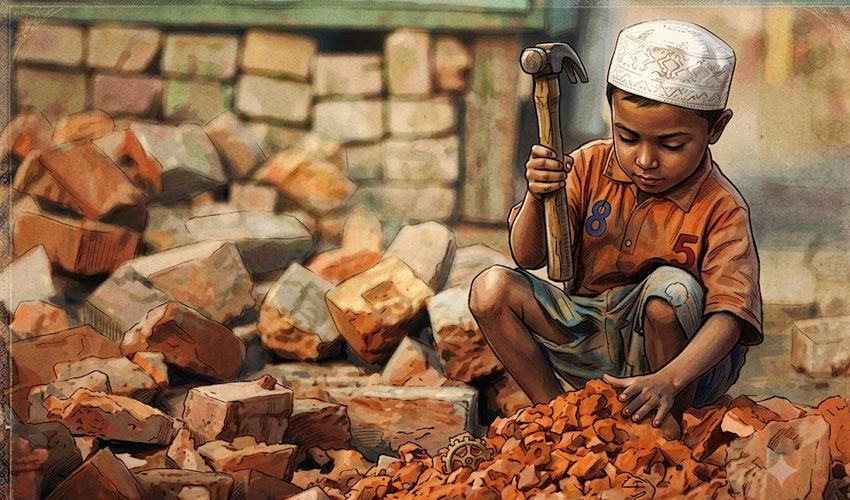
In a brick kiln on the edge of a city, in a workshop behind a shuttered storefront, on a family farm and, most often of all, inside an ordinary home, Pakistan's children are working.
There are 8.6 million of them. And until this week, no one had properly counted them in nearly three decades.
A new national report by the National Commission for Human Rights (NCHR), produced with UNICEF, has finally put a number to a problem the country has long preferred not to see. Titled Pakistan: Child Labour Surveys — Evidence for Action, it is the first nationally representative dataset on child labour since 1996. Its central finding is stark: 8.6 million children are in child labour, and more than 6.6 million of them are doing hazardous work that threatens their health, safety and futures.
That hazardous figure is the report's sharpest warning. Roughly three of every four working children are not simply missing school, they are exposed to dangers, from machinery and chemicals to heat and punishing hours, that can mark a body and a mind for life. Between 32 and 58 percent of working children, the report found, had been injured or had fallen ill on the job. A large share of older children showed symptoms of depression.
A burden that isn't shared evenly
Where these children live is its own story. Punjab, the country's most populous province, carries the overwhelming majority: more than 6 million working children, over 6,036,000. Sindh follows with 1.61 million.
Khyber Pakhtunkhwa accounts for roughly 745,000 and Balochistan for 201,352, while the Islamabad Capital Territory recorded 15,180. Put another way, about seven in every ten of Pakistan's child labourers are in Punjab alone.
Hidden in plain sight
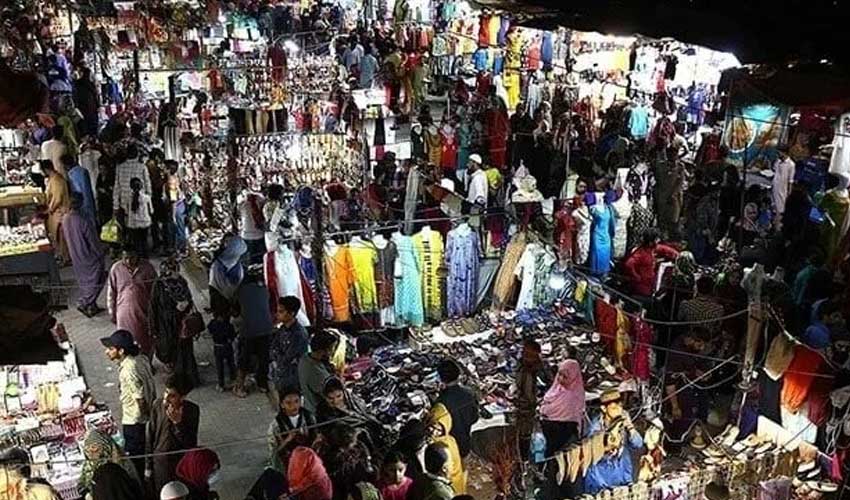
What makes the crisis so stubborn, the report argues, is precisely where it unfolds. Most working children are not in distant factories or busy marketplaces but in their own homes, on family farms and inside family-run businesses, labour that almost never shows up in official view and is easily waved away as a child simply "helping out." Because it is unpaid and domestic, it stays invisible, and an invisible problem is one no policy is built to solve.
The single biggest driver, the report says, is poverty, concentrated in households where parents have little or no formal education, and where a child's earnings or unpaid labour are treated as a necessity rather than a choice.
A problem too big for one ministry
At the report's launch in Islamabad, Federal Minister for Human Rights Azam Nazeer Tarar said the issue could not be solved by any single institution. Ending child labour, he argued, would require strong policy, real resources and a collective national commitment — and a willingness to reassess where the country places its priorities, given how much more widespread the problem has turned out to be than many assumed.
NCHR Chairperson Rabiya Javeri Agha pointed to the long silence in the data: Pakistan's last comprehensive child-labour survey was conducted in 1996, leaving policymakers to work for more than two decades from outdated and fragmented numbers.
Other speakers stressed that the country's obligations are already written into its law. Supreme Court Justice Ayesha Malik pointed to the constitutional bar on hazardous work for children under 14 and the guarantee of free, compulsory education. UNICEF's representative urged that the new evidence be turned into action, with stronger investment in schooling and in lifting families out of the poverty that pushes children into work.
What happens next
The value of this report lies as much in its timing as in its scale. After nearly 30 years without a clear national count, Pakistan finally has a baseline — a map of how many children are working, where they are, and why they are there. The harder question is what the country does with it.
For 8.6 million children, the report is, in the end, a measure of childhoods already being spent on work instead of in classrooms. Whether it becomes a turning point, or simply the most detailed record yet of a problem left to grow, will be decided by what follows the launch.